Nvidia Board Declines to Restore Jensen Huang as Chief Executive
Directors reject co-founder's social media overture hours after he signalled interest in returning to the AI chipmaker

Swift Rejection Follows Public Overture
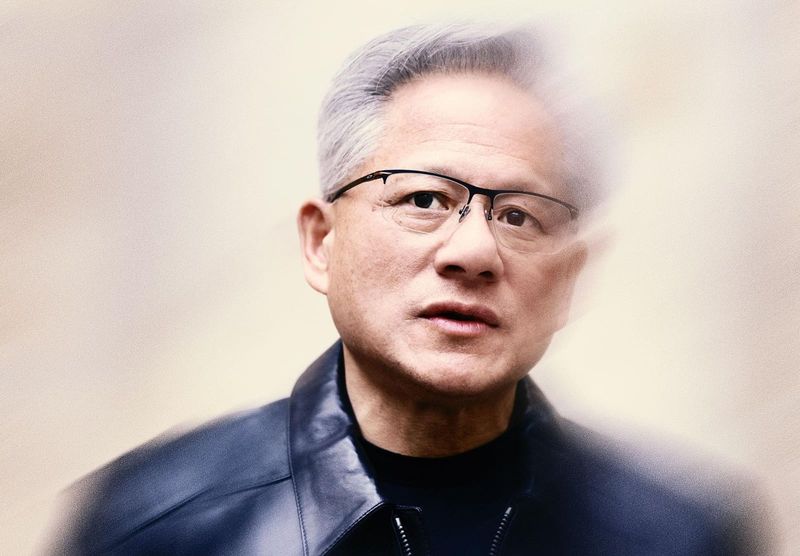
Nvidia's board of directors announced on Tuesday that it has no plans to reinstate Jensen Huang as chief executive, delivering the decision within hours of the co-founder's social media post suggesting he might be open to resuming leadership of the AI chip company he helped build.
The board's statement, issued from Palo Alto, California, closed the door on what had been a brief but intense period of speculation about leadership continuity at one of the semiconductor industry's most valuable firms. Huang had stepped down from the CEO role under circumstances that remain partially opaque, and his Tuesday social media remarks represented the first public signal that he might seek to reclaim the position.
The timing of the board's response underscores the sensitivity surrounding executive transitions at companies whose market valuations hinge on investor confidence in strategic direction. Nvidia shares had climbed roughly 5 per cent in extended trading on Tuesday, a move tied to the company's latest earnings disclosure rather than leadership developments. The board's rapid clarification appeared designed to prevent uncertainty about succession from overshadowing operational results.
Leadership Vacuum Amid Regulatory Turbulence
The question of who will steer Nvidia through its next phase arrives at a moment when the company faces mounting regulatory pressure in multiple jurisdictions. Washington has tightened export controls targeting AI accelerators destined for China, a policy shift that has forced Nvidia to halt shipments of its Hopper-generation chips to customers in the country. That decision came even as the company reported that revenue from China had more than tripled over a recent period, highlighting the strategic dilemma: a market that had become a growth engine is now largely off-limits.
The export restrictions reflect a broader US effort to limit Beijing's access to advanced computing hardware, a campaign that has drawn Nvidia into the centre of geopolitical friction. The company's compliance with the new rules required it to stop shipping Hopper chips, a product line that had been central to its data-centre revenue growth. The abrupt halt has left Chinese cloud providers and research institutions scrambling for alternatives, while Nvidia must now recalibrate its sales forecasts and supply-chain allocations.
For the board, the decision to rule out Huang's return suggests a preference for continuity under the current leadership structure, even as external pressures mount. Huang co-founded Nvidia in 1993 and served as CEO for decades, building the company from a graphics-chip specialist into the dominant supplier of AI training hardware. His departure - whether voluntary or under pressure - has not been fully explained, and the board's statement offered no additional context about the reasons for declining his overture.
Regional Implications for Southeast Asian Supply Chains
The leadership question at Nvidia reverberates beyond Silicon Valley, particularly for companies in Singapore and Malaysia that have become integral to the firm's manufacturing and testing ecosystem. Both countries host facilities and suppliers that handle back-end semiconductor processes, and the recent US export controls have placed some of those operations under scrutiny.
Singapore-based firms that provide chip packaging and testing services have found themselves navigating a complex compliance landscape, as Washington seeks to prevent advanced AI hardware from reaching Chinese entities through indirect channels. Malaysian counterparts face similar challenges, with some suppliers reporting delays in shipments and increased due-diligence requirements from US customers. The uncertainty around Nvidia's executive suite adds another layer of complexity for these regional partners, who must plan capacity expansions and capital investments without a clear sense of the company's strategic priorities under new leadership.
The ripple effects extend to data-centre operators across Asia. Stocks of companies that build or operate AI-focused infrastructure have come under pressure in recent sessions, weighed down by a combination of the US chip curbs and the ambiguity surrounding Nvidia's leadership. Investors are reassessing the pace at which cloud providers in the region can deploy next-generation hardware, given both the export restrictions and the potential for strategic shifts at Nvidia itself.
Market Reaction and Investor Sentiment
Nvidia's share-price movement in after-hours trading on Tuesday reflected a market focused primarily on the company's financial performance rather than the leadership drama. The roughly 5 per cent gain followed an earnings report that beat analyst expectations, driven in part by the surge in China revenue before the Hopper export ban took full effect. That revenue spike - more than tripling over the relevant period - demonstrated the scale of demand for AI accelerators in the Chinese market, even as geopolitical tensions were escalating.
The board's decision to issue a public statement so quickly suggests an awareness that prolonged speculation about Huang's potential return could unsettle investors. Leadership transitions at technology companies often trigger volatility, particularly when the outgoing executive is closely identified with the firm's strategic vision. By foreclosing the possibility of Huang's reinstatement within hours of his social media post, the board aimed to contain any narrative that might distract from the company's operational momentum.
Yet the speed of the response also raises questions about the internal dynamics that led to Huang's departure in the first place. Co-founders who step down from CEO roles typically do so either to pursue other interests or because of disagreements with the board over strategy, governance, or performance. Huang's willingness to signal publicly that he might return - and the board's equally public rejection - hints at unresolved tensions that could resurface if the company's financial results falter or if regulatory pressures intensify.
Navigating Export Controls and Strategic Realignment
The halt in Hopper chip shipments to China represents a significant operational challenge for Nvidia, one that the current leadership will need to address without the benefit of Huang's decades of experience navigating industry cycles and policy shifts. The US government's decision to tighten export controls reflects a view in Washington that advanced AI hardware poses a national-security risk if it enables Chinese military or surveillance applications. Nvidia has complied with the new rules, but the company now faces the task of replacing the lost China revenue with sales in other regions.
That realignment is complicated by the fact that demand for AI accelerators is concentrated in a relatively small number of markets. Hyperscale cloud providers in the United States and Europe account for a large share of Nvidia's data-centre sales, but those customers are also exploring alternative chip architectures and in-house designs that could reduce their dependence on a single supplier. Nvidia's ability to maintain its market position will depend in part on its capacity to innovate faster than competitors and to offer products that justify premium pricing even as customers diversify their hardware portfolios.
The export controls have also prompted a blame game in Washington, with some lawmakers and policy analysts questioning whether the restrictions were implemented too late to prevent sensitive technology from reaching Chinese entities. Nvidia has found itself at the centre of that debate, with critics pointing to the company's robust China sales as evidence that earlier controls were insufficiently stringent. The company has maintained that it followed all applicable regulations, but the political scrutiny adds reputational risk at a time when leadership stability might have helped manage external relations.
What Comes Next for Nvidia's Executive Suite
The board's statement leaves open the question of who will lead Nvidia over the long term and what strategic adjustments the company will make in response to the shifting regulatory and competitive landscape. If the current leadership team was installed as a temporary measure, the board will eventually need to identify a permanent CEO who can command the confidence of investors, employees, and partners. If the current structure is intended to be permanent, the board's rejection of Huang's overture signals a break with the past that may reshape the company's culture and decision-making processes.
For suppliers and customers in Asia, the immediate priority is clarity about Nvidia's product roadmap and its commitment to the region. The combination of export controls, leadership uncertainty, and market volatility has created an environment in which long-term planning is difficult. Data-centre operators need to know which chip generations will be available, under what conditions, and at what price points. Component suppliers need visibility into production volumes and technology transitions so they can allocate capital efficiently.
The board's decision to rule out Huang's return, delivered with such speed and finality, suggests that Nvidia's directors believe the current course is the right one, even if it means forgoing the experience and relationships that Huang brought to the role. Whether that judgement proves correct will depend on the company's ability to navigate a period of heightened geopolitical risk, intensifying competition, and rapid technological change - all without the leader who guided it for most of its history.
The coming quarters will test whether Nvidia's board made the right call in closing the door on a return by its co-founder, or whether the decision to move forward without him becomes a source of regret as the company confronts challenges that few executives have the experience to manage.