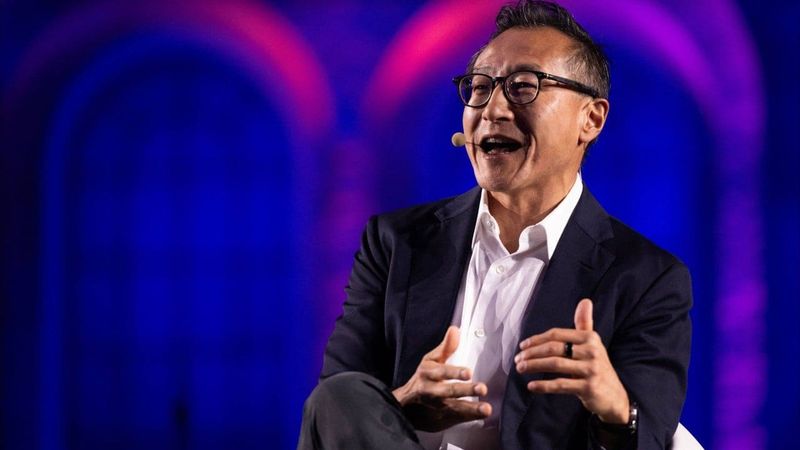
Musk Escalates Public Feud with Ambani as Starlink Stalls in India
SpaceX's founder has shifted from vague complaints to direct attacks on Reliance's chairman, exposing the friction between Silicon Valley's satellite ambitions and India's incumbent telecom giants.
From Oligarchs to Named Targets
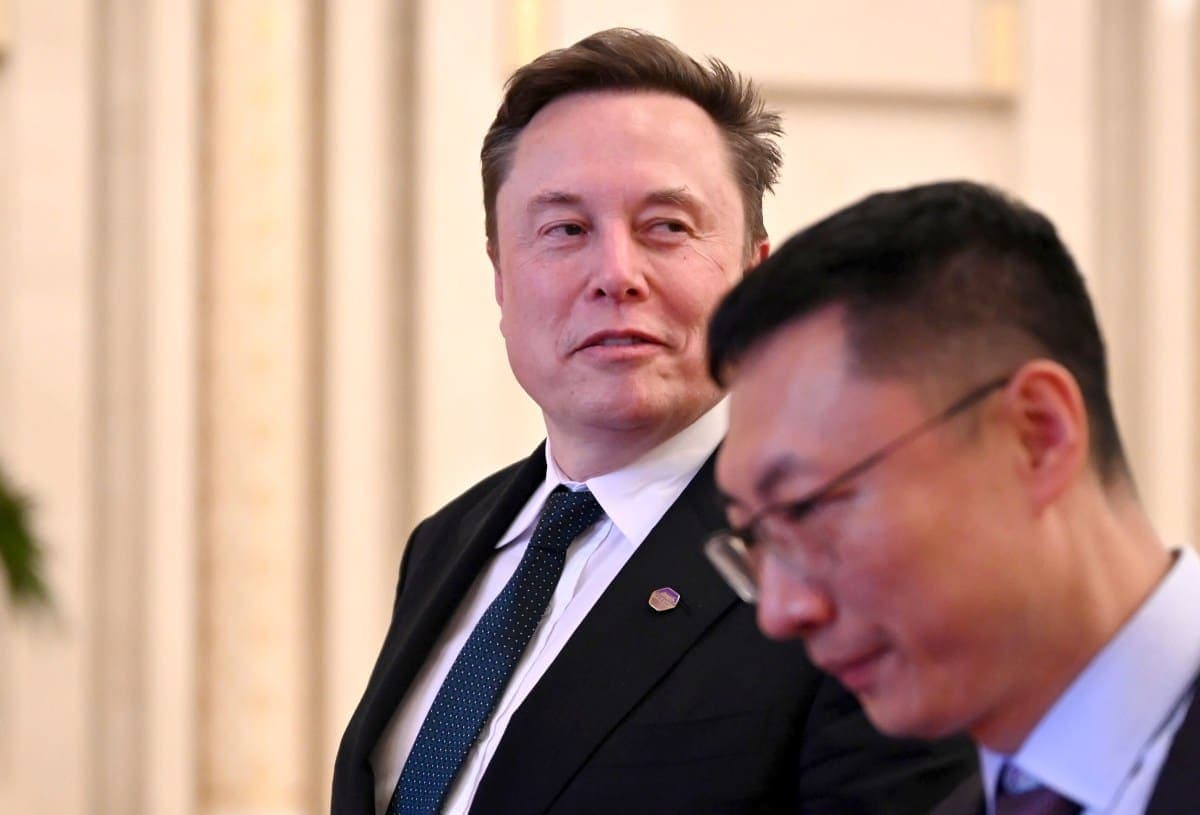
Elon Musk has abandoned subtlety. After years of regulatory delays for Starlink's India launch, the SpaceX founder has pivoted from oblique complaints about unnamed "oligarchs" to direct attacks on Mukesh Ambani, chairman of Reliance Industries. In a post on X this week, Musk mockingly referred to Ambani as India's "prime minister", suggesting the billionaire wields disproportionate influence over government policy. A day later, he posed the question bluntly: "Is Ambani the real boss of India?"
The escalation marks a rare instance of Musk publicly singling out a business rival by name in a regulatory dispute. His latest salvo framed Starlink's delayed entry as a moral issue, arguing that satellite internet could connect remote areas, offer educational opportunities to children, and help small enterprises access global markets. "Naturally, you would prefer to maintain your monopolistic exploitation of the great people of India," Musk wrote, "but would you nonetheless consider allowing Starlink to compete?"
Reliance Jio, the telecom arm of Ambani's conglomerate and India's largest mobile operator, has not responded publicly. India's Ministry of Communications, however, rejected Musk's framing outright, stating that the country's satellite communications framework is "fair and non-discriminatory."
The Regulatory Bottleneck
SpaceX has pursued an Indian licence for Starlink since the early 2020s. The service secured key regulatory clearances and even signed distribution agreements last year with both Reliance Jio and Bharti Airtel, India's second-largest telecom operator, anticipating imminent commercial approval. Yet Starlink remains unable to begin operations. The Ministry of Communications clarified this week that Starlink and two other licensed satellite operators are undergoing mandatory security assessments before spectrum allocation. All three applicants, the ministry said, are at "broadly the same regulatory stage", pushing back against any claim of discriminatory treatment.
That timeline, however, has not satisfied Musk, whose rhetoric has grown sharper as the wait stretches on. At Opentechwire, we've tracked similar satellite internet licensing delays across South and Southeast Asia, where incumbent telecom operators often hold sway over spectrum policy. India's case is notable for the scale of the market and the political capital of the players involved.
Spectrum Allocation: Administrative Process Versus Auction
Before the personal attacks began, Starlink and Reliance Jio clashed over the method for allocating satellite spectrum. Musk's company advocated for administrative assignment, a process common in many jurisdictions and consistent with international norms for non-geostationary satellite services. Jio, by contrast, pushed for a competitive auction, arguing that spectrum is a scarce public resource that should be distributed through a transparent bidding process.
New Delhi ultimately sided with the administrative route, a decision that appeared to favour Starlink's position. Yet the approval to operate has not followed. The delay suggests that spectrum allocation methodology, while contentious, was only one layer of a more complex regulatory and political calculus.
Jio itself is preparing to launch satellite internet through a joint venture with Luxembourg-based SES. Bharti Airtel, meanwhile, holds a significant stake in Eutelsat OneWeb, which has been working to deploy satellite connectivity in India for several years. Both incumbents have strong relationships with the Indian government and are navigating the same security clearance process that now holds Starlink in limbo.
India's Strategic Importance and Musk's Frustrations
India represents one of the largest untapped markets for both Starlink and Tesla. With a population exceeding 1.4 billion and more than a billion internet users, the country offers scale that few other markets can match. For satellite internet, India's geography presents both opportunity and challenge: vast rural areas remain underserved by terrestrial broadband, but regulatory complexity and entrenched telecom interests create formidable barriers to entry.
Musk's frustration with India is not limited to Starlink. Tesla launched in the country last year after extended negotiations over import duties and local manufacturing requirements. The carmaker registered just 699 vehicles in its first twelve months, hampered by import tariffs that pushed the Model Y's price to nearly double its United States equivalent. Tesla reduced prices earlier this year, but its vehicles remain considerably more expensive in India than in most other markets.
The dual setbacks illustrate a broader friction: Musk's companies, accustomed to direct-to-consumer models and relatively permissive regulatory environments in the United States and parts of Europe, have struggled to adapt to markets where government policy is shaped by close relationships between regulators and large domestic conglomerates.
Ambani's Position and the Question of Influence
Mukesh Ambani is India's wealthiest individual and chairs Reliance Industries, a conglomerate with interests spanning petrochemicals, retail, media, and telecommunications. Reliance Jio disrupted India's telecom sector in 2016 by offering free voice calls and aggressively priced data, rapidly becoming the country's largest operator. The company's expansion has been closely aligned with the priorities of Prime Minister Narendra Modi's government, including major infrastructure projects and digital initiatives.
Musk's accusation that Ambani functions as a shadow power broker is inflammatory, but it reflects a perception common among foreign investors: that Reliance's scale and political connections afford it significant influence over policy outcomes. Whether that influence extends to blocking Starlink's entry is disputed. The Ministry of Communications has denied any preferential treatment or obstruction, and there is no public evidence that Reliance has lobbied directly against Starlink's licence.
What is clear is that Jio has a commercial interest in limiting competition. Satellite internet, while unlikely to replace terrestrial mobile networks in urban areas, poses a threat to Jio's rural subscriber base and enterprise connectivity offerings. Starlink's low-latency service and global reach could appeal to businesses, remote communities, and maritime customers, segments where Jio's satellite joint venture is also positioning itself.
Regional Context: Satellite Internet and Incumbent Resistance
India is not unique in seeing friction between satellite operators and terrestrial telecom incumbents. Across Asia, governments have moved cautiously on satellite spectrum, often prioritising the concerns of established operators over new entrants. In the Philippines, regulatory approval for OneWeb took years. In Indonesia, licensing discussions for Starlink have been protracted, with state-owned telecom operators expressing concern about competitive impact.
The pattern reflects a broader dynamic: satellite internet is no longer a niche service for remote research stations or maritime vessels. It is becoming a direct substitute for fibre and mobile broadband in underserved areas, and in some cases, a competitive alternative even in connected markets. That shift has made spectrum allocation a flashpoint, particularly in countries where telecom incumbents are politically powerful.
Musk's decision to escalate publicly may be an attempt to apply external pressure on Indian regulators, leveraging his platform and global profile to shift the narrative. It is a risky strategy. Public attacks on domestic business figures can backfire in markets where national pride and sovereignty concerns run high.
What Happens Next
India's Telecom Minister Jyotiraditya Scindia responded to Musk's allegations by stating that the country "does not allow a monopoly in any sector." The comment, while general, signals that the government is sensitive to perceptions of favouritism. Whether that translates into faster approval for Starlink remains uncertain.
The security assessment process cited by the Ministry of Communications is not trivial. Satellite systems involve cross-border data flows, encryption, and potential national security implications. India has taken a cautious approach to foreign technology platforms, particularly those with defence or dual-use applications. SpaceX's contracts with the United States Department of Defense and its role in providing connectivity to Ukraine during the conflict with Russia add layers of scrutiny.
At the same time, New Delhi has policy incentives to enable satellite internet. The government has set ambitious targets for digital connectivity in rural areas, and satellite services could help close coverage gaps more quickly than terrestrial infrastructure. Blocking Starlink indefinitely would also risk signalling to other foreign investors that India's regulatory environment is unpredictable or unduly influenced by incumbents.
For Musk, the path forward is uncertain. His public confrontation with Ambani has raised the stakes, making it harder for either side to compromise without appearing to capitulate. If Starlink's approval continues to stall, the dispute could become a test case for how India balances its openness to foreign investment with the interests of its largest domestic conglomerates.