Microsoft Pitches Copilot as Operating System for Enterprise Work
CEO Satya Nadella frames AI assistant as the next Office-scale productivity shift, adding code execution and agentic tools in closed-door pitch to corporate customers
A Private Pitch to the People Who Matter
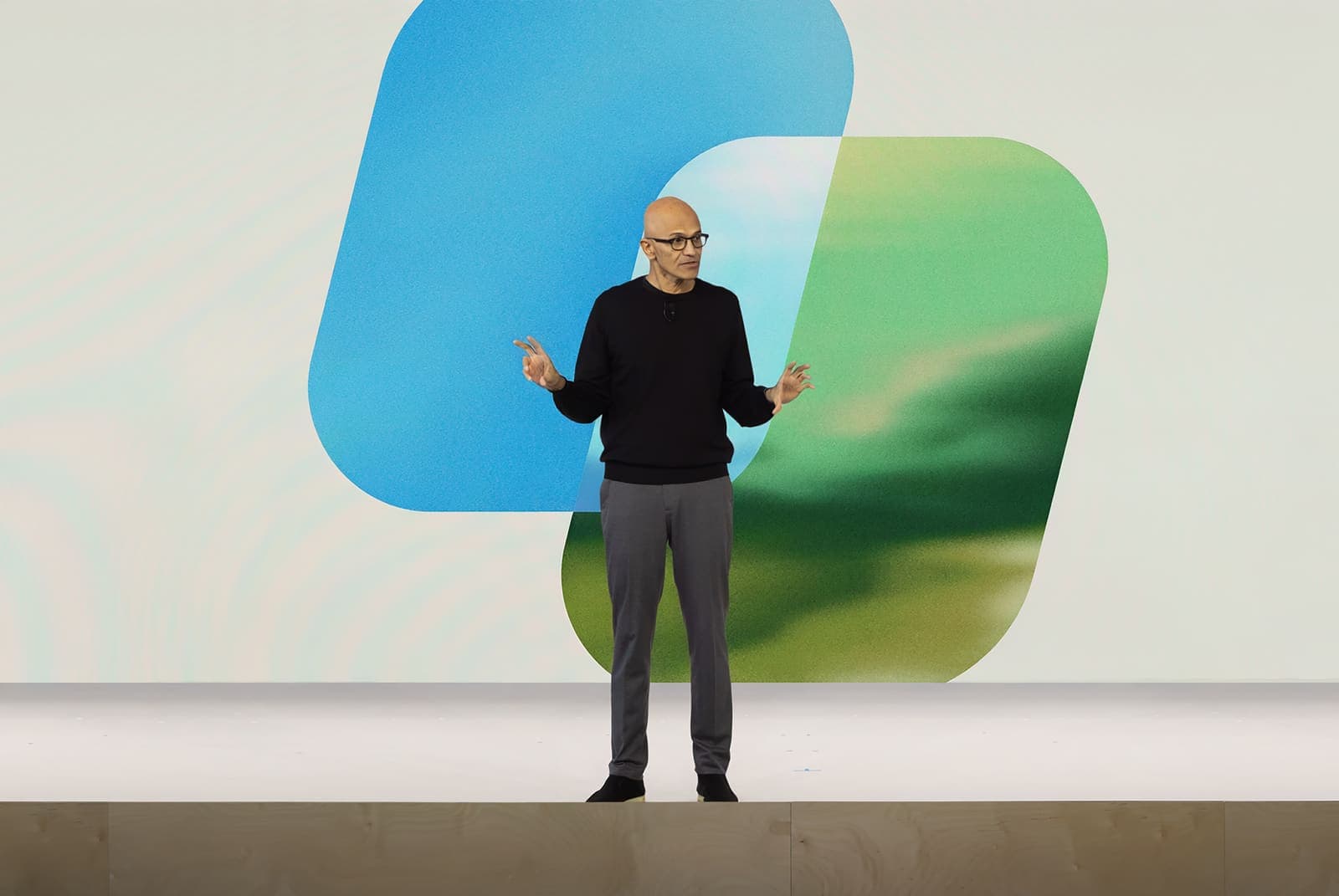
On the final week of September 2026, Satya Nadella gathered a select group of enterprise leaders in a room. No press, no livestream, no product demo videos destined for YouTube. Microsoft's chief executive laid out his latest vision for Copilot to the customers whose contracts fund Redmond's quarterly cloud revenue, framing the AI assistant not as a feature layer but as something closer to infrastructure: an operating system for work itself.
The comparison is deliberate. Nadella is drawing a line between what Microsoft Office accomplished in the late twentieth century and what he believes Copilot can accomplish now. Office became the substrate on which multinational corporations ran their document workflows, their spreadsheets, their presentations. Nadella's argument is that Copilot can occupy the same foundational role for a new category of work, one where natural language and agentic automation replace manual task switching.
At Opentechwire, we've tracked the rising pressure on enterprise AI products to move beyond chatbot interfaces. The closed-door format of this event signals that Microsoft is less interested in consumer hype cycles and more focused on locking in the multi-year contracts that justify its continued capital expenditure on data centre GPU clusters.
Embedding Code and Agency
The technical expansion Nadella outlined centres on two additions. First, Copilot will now include coding capabilities, allowing users to write, test, and execute scripts directly within the assistant interface. This is not GitHub Copilot repackaged; it is execution infrastructure embedded into the main Copilot environment, designed for business analysts and operations teams who need to automate workflows without switching to a developer environment.
Second, Microsoft is building what it calls agent capabilities into Copilot. In practical terms, this means the assistant can now chain together multi-step tasks, interact with external APIs, and trigger actions across connected enterprise software without requiring a human to approve each step. The agent model is a departure from the prompt-response loop that has defined the first generation of LLM products. It introduces latency and reliability challenges, but it also opens the door to automating entire categories of white-collar work that have so far resisted software solutions.
The agent architecture is still bounded by enterprise IT policies. Companies will be able to define what Copilot agents can and cannot access, and Microsoft is positioning compliance and audit logs as first-class features. That focus reflects the reality of selling AI into regulated industries: the technology must fit inside existing governance frameworks, or it will not get past procurement.
Office Inside Copilot, Not the Other Way Around
The more structurally significant shift is the integration of Office directly into Copilot. Until now, Copilot has been embedded into Word, Excel, PowerPoint, and Outlook as a sidebar or inline assistant. The new model inverts that relationship. Users will be able to work entirely within the Copilot interface, calling on Word's formatting engine, Excel's calculation grid, or PowerPoint's slide layout tools as needed, without opening separate application windows.
This is a user experience bet. Microsoft is wagering that knowledge workers will prefer a single conversational environment where they describe what they want to create, and the system assembles the document, spreadsheet, or deck in the background. It is also a retention bet: if users spend their day inside Copilot rather than inside Office apps, Microsoft can reduce the surface area where competitors might insert alternative tools.
The technical challenge is non-trivial. Office applications carry decades of feature accumulation, keyboard shortcuts, macros, and third-party add-ins. Collapsing that complexity into a natural language interface risks either oversimplifying the tool set or overwhelming users with options. Microsoft has not yet detailed how it will handle edge cases, such as users who need precise control over Excel pivot tables or PowerPoint animation timing.
The Office Analogy and Its Limits
Nadella's comparison to Office in the 1980s and 1990s is historically instructive but not entirely parallel. Office succeeded because it standardised file formats and user interfaces at a time when personal computers were proliferating inside corporations. The network effect was strong: if your colleagues used Word, you needed Word. The switching cost became prohibitive.
Copilot faces a different landscape. Large language models are not proprietary in the same way Office was. OpenAI, Anthropic, Google, and a growing set of open-weight model providers offer comparable capabilities. The moat Microsoft is building is not the model itself but the integration layer: the connectors to SharePoint, Dynamics, Azure Active Directory, and the rest of the Microsoft enterprise stack.
That integration is valuable, but it is also a lock-in strategy that some IT leaders are wary of. The more Copilot becomes the "OS for work," the harder it becomes to migrate away from Microsoft's ecosystem. Nadella is betting that the productivity gains will outweigh that concern, but the bet assumes that Copilot's reliability and accuracy will meet the bar enterprises set for mission-critical tools.
Why This Audience, Why Now
The decision to brief enterprise customers rather than the press reflects a shift in Microsoft's go-to-market priority. Consumer-facing AI announcements generate headlines, but they do not generate the recurring revenue that keeps a company with Microsoft's cost structure growing. Enterprise contracts are longer, stickier, and more lucrative per seat, especially when bundled with Azure consumption.
The timing also aligns with budget cycles. Many large organisations finalise their software spending for the following fiscal year in the fourth quarter. By positioning Copilot as essential infrastructure rather than experimental tooling, Microsoft is aiming to move it from discretionary spending into the core IT budget, where it is harder to cut.
There is also competitive pressure. Google has been positioning its Workspace AI tools as an alternative for organisations that want to avoid deepening their dependence on Microsoft. Salesforce, ServiceNow, and a cohort of vertical SaaS providers are embedding their own AI agents. If Microsoft does not establish Copilot as the default orchestration layer, it risks losing ground in the next generation of enterprise software architecture.
The Execution Risk
The "OS for work" framing is ambitious, but it carries execution risk. Operating systems succeed when they are stable, predictable, and backwards-compatible. Large language models, even with reinforcement learning and fine-tuning, still produce inconsistent outputs. Hallucinations, prompt injection vulnerabilities, and context window limitations remain unsolved problems at the model level.
Microsoft's challenge is to abstract those issues away from the user while maintaining enough transparency that enterprises can audit and troubleshoot failures. The company has invested heavily in safety layers, guardrails, and retrieval-augmented generation to ground Copilot's responses in verifiable data. But the gap between demo performance and production reliability is where many AI products have stumbled.
If Copilot fails to meet the uptime and accuracy expectations of the "OS" metaphor, the backlash from enterprise customers could be severe. IT leaders have long memories for software that promises transformation and delivers downtime.
What This Means for the Enterprise AI Market
Microsoft's repositioning of Copilot sets a reference point for how enterprise AI will be sold over the next two years. The message is clear: AI is not a feature, not a plugin, not an experiment. It is infrastructure. That framing forces competitors to either match the scope of integration Microsoft is offering or carve out a differentiated position as best-of-breed tools that sit alongside, rather than replace, existing workflows.
For enterprises, the question is whether to commit to one vendor's vision of AI-native work or maintain optionality by stitching together multiple point solutions. Microsoft is making the single-vendor path as frictionless as possible, but that convenience comes with the trade-off of deeper platform dependence.
Nadella's bet is that the productivity gains will be large enough, and visible enough, to justify that trade-off. The next twelve months will test whether enterprises agree, or whether the "OS for work" metaphor collapses under the weight of unmet expectations.