OpenAI Bets on Cuteness to Challenge Meta's Muse Agent
The company's Dots assistant borrows from its rival's playbook while adding virtual world-building, yet faces the same monetisation question that has haunted consumer AI products for months.
A Familiar Face in the Agent Wars
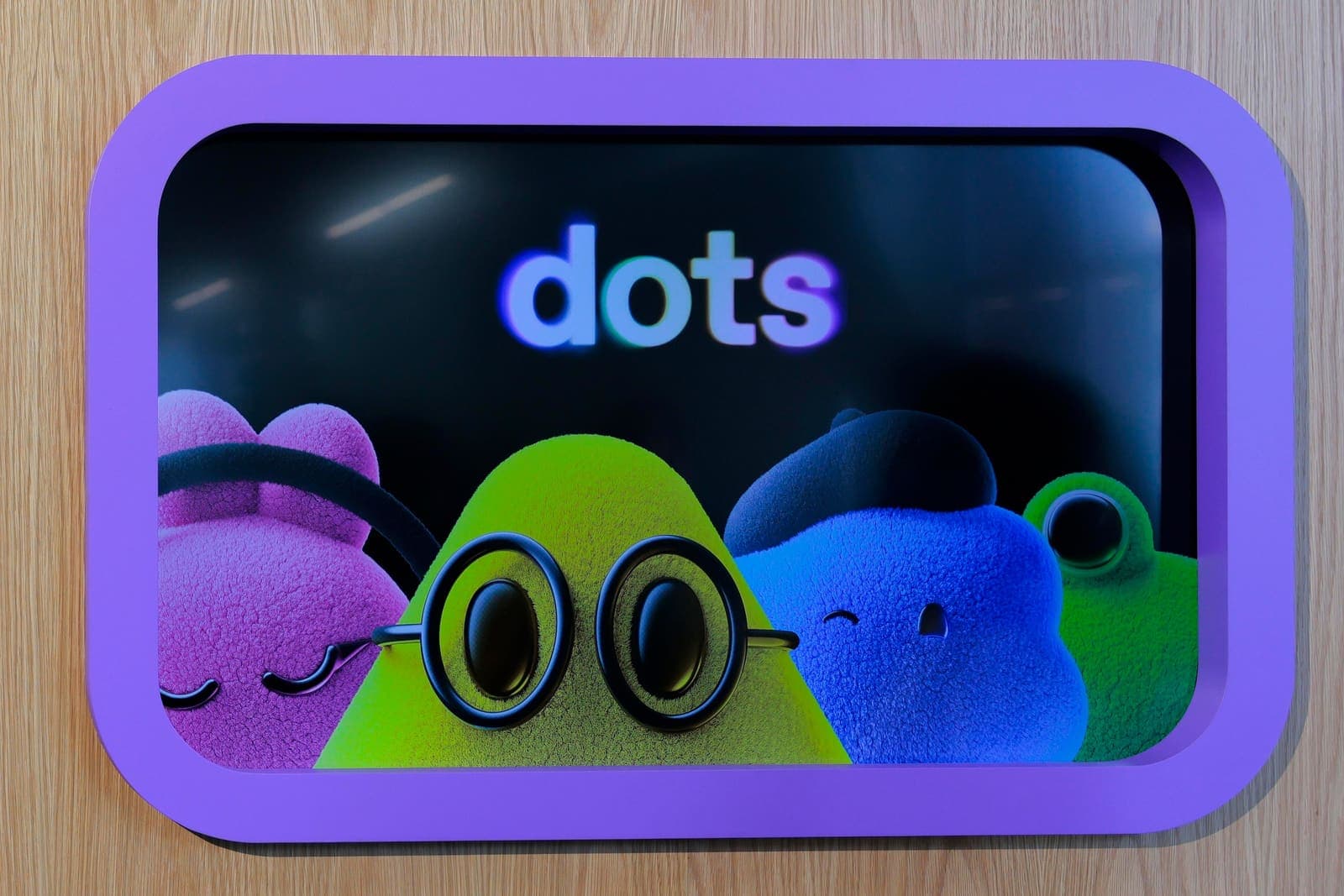
At this year's DevDay conference, OpenAI unveiled Dots, a consumer-facing AI agent that takes the form of customisable, animated blobs with expressive eyes. CEO Sam Altman framed the launch as delivering "real-deal AI" inspired by science fiction assistants, but the design language tells a different story. The choice to emphasise visual charm and personality mirrors Meta's Muse agent platform almost exactly, a platform that has gained traction in recent months by prioritising approachability over raw capability.
Dots runs on GPT-6 Astra, OpenAI's latest inference architecture. The agent handles scheduling, reminders, and conversational queries in much the same way existing assistants do. What differentiates Dots, according to the company's demonstration, is an ability to generate and navigate virtual environments. Users can ask their Dot to construct simple 3D spaces, a feature that appears aimed at Meta's long-standing metaverse ambitions.
The timing of the announcement is notable. Meta has invested heavily in making Muse a household name, embedding it across Instagram, WhatsApp, and Facebook. Early adoption figures have been strong, particularly among users under 30 who respond well to the agent's non-threatening aesthetic. OpenAI's decision to adopt a similar design strategy suggests the company believes charm, not just technical performance, drives consumer adoption in the agent category.
Virtual Worlds as Differentiation
Where Dots diverges from Muse is in its environment-building tooling. During the DevDay demo, Altman showed a user instructing their Dot to create a virtual café, complete with seating, lighting, and ambient sound. The agent generated the space in seconds, then allowed the user to walk through it using a standard web browser. The feature is clearly intended as a jab at Meta's metaverse initiatives, which have struggled to gain mainstream usage despite billions in investment.
Yet the practical utility of these virtual spaces remains unclear. OpenAI positioned them as venues for remote collaboration or casual socialising, but offered few specifics on how users would access them, whether they integrate with existing virtual reality hardware, or what performance requirements they carry. The feature feels more like a proof of concept than a fully realised product layer.
At Opentechwire, we've tracked dozens of AI agent launches over the past 18 months, and the pattern is consistent: companies lead with capability demonstrations, then scramble to articulate use cases that justify the technology. Dots' virtual environments risk falling into the same trap. Building a digital café is impressive from an engineering standpoint; it's less obvious why a consumer would prefer that experience over a video call or a text thread.
The Pricing Question OpenAI Avoided
Altman spent considerable time on stage discussing Dots' personality engine, its ability to remember user preferences across sessions, and its integration with OpenAI's existing API ecosystem. He did not mention pricing. Meta's Muse is free to use, subsidised by the company's advertising business and treated as a moat-building exercise rather than a standalone revenue stream. OpenAI, by contrast, operates a subscription model for ChatGPT Plus and charges developers per API call.
This creates a structural tension. If Dots is bundled into the existing ChatGPT Plus tier, currently priced at 20 US dollars per month, it becomes a value-add for existing subscribers but does little to expand the user base. If OpenAI launches Dots as a separate paid product, it competes directly with a free alternative that already has distribution across three billion-user platforms. If the company makes Dots free, it cannibalises ChatGPT subscriptions and adds compute costs without an obvious path to monetisation.
The agent market in 2026 is bifurcating. Enterprise-facing agents, which automate workflows inside corporate environments, command clear pricing premiums and have straightforward ROI calculations. Consumer agents, which provide companionship or convenience, have yet to prove they can sustain businesses outside of bundled ecosystems or advertising models. OpenAI's positioning of Dots as a consumer play, rather than an enterprise tool, suggests the company is willing to absorb losses in exchange for market share. That calculus works only if OpenAI believes agent adoption will eventually unlock higher-value services down the line.
Competing on Distribution, Not Just Features
Meta's advantage with Muse is not primarily technical. The agent uses Llama 4, an open-weight model that third-party benchmarks place slightly behind GPT-6 Astra in reasoning tasks. What Meta has is distribution. Muse appears natively in Instagram DMs, Facebook Messenger, and WhatsApp, platforms where users already spend hours each day. There is no download, no sign-up friction, no separate app to remember.
Dots, by contrast, lives inside the ChatGPT interface and requires a deliberate decision to engage. OpenAI has partnerships with Apple and Microsoft that embed ChatGPT into operating system-level features, but those integrations are opt-in and often buried in settings menus. Unless OpenAI secures a default placement in a high-traffic consumer surface, Dots will struggle to match Muse's reach regardless of its technical merits.
The virtual world feature could serve as a distribution wedge if OpenAI can convince a gaming platform or social network to integrate it. Imagine a Roblox or Fortnite where users summon Dots to build custom maps or host events. That kind of partnership would give Dots a reason to exist outside the ChatGPT app and create network effects that Meta's text-focused agent cannot easily replicate. But no such deals were announced at DevDay, and the feature remains confined to OpenAI's own properties for now.
The Agent Aesthetic as Strategy
Both Dots and Muse share a deliberate visual strategy: they are non-threatening, vaguely cute, and designed to feel like companions rather than tools. This marks a shift from earlier AI assistant paradigms, which emphasised efficiency and utility. Siri, Alexa, and Google Assistant were faceless voices, designed to fade into the background. Dots and Muse are characters, with expressions and personalities that users are meant to bond with.
The shift reflects lessons learned from social gaming and virtual pet products. Tamagotchis, Neopets, and even early chatbots like SmarterChild succeeded not because they were useful, but because they were endearing. OpenAI and Meta are betting that emotional attachment drives retention in ways that task completion alone does not. If users feel affection for their Dot or Muse, they return even when they don't have a specific job to delegate.
This approach carries risks. Anthropomorphising AI agents invites users to project human-like expectations onto systems that cannot fulfil them. When an agent fails to understand context or makes a mistake, the disappointment is sharper if the user has come to view it as a friend rather than a tool. Both companies will need to manage that expectation gap carefully, or risk backlash when the technology inevitably falls short.
What the Launch Signals About OpenAI's Priorities
DevDay has historically been a developer-focused event, where OpenAI announces API improvements, new model capabilities, and partnerships with enterprise customers. The decision to centre this year's keynote on a consumer agent product is a telling shift. It suggests OpenAI sees the consumer market as strategically important, even if the revenue model remains uncertain.
The company has raised tens of billions in venture funding and is reportedly pursuing a valuation north of 150 billion US dollars in its next round. That kind of valuation requires a path to mass-market adoption, not just a lucrative but niche developer business. Dots is OpenAI's clearest signal yet that it intends to compete in the consumer arena, even if that means going head-to-head with Meta's free, deeply integrated alternative.
Whether Dots can succeed where previous consumer AI products have stumbled depends on execution details OpenAI has not yet revealed. Pricing, distribution partnerships, and the actual utility of virtual world-building will determine whether Dots becomes a household name or another footnote in the crowded agent landscape. For now, it's a well-timed provocation, a reminder that OpenAI is not content to cede the consumer space to its rivals without a fight.