Meta's Terabyte-Scale AI Model Exposes the Real Cost of Local Inference
Muse Spark Open demands hardware setups worth tens of thousands of dollars, revealing the gap between open-weight rhetoric and practical deployment across Asia-Pacific enterprises.
A Model Too Big for Most Budgets
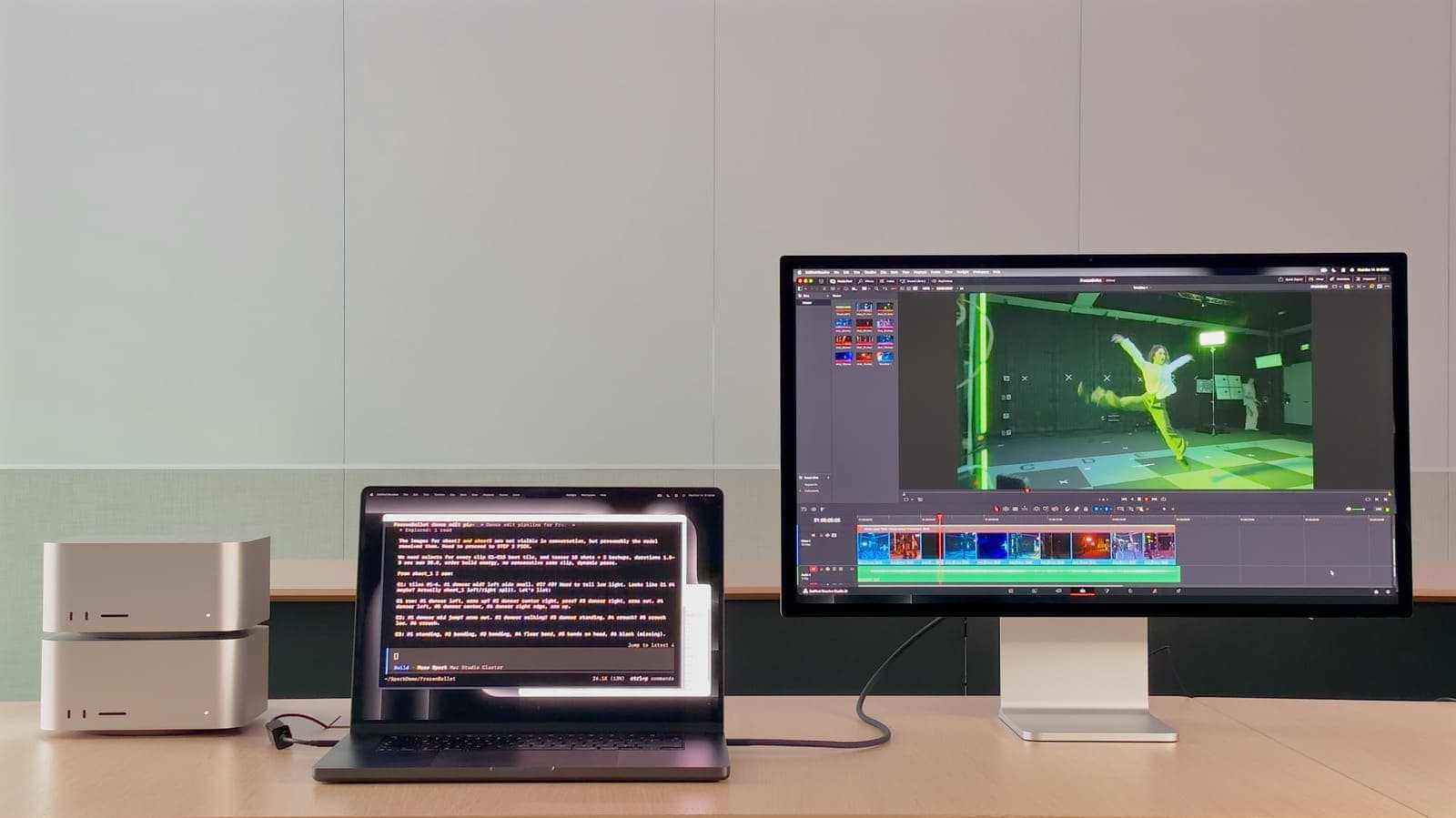
Meta has released Muse Spark Open, an 800-billion-parameter language model that the company positions as America's most capable open-weight offering to date. Yet the hardware required to run it locally tells a more revealing story about the current state of decentralised AI infrastructure: you need either two Mac Studio units equipped with 512 GB of unified memory each, or four machines with 256 GB configurations, translating to a baseline investment approaching USD 38,000 for the smaller-memory quad-machine setup.
The model's release on 15 October 2026 represents Meta's latest effort to cement its position in the open-weight ecosystem, a domain where Chinese laboratories have gained significant ground over the past eighteen months. At Opentechwire, we've tracked this competitive dynamic across both Washington policy circles and Asian tech hubs, where regulatory divergence on model openness continues to shape investment patterns. Meta framed Muse Spark Open explicitly in nationalist terms, describing it as a counterweight to models from Chinese developers, specifically naming GLM 5.3 and Kimi K3 in benchmark comparisons.
The technical architecture centres on Apple's M5 Ultra chip and its unified memory design, which allows the integrated GPU to access up to 512 GB per machine. By pairing two Mac Studios, the system creates what Meta describes as a single computational unit with a terabyte of addressable memory. This approach sidesteps the need for discrete GPU clusters or cloud instances, but it also locks deployment into a narrow hardware lane that few organisations outside North America and select Asia-Pacific markets can easily procure.
Benchmarks Against Chinese Competition
Meta's internal testing claims Muse Spark Open outperforms both GLM 5.3 and Kimi K3 on agentic task completion and visual reasoning workloads. These benchmarks matter less for their absolute scores than for what they signal about the geopolitical framing of AI model development. The explicit comparison to Chinese models, rather than to Western closed-source alternatives or other open-weight projects from European or Southeast Asian labs, underscores how model releases have become proxy statements in a broader technology rivalry.
Agentic tasks, which involve multi-step reasoning and tool use, have emerged as a key differentiator in enterprise deployments across Singapore, Hong Kong, and Sydney, where financial institutions and logistics operators are piloting autonomous workflow systems. Visual reasoning capabilities, meanwhile, address use cases in manufacturing quality control and medical imaging, sectors where Southeast Asian governments have prioritised local compute sovereignty.
Yet the benchmarks published by Meta do not include latency measurements under real-world load, nor do they specify the inference speed achievable on the recommended Mac Studio configurations. For organisations evaluating whether to invest in local inference hardware versus continuing to purchase tokens from cloud providers, these operational metrics often matter more than raw accuracy scores. The absence of disclosed power consumption figures is also notable, given that electricity costs in markets such as Jakarta, Manila, and Mumbai can significantly alter the total cost of ownership for on-premises AI infrastructure.
The Unified Memory Gamble
Apple's unified memory architecture, which Muse Spark Open was specifically optimised to exploit, represents a departure from the discrete GPU farms that dominate large-scale AI training and inference in data centres. By allowing the CPU, GPU, and neural engine to share a single pool of high-bandwidth memory, the M5 Ultra reduces the overhead of data transfer between components. This design works well for workloads that benefit from tight integration, but it also means scaling beyond a terabyte requires adding entire machines rather than swapping in higher-capacity memory modules or additional accelerator cards.
For enterprises in Asia-Pacific, this architectural choice has mixed implications. On one hand, Mac Studio units are relatively compact and can be deployed in office environments without the cooling and power infrastructure required for rack-mounted GPU servers. On the other hand, procurement timelines for high-end Mac configurations in markets outside the United States, Australia, and Japan can stretch to several months, and warranty support for multi-machine clusters is less predictable than for standardised server hardware from Dell, HP, or Lenovo.
The reliance on Apple hardware also introduces a single-vendor dependency that runs counter to the diversification strategies many regional technology officers have adopted since supply chain disruptions in 2023 and 2024. At Opentechwire, we've observed a growing preference among Seoul-based AI startups and Bengaluru research labs for inference stacks built on commodity x86 servers with NVIDIA or AMD accelerators, precisely because those components can be sourced from multiple distributors and serviced by local partners.
Who Can Afford Local Inference at This Scale
The USD 38,000 price tag for a four-machine 256 GB setup, or the presumably higher cost for two 512 GB units, places Muse Spark Open squarely in the territory of mid-sized enterprises and research institutions rather than individual developers or small teams. Meta's positioning of the model as a token-budget alternative implicitly targets organisations that have been spending heavily on API access to closed models from OpenAI, Anthropic, or Google.
For a company processing several million tokens per day, the break-even point on local hardware can arrive within six to twelve months, depending on the ratio of prompt to completion tokens and the complexity of tasks. However, this calculation assumes the model performs comparably to the closed alternatives, an assumption that will take months of production use to validate. It also assumes the organisation has the engineering capacity to manage model deployment, version updates, and infrastructure monitoring without the operational convenience of a managed API.
In Singapore and Hong Kong, where venture-backed startups have raised significant capital to build AI-native applications, the hardware cost may be less of a barrier than in Jakarta, Bangkok, or Ho Chi Minh City, where seed and Series A rounds remain smaller and cash preservation is a higher priority. The regional disparity in access to cutting-edge open-weight models, even when the weights themselves are freely available, points to a structural challenge that model openness alone does not resolve.
The Open-Weight Narrative and Its Limits
Meta has framed its Muse Spark releases, both the closed Muse Spark and now Muse Spark Open, as part of a broader commitment to open AI development. The company has argued in policy forums and public statements that the United States should encourage open-source and open-weight models to counter China's growing influence in the domain. This rhetoric positions openness as a strategic asset rather than simply a technical or ethical choice.
Yet the practical accessibility of Muse Spark Open reveals the limits of that narrative. An 800-billion-parameter model that requires a terabyte of RAM is open in the sense that its weights are downloadable from Hugging Face, but it is not accessible to the vast majority of developers, startups, or research groups outside well-funded institutions. The hardware requirements effectively gate the model behind a financial threshold that replicates, in different form, the barriers imposed by per-token pricing on closed APIs.
This dynamic is not unique to Meta. Other large open-weight models released in 2025 and 2026 have faced similar challenges, where the computational demands of inference make local deployment impractical for all but a narrow slice of the market. The result is a bifurcated ecosystem: organisations with capital or cloud credits run large models, while smaller players either fine-tune smaller models or continue to rely on API access. Open weights do not automatically translate to democratised access when the infrastructure costs remain prohibitive.
Regional Implications for Asia-Pacific
For technology leaders across Asia-Pacific, Muse Spark Open represents both an opportunity and a test case. The opportunity lies in the potential to reduce ongoing API expenses and gain greater control over data residency, latency, and customisation. The test case is whether organisations can build the internal expertise and infrastructure to make local inference viable at this scale.
In Seoul, where Samsung and LG have invested heavily in on-premises AI infrastructure, the model may find early adopters among electronics manufacturers seeking to integrate advanced reasoning into product design workflows. In Bengaluru, where Tata Consultancy Services and Infosys have established AI labs with substantial compute budgets, Muse Spark Open could serve as a benchmark for evaluating the trade-offs between open-weight and proprietary models in enterprise settings.
However, in markets where cloud adoption is still accelerating and local data centre capacity is constrained, the appeal of a model that requires four to six figures of upfront hardware investment is less clear. Governments in Indonesia, Vietnam, and the Philippines have prioritised AI literacy and cloud infrastructure over on-premises compute, and for startups in those markets, the path to deploying Muse Spark Open is likely to remain out of reach without external funding or partnership with larger enterprises.
The model's optimisation for Apple Silicon also raises questions about platform lock-in. While Mac Studio units are widely available in major Asian cities, they are not the default choice for enterprise AI workloads, where Linux-based servers and NVIDIA GPUs dominate. Meta's decision to optimise specifically for Apple hardware may reflect a strategic partnership or a bet that the unified memory architecture will become more influential in AI inference, but it also narrows the addressable market in the near term.
What Open-Weight Means in Practice
The release of Muse Spark Open underscores a recurring tension in the AI industry: the gap between the ideal of open models and the reality of who can use them. Making weights available for download is a necessary step, but it is not sufficient to ensure broad participation in AI development when the infrastructure required to run those weights is financially out of reach for most organisations.
At Opentechwire, we've seen this pattern repeat across multiple model releases over the past two years. Each time a large open-weight model is published, the conversation focuses on the openness of the weights themselves, while the hardware, energy, and expertise required to deploy the model receive less attention. Muse Spark Open, with its terabyte memory requirement and five-figure hardware investment, makes this trade-off unusually explicit.
For enterprises evaluating their AI strategies, the lesson is that open weights are one variable among many. Model performance, hardware compatibility, operational overhead, vendor dependencies, and total cost of ownership all matter as much as whether the weights are downloadable. Meta's latest release offers a powerful tool for organisations that can afford to use it, but it also highlights how far the industry has to go before open-weight models become genuinely accessible to the wider developer community across Asia-Pacific and beyond.