Memory Chipmakers Face Investor Scepticism as AI Boom Meets Pricing Pressure
Samsung, SK Hynix and CXMT shares tumbled this week despite record quarterly results, signalling doubt over the sustainability of AI-fuelled demand.
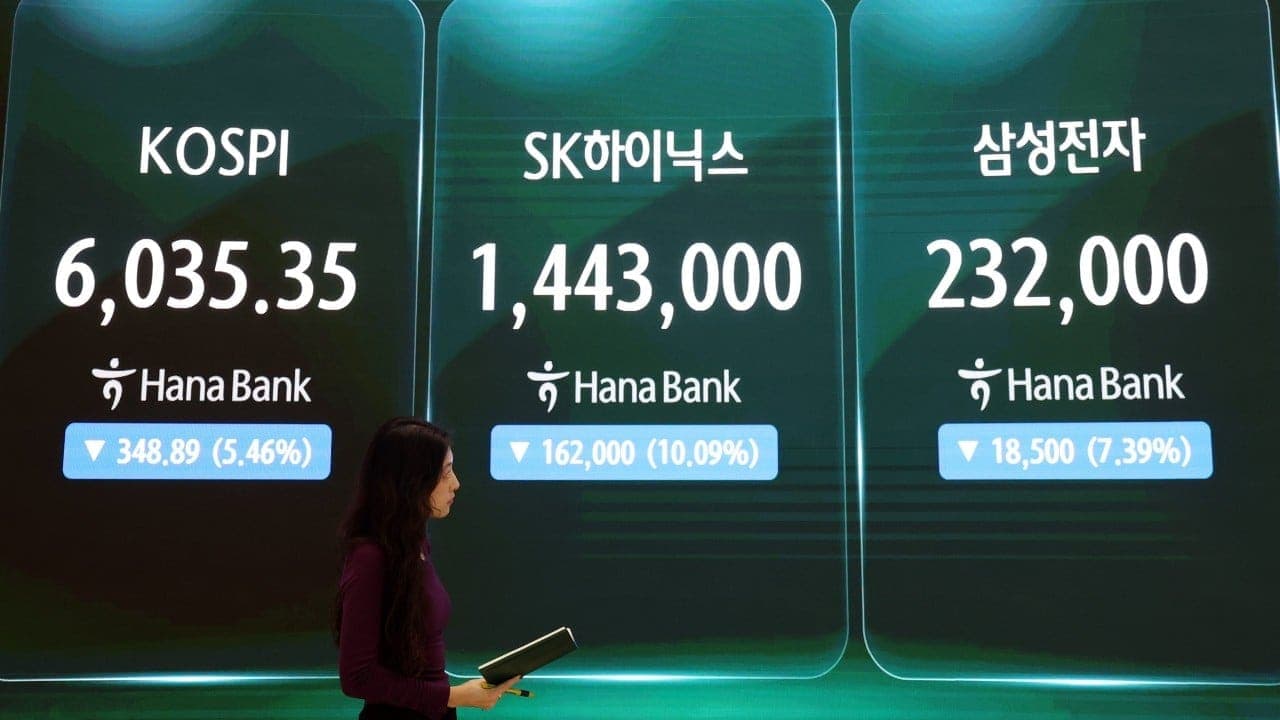
The Sell-Off That Defied Earnings
Samsung Electronics and SK Hynix saw their shares drop 7.4 per cent and 10.1 per cent respectively in Seoul on Tuesday, capping a multi-day retreat that also pulled down Chinese competitor ChangXin Memory Technologies. The declines came as a surprise to many observers, arriving in the same week that both Korean firms posted robust quarterly results driven by elevated memory pricing tied to artificial intelligence workloads.
The divergence between strong operational performance and investor sentiment points to a deeper concern: whether the current pricing environment for high-bandwidth memory and DRAM can hold as production capacity expands and hyperscale buyers begin to push back on cost.
At Opentechwire, we've tracked similar cycles across the semiconductor industry, where brief periods of supply tightness and pricing power give way to overcapacity and margin compression. The memory sector's exposure to capital-intensive fab expansion makes it particularly vulnerable to these swings, and the current sell-off suggests that institutional investors are positioning for a return to that pattern.
What's Driving the Discount
The immediate catalyst appears to be forward guidance. Both Samsung and SK Hynix have signalled plans to ramp production of high-bandwidth memory (HBM) and DDR5 modules, responding to procurement commitments from hyperscalers building out AI inference infrastructure. That capacity, however, is expected to come online in volume during the second half of next year, precisely when current supply agreements may be up for renewal.
Analysts tracking the sector note that pricing for HBM3E, the latest generation of stacked memory used in AI accelerators, has begun to plateau after months of sequential increases. Spot prices for commodity DRAM have also softened slightly in recent weeks, though they remain well above the trough levels seen in early 2024.
The concern is not that demand will collapse, but that the gap between supply and demand will narrow enough to erode the pricing power that memory makers have enjoyed over the past four quarters. Hyperscale buyers, who account for the majority of HBM purchases, have historically been aggressive negotiators once they perceive that supply constraints are easing.
China's Role in the Equation
ChangXin Memory Technologies, which has emerged as a credible domestic alternative for Chinese cloud providers, adds another layer of complexity. The company has been ramping production of DDR4 and DDR5 modules at its Hefei fab, and while it does not yet manufacture HBM at scale, its growing presence in the commodity DRAM market puts additional pressure on global pricing.
CXMT's shares have mirrored the declines in Seoul, reflecting investor concern that increased output from Chinese fabs will accelerate the return to more competitive pricing dynamics. The company benefits from policy support and captive demand within China's domestic cloud infrastructure build-out, giving it some insulation from margin pressure. But its expansion plans are also a signal to the broader market that supply is set to increase faster than many had anticipated six months ago.
Export controls on advanced semiconductor manufacturing equipment have slowed CXMT's ability to move into leading-edge processes, but they have not prevented the company from scaling production of older-generation memory that still commands significant market share in consumer electronics, automotive, and edge computing applications.
The AI Inference Bet
Memory demand tied to AI training remains robust. Large language models and diffusion-based image generators require enormous amounts of high-bandwidth memory during the training phase, and that workload has been a tailwind for Samsung and SK Hynix throughout 2025 and into this year.
Inference, however, presents a different demand profile. Deploying trained models at scale requires memory, but the per-unit memory intensity is lower, and the cost sensitivity of inference workloads is higher. As AI applications move from research labs into production environments serving millions of users, the buyers of that infrastructure are under pressure to reduce the cost per query.
This shift in the composition of AI demand may be contributing to investor caution. If the next wave of memory procurement is driven more by inference than training, the pricing umbrella that has protected margins could begin to close. Hyperscalers have already begun deploying custom inference accelerators with lower memory bandwidth requirements, and that trend is likely to continue as workloads mature.
Capital Expenditure and the Cycle Ahead
Samsung and SK Hynix have both announced significant capital expenditure plans for the next 18 months, focused on expanding HBM production and advancing to the next node of DRAM process technology. Those investments are necessary to maintain competitiveness, but they also lock the companies into a cycle of capacity addition that can be difficult to slow once demand softens.
Memory chipmakers operate in a capital-intensive, cyclical industry where timing is everything. Expanding capacity during a period of strong pricing can yield high returns, but if that capacity comes online just as demand growth decelerates or competitors add their own capacity, the result is often a sharp correction in both prices and margins.
The current sell-off suggests that investors are pricing in that risk. Quarterly earnings may remain strong through the end of this year, but the forward view is cloudier. The question is not whether AI will continue to drive memory demand, but whether that demand will grow fast enough to absorb the supply that is already committed.
What Comes Next
For now, memory chipmakers are maintaining their guidance and emphasising the structural nature of AI-driven demand. Executives at both Samsung and SK Hynix have pointed to multi-year procurement agreements with hyperscalers as evidence that the current cycle is different from past boom-and-bust patterns.
But the equity market is rarely swayed by reassurances alone. Investors have seen similar narratives play out before, and the memory sector's history of overcapacity and price wars makes scepticism the default position. The coming quarters will test whether the AI boom represents a genuine shift in demand dynamics or simply a higher peak in a familiar cycle.
At Opentechwire, we expect to see continued volatility in memory chip valuations as the market digests each new round of capacity announcements and pricing data. The underlying technology trends remain strong, but the financial dynamics of the sector are shaped as much by supply discipline as by end-market demand. And on that front, the signals are decidedly mixed.