May Mobility Takes the Robotaxi Model Public in $1.4 Billion SPAC Merger
The Michigan-based autonomous vehicle firm is betting Wall Street will embrace its asset-light, licensing-first approach to self-driving ride-hailing.
A Different Kind of Autonomy Play
May Mobility announced its intention to merge with special purpose acquisition company ACP Holdings Acquisition Corp., a transaction that values the autonomous vehicle operator at $1.4 billion and could inject more than $300 million into the business, according to May Mobility. The deal structures around a $120 million private investment in public equity alongside up to $217 million held in ACP Holdings' trust account, though standard SPAC redemption rights mean the final cash infusion may shrink.
What sets this listing apart is scope. Once the merger closes, May Mobility will become the first publicly traded US company devoted exclusively to autonomous ride-hailing. That framing deliberately excludes Tesla and Rivian, which sell consumer vehicles; Alphabet's Waymo, embedded inside a tech conglomerate; and Aurora and Kodiak, both freight-focused. The positioning frames a clear question for investors: is there appetite for a pure-bet on robotaxis, stripped of adjacent revenue lines or corporate shelter?
Licensing Autonomy, Not Owning Fleets
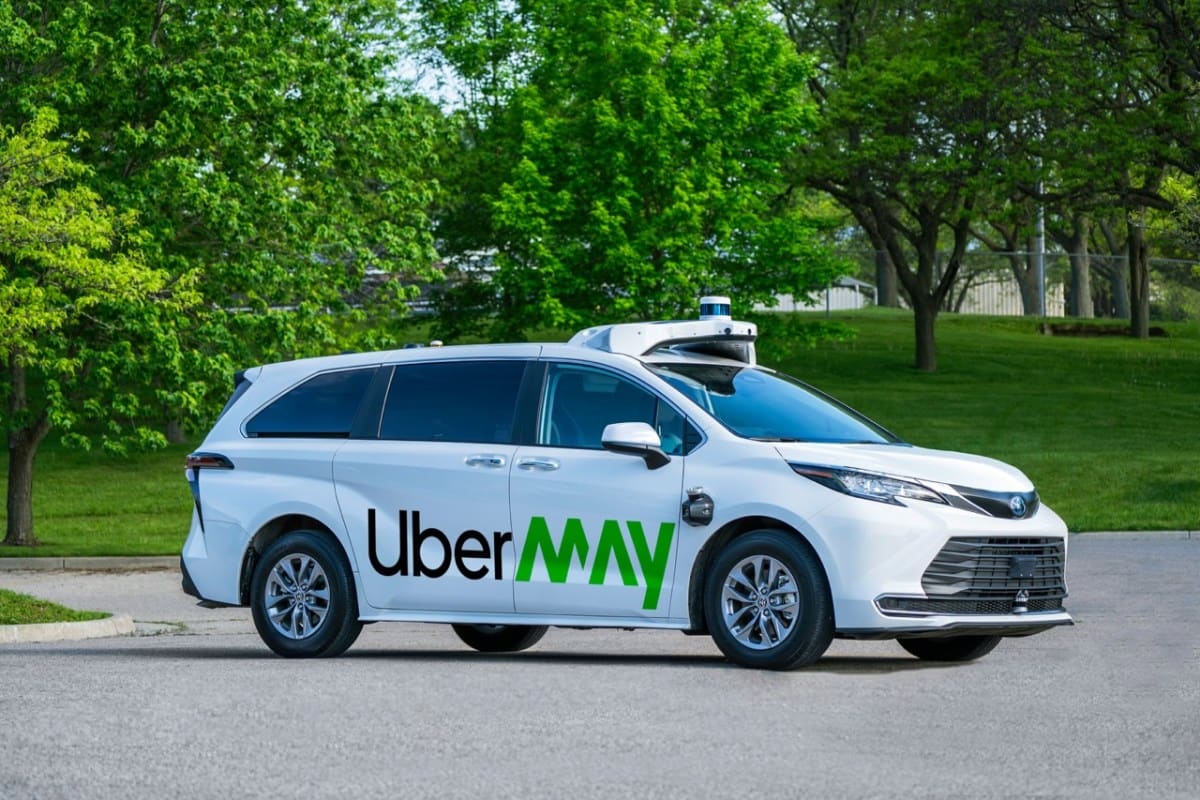
Founded in 2017, May Mobility has pursued what it calls an asset-light model. Rather than own and operate robotaxi fleets directly, the company sells autonomous-enabled Toyota Siennas to fleet partners, retaining control over remote supervision infrastructure and over-the-air software updates. In return, May Mobility collects either fixed licensing fees or per-trip royalties. The pitch is capital efficiency: partners carry vehicle ownership risk while May Mobility captures recurring software revenue.
The firm currently runs commercial operations in three US locations. It has integrated with Lyft in Atlanta and offers rides in Eden Prairie and Grand Rapids, both in Minnesota. These deployments generated approximately $10 million in revenue last year, according to May Mobility, against a cash burn of around $93 million. The company has delivered more than 550,000 paid autonomous rides and logged over 1 million miles. A pilot programme launched recently in Japan, and May Mobility expects to begin commercial service in Arlington, Texas, through a partnership with Uber by the end of this year or early 2027.
Capital Allocation and the Safety-Driver Question
May Mobility said proceeds from the transaction will fund expanded research and development, particularly work aimed at removing safety drivers from its vehicles entirely. The company also intends to invest in supply-chain optimisation to lower bill-of-materials costs per vehicle and to support new geographic launches, some of which it plans to announce later this year.
At Opentechwire, we've tracked the uneven trajectory of AV SPAC mergers since 2021. Several high-profile transactions delivered underwhelming post-merger performance, often because revenue timelines stretched and operating losses widened faster than capital markets tolerated. May Mobility enters this environment with modest but real revenue, a deployed fleet, and a licensing model that theoretically decouples revenue growth from the capital intensity of fleet expansion. Whether that decoupling holds under public-market scrutiny remains an open test.
A Benchmark for Robotaxi Economics
The merger with ACP Holdings, an entity established by Houston-based investment management firm Atlas Credit Partners, offers Wall Street its first pure-play proxy for autonomous ride-hailing economics in the United States. Waymo operates within Alphabet's sprawling portfolio; Cruise, despite its GM backing, has faced operational setbacks. May Mobility's licensing-first model presents a structural alternative, one that prioritises margin over scale in the near term.
But the model also carries risk. Fleet partners must be willing to purchase vehicles outright and absorb depreciation, insurance, and maintenance while May Mobility retains software control. That arrangement works when utilisation is high and per-trip economics are positive. If utilisation sags or regulatory costs spike, partners may baulk at vehicle purchases, crimping May Mobility's sales pipeline. The company's ability to sign and retain partners, particularly in new markets, will be a leading indicator for investors.
What the Deal Signals About AV Funding
The timing of the transaction is notable. Venture funding for autonomous vehicle companies has contracted since 2022, and the SPAC mechanism itself fell sharply out of favour after a wave of de-SPAC failures. That May Mobility is moving forward suggests either renewed confidence in near-term robotaxi commercialisation or a narrowing set of alternatives for late-stage private AV firms seeking liquidity.
The $1.4 billion valuation sits well below the peaks commanded by AV companies during the 2020-2021 funding surge, but it also reflects a company with live operations, paying customers, and a defined path to removing human supervision. For investors, the question is whether May Mobility's licensing model can scale profitably before cash reserves deplete and whether the public markets will grant the company the patience required to reach that inflection point.
The deal is expected to close in the coming months, subject to shareholder approvals and regulatory clearances. Once complete, May Mobility will trade on a US exchange, and its quarterly filings will offer the market an unprecedented window into the unit economics, customer acquisition costs, and margin structure of a pure-play robotaxi operator.