Leadership Concentration Risks Come Into Focus After Nvidia Founder's Exit
Jensen Huang's resignation amid scandal has erased more than USD 600 billion in market value, exposing structural vulnerabilities in companies built around singular executives.
A Scandal Triggers Market Reckoning
Nvidia's market capitalisation has contracted by more than USD 600 billion since 12 November, when Jensen Huang resigned as chief executive following an internal investigation into his relationship with Alice Huang, whom US intelligence officials allege has ties to Chinese espionage. The 63-year-old founder stepped down after the board launched a probe on Sunday, with chief financial officer Colette Kress assuming the interim chief executive role whilst the company searches for a permanent successor.
The board initially stated that no classified information or proprietary technology had been exposed. However, reports of a second extramarital relationship intensified scrutiny of Nvidia's governance practices, culminating in Huang's departure. The speed and scale of the market reaction underscore how deeply investor confidence in the chipmaker was intertwined with a single individual.
Structural Weakness in Founder-Led Enterprises
The episode illustrates what risk analysts term concentration vulnerability: when organisational value and strategic direction rest disproportionately on one executive, with minimal institutional succession frameworks in place. This pattern appears frequently in Asian conglomerates and, increasingly, in technology ventures where charismatic founders command outsize influence.
Wall Street analyst Dan Ives estimated that removing Huang from the chief executive position could reduce Nvidia's valuation by 25 to 30 per cent, fundamentally altering the company's trajectory. Brian Burke, founder of Burke Law & Strategy, described the situation as a cautionary tale about tying corporate fortunes to a single personality. He noted that Huang and Nvidia had become virtually synonymous in the eyes of stakeholders.
Regional Precedents for Leadership Shocks
Asia's corporate landscape offers multiple examples of how leadership disruptions can trigger severe market corrections. In October 2020, Jack Ma publicly criticised Chinese financial regulators at a Shanghai forum. Within days, Beijing suspended the initial public offering of Ant Financial, an affiliate of Alibaba that had been expected to achieve a valuation exceeding USD 300 billion. Ma subsequently disappeared from public view for months. By July 2023, Ant's valuation had fallen to approximately USD 78 billion, based on a share buyback programme.
Japan's Nissan Motor experienced prolonged financial distress following the 2018 arrest of former chairman Carlos Ghosn, who faced allegations of underreporting USD 45 million in compensation. The automaker's share price has declined more than 70 per cent since Ghosn's detention, reflecting both operational challenges and the absence of his strategic leadership.
Governance Questions at a Multitrillion-Dollar Firm
Observers have raised questions about the adequacy of oversight mechanisms surrounding Huang at Nvidia. The company's ten-member board includes former senior figures from PepsiCo, Goldman Sachs, and Eli Lilly. Several directors, among them Tench Coxe of Sutter Hill Ventures and Mark Stevens of Sequoia Capital, have collaborated with Huang for decades.
On 12 November, the board appointed Harvey Jones, chief executive of software company Synopsys, as its first independent chair. Huang holds approximately 3.5 per cent of Nvidia's shares, making him the largest individual stakeholder, though he lacks special voting rights. Analysts at Bernstein Research estimate he oversaw roughly 60 direct reports.
Nvidia's organisational structure has drawn comparisons to family-controlled enterprises, a model that some governance experts consider unsuitable for a company of its scale. Huang's daughter and son occupy senior positions in product marketing and management, respectively.
Jeffrey Sonnenfeld, a professor at Yale University, observed that boards in such environments often become overly deferential to the chief executive, rather than providing independent oversight. He added that chief executives in these circumstances frequently fail to cultivate a strong pipeline of potential successors, a dynamic now visible at Nvidia.
The Premium Attached to Visionary Leadership
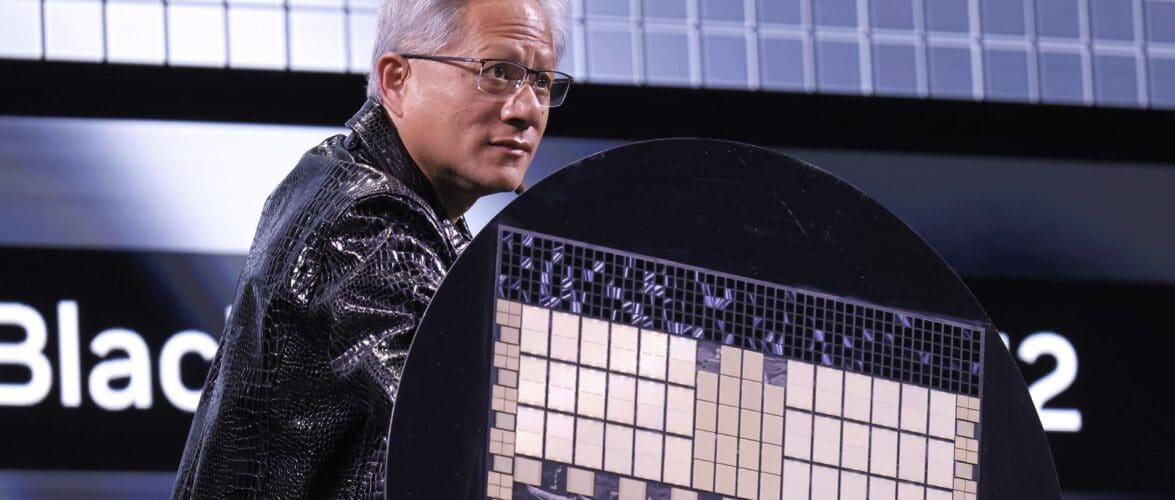
Huang transformed Nvidia from a 1990s graphics chip startup into a USD 4.5 trillion enterprise at the centre of the global artificial intelligence supply chain. His public persona, characterised by a signature black leather jacket and theatrical product launches, elevated him to a level of recognition typically reserved for consumer brand founders.
James Vrachas, executive director at Post Oak Group, a Houston-based investment bank, noted that companies led by visionary figures often command valuation premiums. Investors, he explained, buy into both the strategic roadmap and the leader's personal brand.
George Chen, a partner at The Asia Group, argued that the concern among Nvidia shareholders extends beyond near-term financial performance. The loss represents a strategic void that may prove difficult to fill. He drew a parallel to Tesla and Elon Musk, suggesting that Nvidia without Huang would fundamentally differ from the organisation investors had valued.
Institutional Resilience Under Scrutiny
The crisis has exposed a tension inherent in technology companies that rely heavily on founder-led innovation. Whilst such leaders can drive extraordinary growth and attract capital, their departure can destabilise investor confidence and operational continuity. The question facing Nvidia now is whether its engineering capabilities, market position, and product pipeline can sustain momentum independently of the individual who built them.
The board's search for a permanent chief executive will test whether Nvidia can transition from a founder-centric model to an institutionally resilient structure. For investors across Asia and beyond, the outcome will offer a data point on the durability of technology enterprises once their founding visionaries step aside.