Kawasaki Heavy Bets on Domestic AI Platform to Power 2030 Humanoid
The Japanese industrial giant plans to integrate a homegrown physical AI system into its Kaleido android, marking a strategic pivot from reliance on foreign robotics infrastructure.
A Decade-Long Bet on Humanoid Form
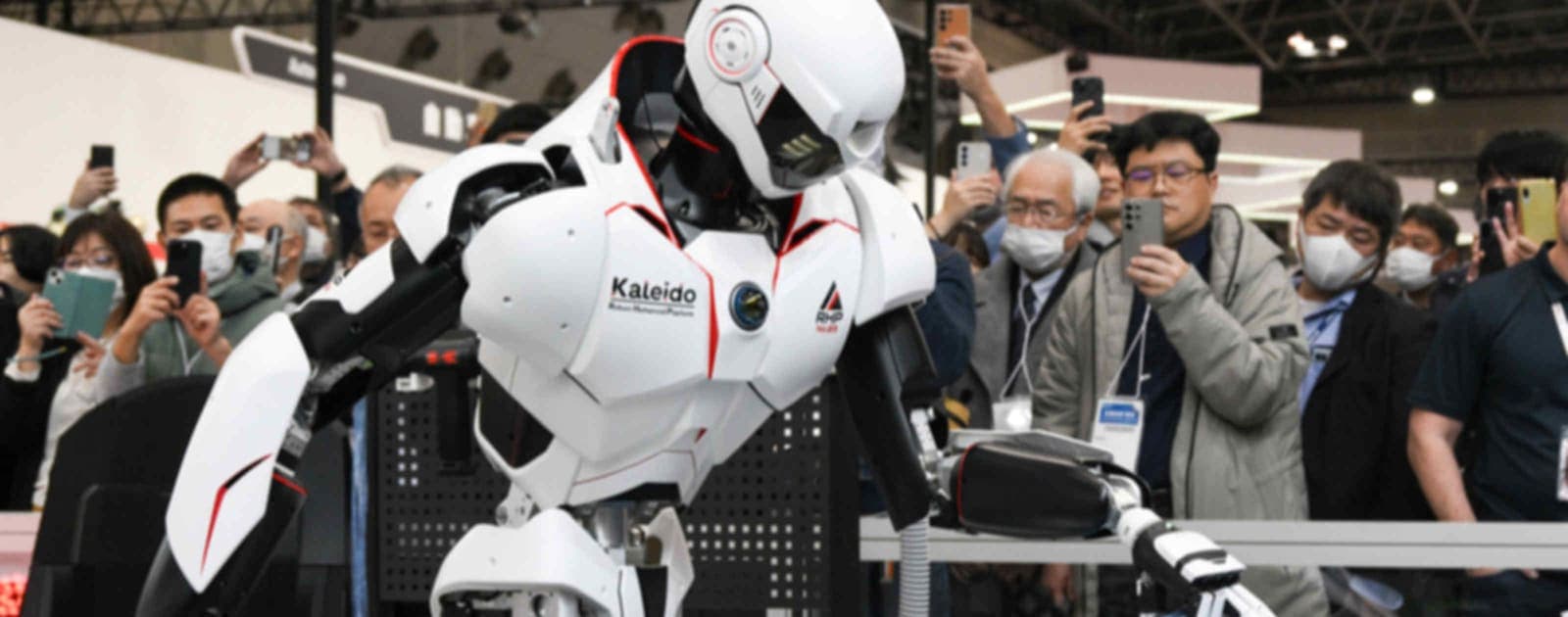
Kawasaki Heavy Industries has spent more than a decade refining Kaleido, its humanoid robot prototype that first emerged from the company's labs in 2015. Now the conglomerate is setting a concrete timeline: by 2030, it expects to field a version capable of operating without human oversight, powered entirely by artificial intelligence decision-making.
The target date reflects both technical ambition and market pressure. Humanoid platforms have moved from research curiosities to commercial products in automotive assembly lines and warehouses across Asia and North America. Kawasaki's timeline puts it in direct competition with Tesla's Optimus programme, China's Unitree H1, and a cohort of venture-backed startups racing to prove humanoid economics at scale.
What sets Kawasaki's roadmap apart is the AI layer. The company intends to build Kaleido around a physical AI platform currently under development by Noetra, a Japan-based research entity. Physical AI refers to systems that learn to manipulate objects and navigate three-dimensional environments through embodied interaction, rather than purely vision or language tasks. The technology remains nascent; most deployed humanoids today rely on pre-programmed motions or teleoperation for complex tasks.
The Supply Chain Calculus
Kawasaki's choice to anchor its humanoid strategy on domestic AI development carries strategic weight. Over the past three years, Japanese robotics manufacturers have confronted tightening access to Chinese components and growing unease over dependence on US-controlled software stacks. Export controls on advanced semiconductors and machine-learning accelerators have added friction to cross-border collaboration.
Noetra's platform, details of which remain sparse, is described as purpose-built for physical reasoning and real-time control. If successful, it would offer Kawasaki a vertically integrated alternative to licensing frameworks from Nvidia, Google, or Chinese AI labs. That autonomy matters in sectors where data sovereignty and supply resilience are procurement criteria: healthcare logistics, defence adjacent applications, and critical infrastructure maintenance.
At Opentechwire, we've tracked similar regionalisation moves across Asia's robotics value chain. Fanuc has partnered with Google on AI-assisted welding systems, while Yaskawa Electric is shifting production capacity out of China and closer to US customers. Kawasaki's humanoid push fits a broader pattern: incumbents hedging against geopolitical volatility by building redundant capability at home.
From Factory Floor to General Purpose
Kawasaki Heavy is better known for industrial robots that weld motorcycle frames and load shipping containers. Humanoid machines represent a category shift. Unlike fixed-arm manipulators optimised for repetition, humanoids are designed for unstructured settings: navigating hospital corridors, climbing ladders, operating tools designed for human hands.
The company has already deployed logistics robots in Japanese hospitals, claiming time savings equivalent to 2,700 hours of human labour. Those systems, however, are wheeled platforms following predetermined routes. A fully autonomous humanoid would need to perceive obstacles, reason about tasks, adapt to changing instructions, and recover from failures without operator intervention.
The technical gap between those capabilities is substantial. Humanoid balance and dexterity remain expensive to achieve in hardware; inference latency and energy draw constrain how much on-device AI a mobile platform can run. Kawasaki's 2030 target assumes progress on multiple fronts: lighter actuators, more efficient neural architectures, faster edge inference chips, and training datasets large enough to generalise across tasks.
Market Timing and Competitive Pressure
Kawasaki is not alone in eyeing the end of the decade. Toyota has announced plans to deploy 400,000 robots, many of them collaborative humanoid or semi-humanoid designs, across its manufacturing footprint. In China, consumer-grade exoskeleton robots and household humanoids are entering pilot programmes, backed by rapid iteration cycles and state-aligned capital.
The 2030 window also aligns with expected advances in battery energy density and the maturation of transformer-based models fine-tuned for embodied tasks. If physical AI platforms prove viable, the economic case for humanoids strengthens: a single platform could learn welding, picking, inspection, and assembly from shared datasets, reducing per-task training overhead.
Yet the business model remains unproven at scale. High upfront costs, maintenance complexity, and limited task flexibility have kept humanoid adoption confined to pilot projects and flagship deployments. Kawasaki will need to demonstrate not just technical capability but total cost of ownership that competes with human labour or specialised automation.
The Noetra Variable
Noetra's role in Kawasaki's roadmap is the least transparent piece. Physical AI requires vast amounts of real-world interaction data, compute infrastructure for training, and domain expertise in robotics, control theory, and machine learning. Whether Noetra can deliver a platform competitive with well-funded efforts in Silicon Valley or Shenzhen remains an open question.
Japan's AI research ecosystem is fragmented compared to the concentrated resources of US hyperscalers or China's national champions. Noetra will need to either aggregate datasets across multiple hardware partners or develop simulation-to-reality transfer techniques robust enough to substitute for physical training at scale. Both paths are research-intensive and capital-intensive.
If the partnership succeeds, Kawasaki gains a defensible moat in a market where software increasingly determines hardware value. If it stumbles, the company risks arriving late to a category already dominated by platforms with larger training corpuses and faster iteration cycles.
What Autonomy Means in Practice
The phrase "fully autonomous" merits scrutiny. In robotics, autonomy exists on a spectrum. Level 3 autonomy might mean a humanoid can complete a structured task, like moving boxes from point A to point B, without step-by-step commands. Level 5 would imply the machine can independently identify tasks, prioritise them, and execute across novel environments without human oversight.
Kawasaki has not specified which definition it is targeting. The distinction matters for regulation, liability, and market fit. A hospital logistics humanoid operating under human supervision faces different certification hurdles than one making autonomous decisions about patient-adjacent tasks. Industrial settings may tolerate higher autonomy if safety protocols are embedded; consumer or public-facing applications will face stiffer scrutiny.
The 2030 timeline suggests Kawasaki is aiming for somewhere in the middle: robust task-level autonomy within defined domains, rather than general-purpose intelligence. That would be enough to unlock commercial deployment in factories, warehouses, and institutional settings where the environment can be partially controlled.
Regional Context and Strategic Hedging
Kawasaki's humanoid ambitions sit within a larger recalibration of Asia's technology strategy. Japan's government has prioritised dual-use technology development, recruiting overseas expertise and channelling subsidies toward domestic semiconductor and AI capabilities. The country's demographic trajectory, with a shrinking workforce and rising care burden, makes automation economically urgent.
Neighbouring South Korea and China are pursuing parallel paths. South Korea's conglomerates are investing in service robots and humanoid platforms for elder care. China's robotics sector benefits from vertical integration, low-cost manufacturing, and a permissive regulatory environment for pilot deployments. Japan's advantage lies in precision manufacturing, process discipline, and decades of industrial robotics experience, but it trails in software agility and AI talent density.
Kawasaki's choice to build on a domestic AI platform reflects that tension. It is a hedge against supply chain disruption and a bet that Japan's engineering culture can compensate for smaller datasets and less capital. Whether that calculus holds depends on execution over the next four years and the pace of progress elsewhere.
Execution Risk and Open Questions
Four years is a compressed timeline in robotics hardware development. Kawasaki must finalise mechanical design, validate safety systems, integrate Noetra's AI stack, conduct field trials, and navigate regulatory approval, all while the underlying AI technology continues to evolve. Any delay in the platform's readiness cascades into Kaleido's schedule.
The company has not disclosed pricing, target customers, or production volume. Those details will determine whether the 2030 launch is a flagship demonstration or the start of commercial scale. Humanoid economics improve with volume, but volume requires proven reliability and a clear return on investment for buyers.
Kawasaki also faces the innovator's dilemma. Its core business remains industrial automation with long replacement cycles and risk-averse customers. A humanoid platform demands faster iteration, software-first thinking, and tolerance for early-stage imperfection. Bridging that cultural gap will be as challenging as the technical roadmap.
The 2030 target is ambitious, and the dependencies are numerous. But it signals that one of Japan's industrial anchors sees humanoid robots not as a research project but as a coming product category, one where the AI beneath the metal will matter as much as the engineering within it.