JD Logistics Plans 3 Million Robots Across China as Warehouse Automation Accelerates
Beijing-based e-commerce firm commits to five-year robotics procurement while pledging retraining for frontline workers facing displacement
A Nationwide Automation Blueprint
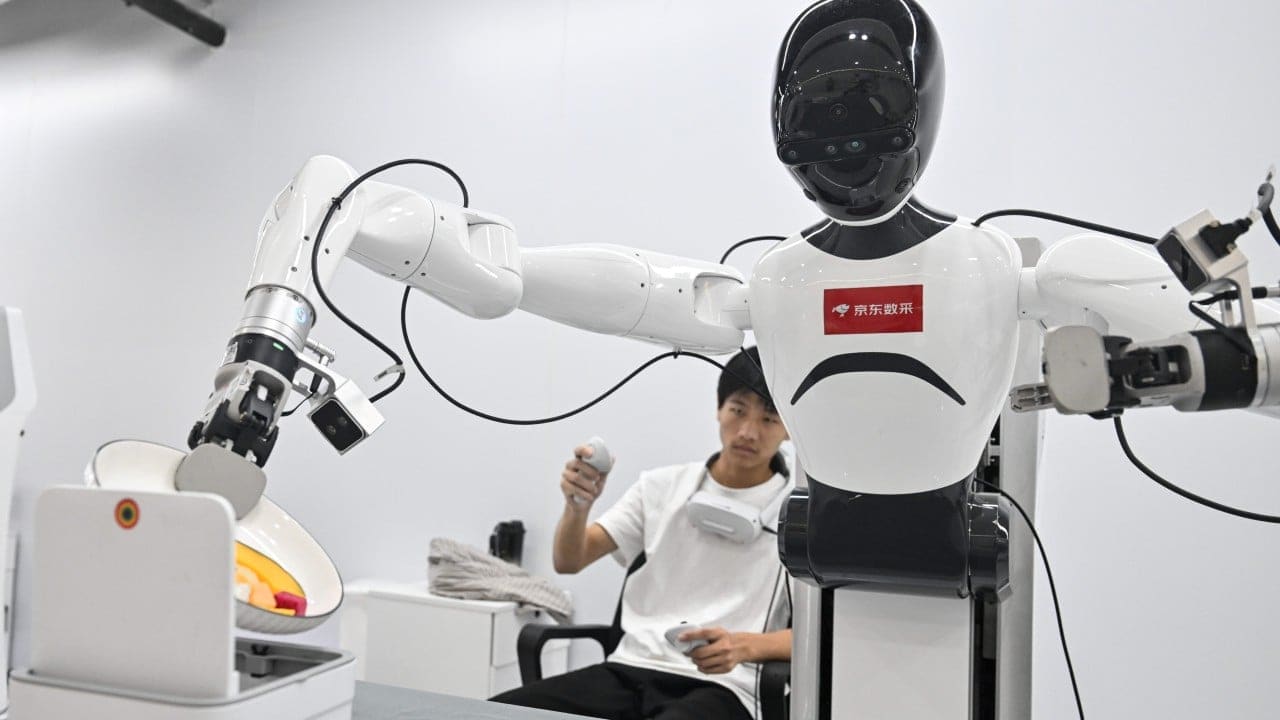
JD.com's logistics division announced a five-year robotics procurement plan at a Beijing event on Wednesday, targeting 3 million robots, 1 million autonomous vehicles, and 100,000 delivery drones for deployment across its nationwide fulfilment network. The company introduced its Wolf Robot series, designed for warehouse tasks ranging from goods-to-person picking to sortation and pallet handling, as the centrepiece of the automation push.
The scale of the commitment places JD Logistics among the most ambitious corporate buyers of warehouse robotics globally. For context, the entire installed base of logistics robots across China stood at roughly 1.2 million units as of mid-2025, according to data from the China Mobile Robot Alliance. JD's procurement alone would more than double that figure, assuming deployment proceeds on schedule.
At DailyTechWire, we've tracked similar automation programmes at Alibaba's Cainiao and SF Express, but none have articulated a robotics target of this magnitude. The move reflects both the margin pressures squeezing Chinese e-commerce operators and the maturation of domestic robotics supply chains capable of delivering units at the volumes JD requires.
Workforce Transition and the Retraining Pledge
JD Logistics currently employs over 400,000 workers, with the majority engaged in warehousing, sorting, and last-mile delivery. The company stated it would retrain couriers and warehouse staff for "technical roles" as automation displaces frontline tasks, though it did not specify timelines, budget, or which roles would absorb the transitioning workforce.
The retraining promise echoes similar commitments made by Alibaba in 2023 and Amazon in 2021, both of which faced criticism for the gap between announced programmes and actual job placement outcomes. Labour economists we've consulted note that retraining at this scale typically requires multi-year commitments, partnership with vocational institutions, and wage guarantees during the transition period. JD has not yet detailed any of these elements.
China's courier workforce has grown to over 5 million people, concentrated in a handful of major logistics providers. Any large-scale displacement at JD would ripple through labour markets in Tier 2 and Tier 3 cities where the company operates major fulfilment centres. The social dimension of automation is particularly sensitive in China, where employment stability remains a policy priority amid slower GDP growth.
The Wolf Robot Series and Domestic Supply Chains
The Wolf Robot line represents JD's shift from relying on external robotics vendors to co-developing proprietary platforms. The company has partnered with Chinese robotics firms including Geek+ and Quicktron, both of which have expanded production capacity in anticipation of multi-year orders from e-commerce operators.
The robots are designed for modular deployment, allowing JD to retrofit existing warehouses without full greenfield builds. This is critical for a network that spans over 1,500 warehouses and sorting centres, many of which were constructed before autonomous mobile robots became standard infrastructure.
JD Logistics has also signalled interest in autonomous trucking for inter-city freight, though regulatory constraints remain. China's Ministry of Transport permits autonomous vehicle trials on designated routes but has not yet approved fully driverless commercial operations for freight. The 1 million unstaffed vehicles in JD's plan likely include a mix of autonomous forklifts, yard tractors, and short-haul delivery vehicles, rather than long-haul trucks.
Margin Pressure and the Economics of Automation
Chinese e-commerce operators face intensifying margin compression. Average logistics cost per parcel has fallen from 4.2 yuan in 2020 to 3.1 yuan in 2025, according to figures from the China Federation of Logistics and Purchasing. At the same time, labour costs have risen by an average of 6 per cent annually, driven by wage growth and social insurance contributions.
Robotics offers a path to decouple labour cost inflation from operational expenses. Industry analysis suggests that warehouse robots achieve payback in 18 to 24 months under current utilisation rates, assuming three-shift operation and a unit cost of approximately 80,000 yuan per robot. JD's scale gives it negotiating leverage to push that unit cost lower, potentially shortening payback periods further.
However, the capital intensity of the plan is substantial. At 80,000 yuan per robot, 3 million units would require 240 billion yuan in procurement alone, excluding integration, maintenance, and software infrastructure. JD has not disclosed how it will finance the rollout, though the company generated 28 billion yuan in operating cash flow in 2025, leaving room for phased investment.
Regional Competition and the Automation Arms Race
JD's announcement arrives as regional competitors accelerate their own automation strategies. Cainiao, Alibaba's logistics affiliate, operates over 30 fully automated warehouses and has committed to deploying 500,000 autonomous mobile robots by 2027. SF Express, China's largest courier by revenue, has invested heavily in sortation automation and operates a fleet of cargo drones for rural delivery.
The competition extends beyond China. Southeast Asian e-commerce players including Shopee and Lazada are expanding fulfilment infrastructure in Vietnam, Thailand, and Indonesia, with automation a core component of their buildouts. JD has logistics operations in Indonesia and Thailand, and the robotics platform developed for China could serve as a template for those markets, though labour cost differentials make the economics less compelling in the near term.
At DailyTechWire, we see the JD announcement as part of a broader recalibration in Chinese tech. With regulatory pressure constraining consumer-facing expansion, companies are redirecting capital toward operational efficiency and B2B services. Logistics automation sits at the intersection of both, offering margin relief while positioning JD as an infrastructure provider to third-party merchants.
Open Questions on Deployment and Execution
Several aspects of the plan remain unclear. JD has not specified whether the 3 million robots will be procured outright, leased, or acquired through robotics-as-a-service arrangements. The company has experimented with all three models in pilot programmes, and the final structure will have significant implications for capital allocation and balance sheet impact.
Deployment sequencing is another variable. JD could prioritise its highest-volume fulfilment centres, achieving quick wins in major metropolitan areas, or pursue a geographically distributed rollout to maintain service levels across its network. The former approach maximises short-term ROI; the latter aligns with JD's brand positioning around nationwide coverage.
Regulatory risk also looms. China's State Administration for Market Regulation has increased scrutiny of labour practices in the gig economy, and large-scale automation could invite policy intervention if job losses concentrate in specific regions. JD's retraining commitment may be as much about regulatory optics as workforce development.
The five-year timeline is aggressive but not unprecedented. Amazon deployed over 500,000 mobile robots across its network between 2012 and 2022, though that rollout benefited from early mover advantages and a more permissive regulatory environment. JD will need to navigate supply chain bottlenecks, integration complexity, and workforce transition challenges simultaneously.
If executed, the plan would position JD Logistics as one of the most automated large-scale logistics networks globally, with implications for labour markets, robotics supply chains, and competitive dynamics across Chinese e-commerce. The next 18 months will clarify whether the company can translate ambition into operational reality.