Japan Presses US AI Labs to Open Cybersecurity Tools for Critical Infrastructure
Tokyo wants Anthropic and OpenAI to widen access to vulnerability-detection models as cyber threats multiply across power grids, transport networks and finance
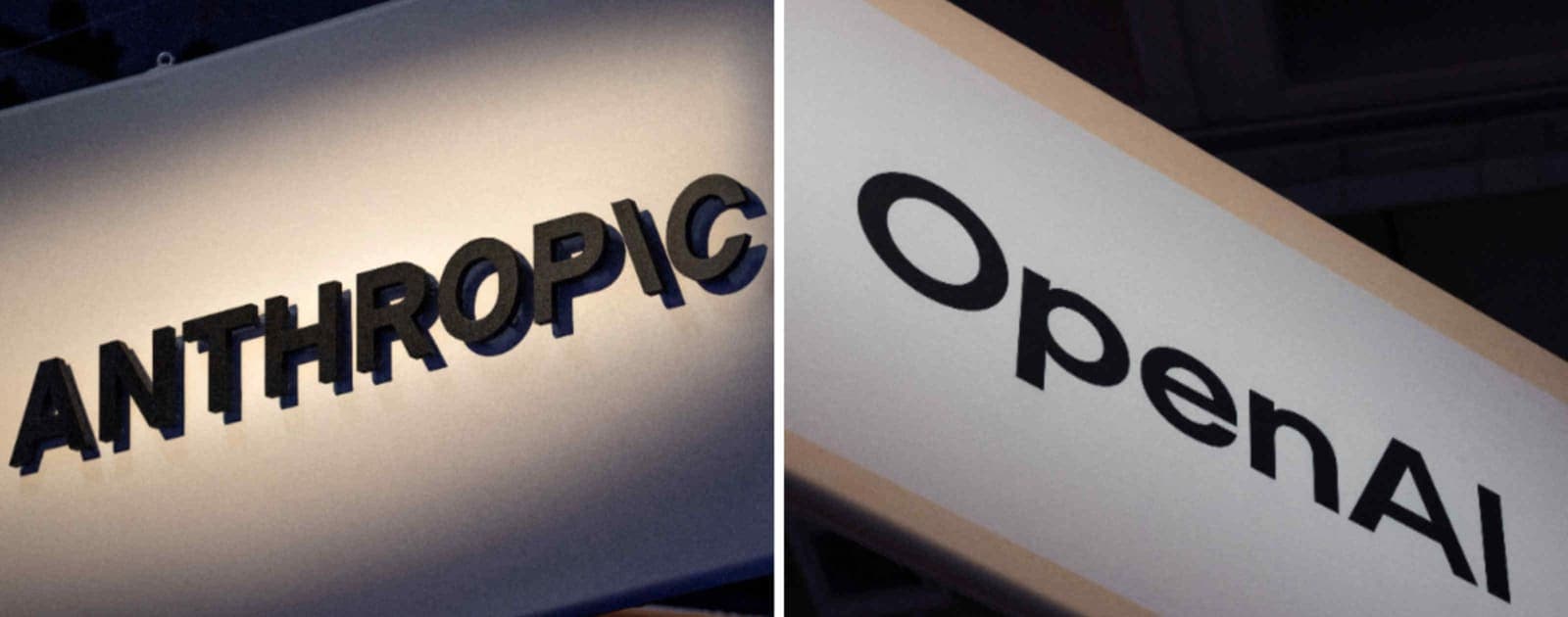
Tokyo Seeks Expanded AI Tool Access
Japan's government has formally requested that Anthropic and OpenAI provide broader access to their specialised artificial intelligence models designed to identify cybersecurity vulnerabilities, according to new information obtained by local sources. The move signals Tokyo's intention to deploy these tools across operators of critical national infrastructure, from power grids to transport networks and financial systems.
The request centres on advanced models that can systematically probe software and networks for weaknesses before malicious actors exploit them. Unlike general-purpose large language models, these cybersecurity-focused systems are trained to reason about attack surfaces, reverse-engineer exploit chains and simulate adversarial behaviour. Both Anthropic's Claude and OpenAI's GPT-4 family include capabilities that can assist security teams, but their most potent features remain gated behind enterprise tiers or restricted API access.
Japan's approach reflects a broader recognition across Asia that critical infrastructure has become a live battlefield. The country has weathered a sustained uptick in cyberattacks targeting industrial control systems, municipal services and logistics hubs. At Opentechwire, we've tracked how nation-state and financially motivated groups have increasingly turned to automation and AI-augmented reconnaissance, compressing the time between vulnerability disclosure and active exploitation from weeks to hours.
Why Japan Wants These Models Now
The urgency stems from three converging pressures. First, Japan's ageing IT workforce in sectors such as utilities and rail cannot keep pace with the volume and sophistication of threats. Second, the country's tightly integrated supply chains mean that a breach at a single logistics node or port operator can cascade across manufacturing, retail and export flows. Third, geopolitical friction in the region has elevated the risk profile for state-sponsored intrusions targeting sensitive data and operational technology.
By encouraging essential infrastructure operators to adopt AI-driven vulnerability scanning, Tokyo hopes to shift from reactive patching to proactive hardening. The models in question can continuously audit codebases, configuration files and network topologies, flagging misconfigurations or zero-day candidates that human analysts might miss. In theory, this creates a moving target for attackers and raises the cost of successful compromise.
Yet access remains a sticking point. Anthropic and OpenAI have historically restricted their most capable cybersecurity features to vetted enterprise customers or government partners, citing dual-use concerns. The same model that helps a defender discover a buffer overflow can help an attacker craft a weaponised payload. Export controls and internal safety protocols mean that even paying customers in certain jurisdictions face longer approval queues or feature limitations.
The Dual-Use Dilemma
Japan's request arrives at a moment when AI safety discourse and national security imperatives are pulling in opposite directions. US export regulations now treat advanced AI systems with certain capability thresholds as controlled items, akin to semiconductor manufacturing equipment or cryptographic software. Both Anthropic and OpenAI maintain compliance teams that evaluate requests from foreign governments, weighing strategic alliance considerations against proliferation risk.
For Tokyo, the calculation is straightforward. Japan is a treaty ally with deep intelligence-sharing arrangements and co-located US military installations. Officials argue that denying or delaying access to defensive AI tools undermines collective security, particularly when adversaries face no such constraints. Chinese and Russian state-linked groups already employ machine learning to optimise phishing campaigns, automate lateral movement and obfuscate command-and-control traffic.
From the vantage point of the AI labs, however, geography is only one variable. Internal red-team exercises at both companies have demonstrated that cybersecurity models can be repurposed for offence with minimal fine-tuning. A model trained to discover SQL injection flaws can generate hundreds of exploit variants in minutes. Publishing or licensing such a system widely increases the probability that it lands in the hands of criminal syndicates or rogue insiders.
What Expanded Access Might Look Like
If Anthropic and OpenAI agree to Tokyo's request, implementation will likely involve a tiered framework. Essential infrastructure operators would gain API access to cybersecurity-specific endpoints, potentially with usage quotas, logging requirements and mandatory incident reporting. The models themselves might be deployed in a sovereign cloud environment within Japan, ensuring that sensitive scan results and network metadata never leave the country.
Japan's Digital Agency and the National Centre of Incident Readiness and Strategy for Cybersecurity would probably oversee onboarding and auditing. Operators in sectors designated as critical, such as electricity generation, water treatment, telecommunications and rail, would receive priority. Smaller firms and municipalities could access a lighter version through a government-subsidised programme, reducing the cost barrier that has historically left regional infrastructure exposed.
Training and integration present separate challenges. AI-driven vulnerability detection requires skilled personnel to triage findings, distinguish true positives from noise and coordinate remediation across legacy and modern systems. Japan's push for expanded access will need to run in parallel with workforce development initiatives, including certifications and tabletop exercises that familiarise security teams with the new tools.
Regional Implications
Japan's move may set a precedent for other US allies in Asia seeking similar arrangements. South Korea, Singapore and Australia have each signalled interest in AI-augmented cyber defence, and all host significant American technology partnerships. If Tokyo secures a favourable agreement, it could serve as a template, complete with compliance guardrails and audit mechanisms that satisfy both the labs' safety teams and Washington's export authorities.
Conversely, a protracted negotiation or outright refusal would likely accelerate Japan's domestic AI development. The government has already committed funding to Sakana AI and other local ventures focused on building sovereign models that do not depend on US approval cycles. While these efforts trail the frontier labs in raw capability, they offer strategic autonomy and may prove sufficient for many infrastructure security tasks.
China's approach provides a contrasting data point. Beijing has mandated that critical infrastructure operators use domestically developed AI tools, citing both security and industrial policy goals. Chinese cybersecurity vendors have integrated large language models into their platforms, though transparency around training data, red-teaming and external validation remains limited. For Japan, the question is whether partnership or self-reliance offers a faster path to resilience.
The Clock Is Ticking
Cyber incidents targeting infrastructure are no longer hypothetical tail risks. In the past year alone, ransomware groups have disrupted hospital networks in Osaka, a logistics software provider serving multiple ports reported a breach that idled container operations for days, and municipal systems in several prefectures went offline following suspected intrusions. Each incident underscores the gap between threat velocity and defensive capacity.
AI-driven vulnerability scanning is not a silver bullet. It cannot compensate for poor patch management, inadequate network segmentation or underfunded security programmes. But it can compress detection cycles, surface blind spots and provide decision-makers with a clearer picture of their risk posture. For a country as densely networked and trade-dependent as Japan, those marginal gains matter.
Whether Anthropic and OpenAI will meet Tokyo's request remains an open question. Both companies face competing demands from governments, enterprises and civil society groups, each with distinct threat models and risk tolerances. The outcome will hinge not only on technical feasibility but on the evolving norms around AI export, dual-use technology and the responsibilities of frontier labs in an increasingly multipolar landscape.
What is clear is that Japan is no longer willing to wait. The next phase of its cyber strategy will be shaped by the decisions made in San Francisco and the corridors of Tokyo over the coming months.