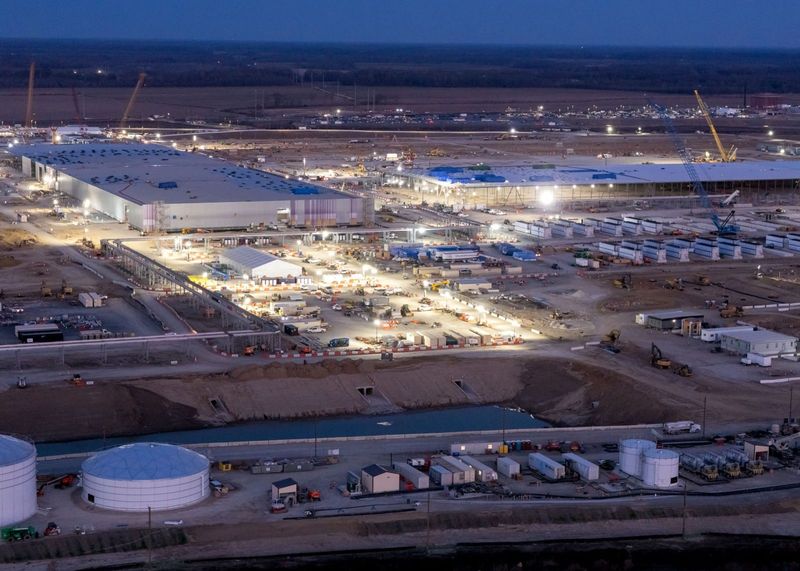
India's Data Centre Push Confronts a Jobs Paradox
New Delhi is betting billions on hyperscale infrastructure, but the facilities promise little direct employment in a nation grappling with what critics call growth without work.
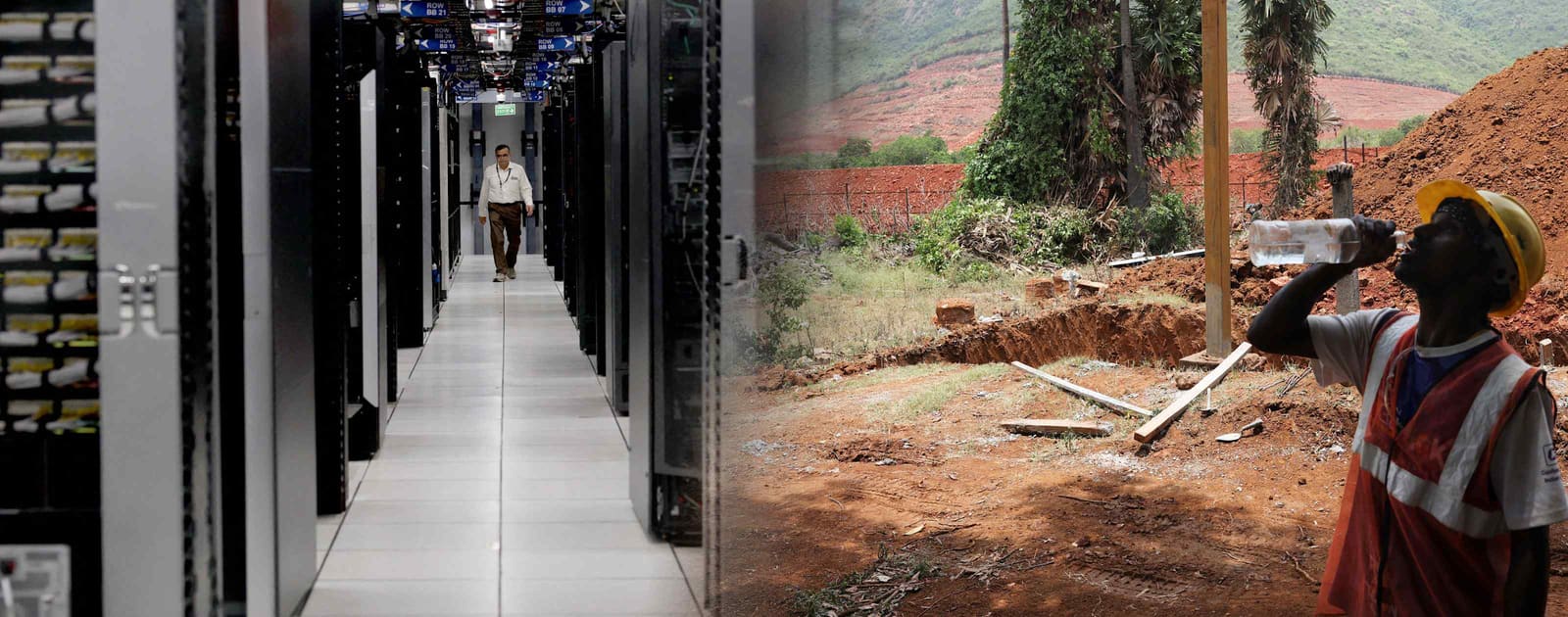
A Mismatch Between Ambition and Employment
India generates roughly one-fifth of global data but hosts only four per cent of worldwide data centre capacity, according to industry assessments. That gap has prompted New Delhi to roll out incentive packages worth billions of rupees, drawing commitments from Amazon, Google, and other hyperscale operators. Officials frame the drive as a path to manufacturing jobs and IT work tied to the broader ecosystem. Yet the facilities themselves - racks of servers in climate-controlled halls - demand far fewer hands than a textile mill or an automotive plant, and that arithmetic is stirring unease in a country where the phrase "jobless growth" has moved from academic journals into street-level political argument.
At Opentechwire, we've tracked similar infrastructure waves across Southeast Asia and watched governments discover that data centre capacity and headcount rarely scale together. India's bet is more explicit: the hope rests not on the server halls but on the supply chains, software services, and edge applications that might cluster around them. Whether that adjacent employment materialises - and at what wage - will determine whether the policy weathers the backlash already gathering.
The Capacity Gap and the Incentive Response
Industry reports place India's share of global data centre capacity at four per cent, a figure that sits awkwardly against the country's population, digital adoption curve, and data generation. Sovereign data-localisation rules, introduced over the past five years, have kept some workloads onshore; low power costs in select states and improving fibre backhaul have made the economics less punitive. Still, latency-sensitive applications - financial settlement, real-time recommendation engines, multiplayer gaming - often route through facilities in Singapore or Sydney, adding milliseconds that matter.
New Delhi's response has been a combination of tax breaks, land at concessional rates, and expedited environmental clearances. Google and the Adani Group are building a facility in Visakhapatnam; Amazon Web Services has announced expansions in Mumbai and Hyderabad; Microsoft has flagged three new availability zones. The government has not published a consolidated figure for the value of incentives, but state-level announcements and corporate filings suggest the total runs into tens of billions of rupees over the next decade.
Why Direct Employment Remains Modest
A modern hyperscale data centre - say, 50 megawatts of IT load - might employ between 100 and 200 people once operational: facility managers, network engineers, security staff, and a rotating shift of technicians. Construction brings a temporary surge - civil contractors, electricians, HVAC specialists - but those jobs vanish when the ribbon is cut. Compare that to a semiconductor fabrication plant, which can sustain several thousand roles, or a consumer-electronics assembly line, which might employ tens of thousands.
The disparity stems from design. Hyperscale operators prize automation, remote monitoring, and lights-out operation. Cooling systems adjust themselves; software predicts disk failures and triggers replacements; access is logged and restricted. The fewer people inside the building, the lower the risk of error or breach. For a government under pressure to show job creation - India adds roughly twelve million people to the labour force each year - the optics are uncomfortable.
The Ecosystem Argument
Officials and industry groups counter that the direct headcount misses the story. They point to three adjacent layers. First, the supply chain: racks, cabling, uninterruptible power supplies, cooling units, and diesel generators, much of which could be manufactured domestically if volumes justify the investment. Second, the IT services that orbit the facilities - managed services, cybersecurity, compliance auditing, data analytics - work that Indian firms have long performed for global clients. Third, the applications that low-latency, in-country infrastructure enables: fintech settlement, telemedicine imaging, autonomous-vehicle training, and the next generation of generative AI inference, all of which might spawn startups and product teams.
The logic is sound in principle. South Korea's data centre build-out in the 2010s did catalyse a wave of cloud-native startups; Ireland's status as a European hub has drawn not just server farms but also the regional headquarters and engineering teams that support them. The question is execution. India's manufacturing incentives - production-linked schemes for electronics, batteries, and other sectors - have shown mixed results; compliance costs, land acquisition delays, and infrastructure gaps have slowed rollout. If the same frictions apply to data centre supply chains, the ecosystem remains theoretical.
Political Pressure and the Jobless-Growth Narrative
The phrase "jobless growth" entered India's policy discourse around 2018, as GDP expansion outpaced formal employment gains. The pandemic deepened the anxiety; millions of informal workers lost income, and the recovery has been uneven. Opposition parties and labour unions have seized on the data centre incentives as a symbol: billions for foreign tech giants, scant benefit for ordinary workers. The critique may oversimplify - capital-intensive infrastructure always looks lopsided in a jobs-per-rupee comparison - but it resonates.
State governments, which compete for data centre investment, have begun embedding employment targets in their incentive contracts. Telangana's industrial policy, for example, ties a portion of tax relief to the number of local hires in adjacent IT roles. Enforcement remains opaque, and it is unclear whether those targets count direct facility staff, construction labour, or the broader ecosystem. The risk is that officials, eager to claim credit, inflate projections and set expectations the industry cannot meet.
Energy, Renewables, and a Second Dividend
One dimension where the employment case strengthens is renewable energy. A 50-megawatt data centre running at 80 per cent utilisation consumes roughly 350 gigawatt-hours a year. Hyperscale operators have committed to matching that load with wind, solar, and battery storage, both to meet corporate sustainability pledges and to hedge against grid volatility. Those renewables projects - fabrication of solar modules, installation, operations, and maintenance - generate more jobs per megawatt than the data centres themselves, and the work is geographically distributed.
India's solar manufacturing capacity has grown sharply under the production-linked scheme; domestic module production now exceeds 30 gigawatts annually. If data centre demand acts as a guaranteed off-taker, it de-risks further capacity addition and could pull forward investment in grid-scale batteries and green hydrogen for backup power. The jobs dividend from that chain is harder to capture in a single headline but may prove more durable than the construction bump.
What the Region Has Learned
Across Asia, the data centre boom has followed a pattern. Singapore attracted the first wave, then imposed a moratorium in 2019 when power and land constraints bit. Malaysia and Indonesia stepped in, offering lower costs and fewer environmental hurdles, but both have since tightened approvals as local opposition to energy consumption and water use has mounted. Thailand and the Philippines are courting investment now, each promising streamlined permitting and grid upgrades.
The lesson from those markets is that data centres become politically contentious when the trade-off - cheap power and land in exchange for modest employment - becomes visible. Governments that front-load infrastructure spend, secure binding commitments on adjacent investment, and communicate realistic job numbers tend to fare better. Those that over-promise and under-deliver face backlash, and the window to walk back incentives is narrow once capital has been deployed.
The Path Forward
India's data centre ambition is not misguided. The capacity gap is real, latency matters, and sovereignty concerns will keep pushing workloads onshore. The challenge is managing expectations. If New Delhi frames the policy as a direct job creator, it will disappoint. If it positions the build-out as critical infrastructure that enables a broader digital economy - and then delivers on the supply-chain and services ecosystem - the case holds.
That requires coordination across ministries: manufacturing incentives that align with data centre timelines, skills programmes that train for network engineering and cybersecurity rather than generic IT, and transparency about employment figures so that critics cannot fill the void with inflated counterfactuals. It also requires patience. The ecosystem jobs will lag the ribbon-cutting by two or three years, and political cycles are shorter than infrastructure payoffs.
For now, the construction cranes are rising in Visakhapatnam, Mumbai, and Hyderabad. The servers will hum, the cooling fans will spin, and a few hundred technicians will keep watch. Whether that translates into the tens of thousands of jobs officials have hinted at depends on decisions - about procurement, about localisation, about skills - that are still being made. India's data centre bet is ultimately a bet on its ability to build not just the facilities but the economy around them.