Huang Pledges to Trump That AI Build-Out Will Not Slow
A live phone call during a venture-capital summit underscored the alignment between Nvidia's chief executive and the White House on data-centre expansion.
The Call
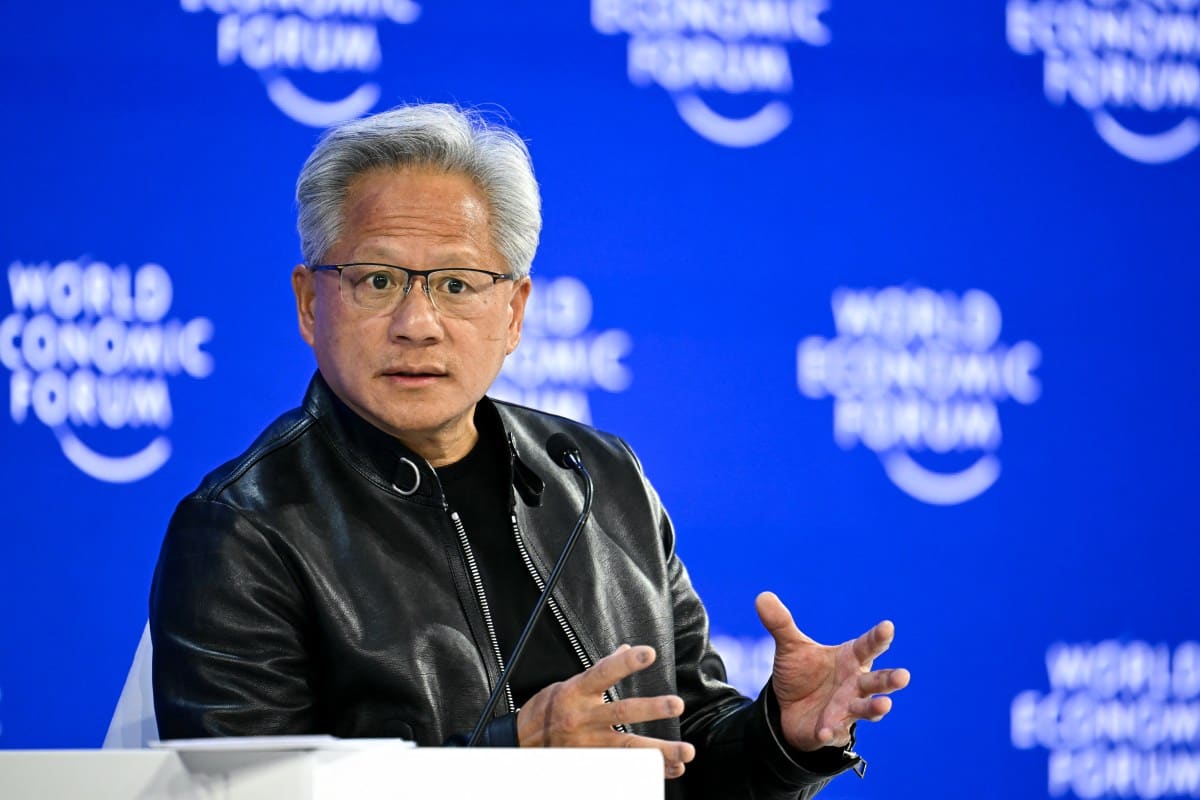
Jensen Huang answered the phone mid-presentation at the All-In Summit in Los Angeles on 14 September, then placed President Donald Trump on speaker for the audience. The Nvidia chief executive had been discussing industry debate over compute-infrastructure growth when the White House rang through.
"I'm onstage with the besties," Huang told Trump, referring to the venture capitalists hosting the event, a group that includes White House advisers David Friedberg and David Sacks. The exchange, audible to hundreds of attendees, centred on whether the United States should moderate the pace of artificial-intelligence development. Huang and Trump both said no.
"You're right. We're not going to let that happen, sir," Huang replied after Trump dismissed concerns about data-centre construction as politically motivated or foreign interference. The crowd applauded.
The Context
The call interrupted a panel discussion about a statement by Anthropic chief executive Dario Amodei, who had recently urged the industry to slow capability improvements in AI systems. OpenAI's Sam Altman and SpaceX's Elon Musk have publicly endorsed that position. Huang's view diverges sharply.
Trump characterised the sentiment for restraint as "a hoax," suggesting it served adversaries. "They're just playing right in the hands of a lot of people that don't want to see it happen," Trump said. "That could be political people. It could also be China."
At Opentechwire, we have tracked this fault line for months. One camp argues that frontier models demand governance frameworks before deployment at scale; the other insists that any deceleration hands strategic advantage to competitors, particularly Beijing. The White House has made clear which side it occupies.
Public Opinion and Infrastructure Reality
Trump's framing overlooks domestic opposition unrelated to geopolitics. Polling by Gallup released earlier this year found that seven in ten Americans oppose data-centre construction in their communities, according to Gallup. More than half cited environmental impact, particularly water and energy consumption. About 20 per cent pointed to cost-of-living increases and quality-of-life effects.
That resistance is not abstract. Utilities across Virginia, Arizona, and Georgia have warned that new load from hyperscale facilities threatens grid reliability. In Singapore, the government paused approvals for new data centres in 2023 and has lifted the moratorium selectively, prioritising efficiency benchmarks. Ireland's grid operator has restricted connections in the Dublin metro area.
Huang's promise to Trump implicitly dismisses these constraints as surmountable, or secondary. "We have to be a little bit careful… We have to do things and we have to do them prudently, but that doesn't mean we're going to stop an industry," Trump said during the call. "So I'm with you all the way."
The Alignment
The exchange reveals how tightly Nvidia's roadmap now aligns with US policy. Huang's willingness to take the call onstage, and to amplify it, signals confidence that his commercial interests and the administration's political agenda are the same. That is not unusual in sectors where government procurement or regulation shape demand; it is notable when the chief executive of a USD 3.1 trillion company (by market capitalisation) performs that alignment in public, in real time.
Y Combinator chief executive Garry Tan has echoed Trump's claim that opposition to data-centre expansion is part of an international campaign to undermine American competitiveness. No evidence for coordinated foreign influence has been presented. The opposition documented by Gallup stems from residents and local officials confronting infrastructure costs they did not anticipate.
What Huang Did Not Say
Huang did not address whether Nvidia's customers, the hyperscalers and cloud providers funding the build-out, share his certainty. Microsoft, Google, and Amazon have all published sustainability commitments that conflict with the energy trajectory of training runs at current scale. They have not reneged, but they have also begun exploring nuclear partnerships and purchasing carbon offsets at volumes that suggest unease.
Nor did Huang comment on whether the semiconductor supply chain can sustain the pace he promised Trump. TSMC's Arizona fabs are behind schedule; advanced packaging capacity remains bottlenecked in Taiwan. Export controls on chipmaking equipment to China have tightened, but they have also made supply chains less flexible.
The call lasted less than three minutes. It was enough to make Huang's position unambiguous: Nvidia will continue to ship the hardware that makes larger models possible, and the White House will continue to frame that expansion as a national imperative. Whether the grid, the public, and the balance sheets of Nvidia's customers can sustain that trajectory is a separate question.
The Political Wager
Trump's interjection, and Huang's response, reflect a wager that the economic value of AI leadership will outweigh the political cost of overriding local opposition. That wager assumes the technology will deliver returns large enough to justify the infrastructure spending and the environmental externalities. It also assumes that voters will blame someone other than the administration if power prices rise or water tables drop.
The All-In Summit audience applauded Huang's reply to Trump. That crowd skews heavily towards venture capital and technology executives with exposure to AI valuations. The Gallup respondents who oppose data-centre construction in their neighbourhoods were not in the room.