Hong Kong Opens First Embodied AI Test Centre as Seven Robotics Firms Join
The city's new experimental hub in Kowloon Tong brings together mainland and local robotics players, signalling a push to claim ground in the accelerating global race for physical AI systems.
A New Test Ground for Physical AI
The Hong Kong Productivity Council opened an experimental facility for embodied artificial intelligence on 16 October, marking the city's first dedicated space for testing robotics systems that integrate AI models with physical hardware. Seven companies from Hong Kong and mainland China have joined the initiative, including Unitree Robotics and Galbot, two firms at the forefront of commercial robotics development in the region.
The facility, named the Embodied AI International Applications Hub, sits within the HKPC Building in Kowloon Tong. It operates under the council's industrial AI and robotics centre and features simulated environments designed to replicate real-world deployment scenarios for embodied systems. These are AI architectures that move beyond screen-based interaction, enabling machines to perceive, reason about, and act upon physical spaces.
At Opentechwire, we've tracked the embodied AI category closely over the past eighteen months as venture capital, corporate labs, and national research programmes across Asia have accelerated investment. Hong Kong's entry reflects both ambition and competitive pressure. While Shenzhen, Beijing, and Shanghai have established manufacturing and research clusters for humanoid and industrial robots, Hong Kong has historically concentrated on finance, logistics, and services. The new hub represents an attempt to translate those sectoral strengths into robotics use cases, particularly in warehousing, healthcare, and hospitality.
Who Is Building What
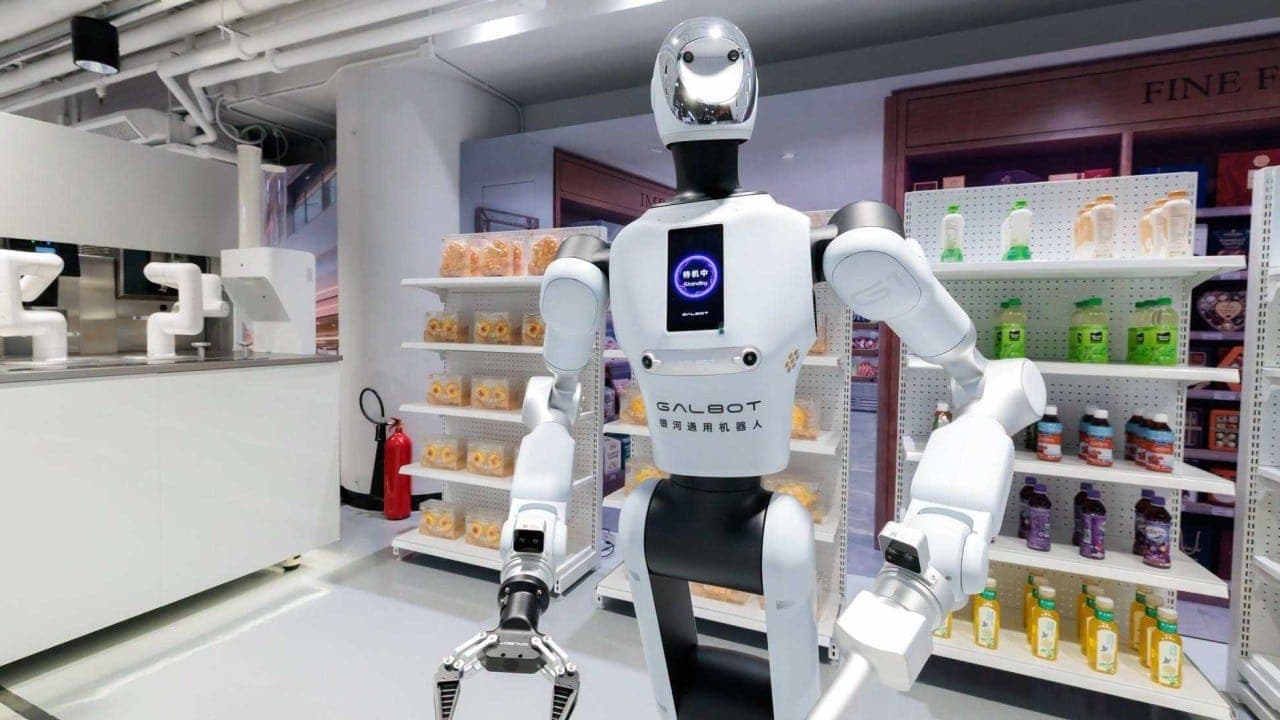
Unitree Robotics, based in Hangzhou, has shipped quadruped and bipedal robots to customers in more than thirty countries. Its Go2 quadruped and H1 humanoid models are priced competitively against Boston Dynamics equivalents, and the company has focused on open software interfaces that allow third-party developers to programme custom behaviours. Galbot, a Hong Kong-based startup, develops service robots for retail and catering, with pilot deployments in shopping centres and restaurant chains across Guangdong province.
The HKPC has not disclosed the full roster of participating companies, but the presence of these two indicates a mix of hardware platform providers and application-layer specialists. The council's remit is to facilitate technology transfer and productivity improvement for Hong Kong industry, which means the hub will likely prioritise near-term commercial pilots over blue-sky research.
The facility's simulated environments include mock warehouse aisles, hospital corridors, and retail floors. These testbeds allow robotics firms to iterate on navigation algorithms, object manipulation routines, and human-robot interaction protocols without the logistical overhead of live deployments. For smaller companies, access to such infrastructure can compress development cycles by six to twelve months, particularly when testing edge cases like crowded spaces or unstructured environments.
The Regional Context
Hong Kong's move comes as governments and industrial players across Asia compete to establish robotics ecosystems. South Korea has committed more than USD 1.4 billion to humanoid robot development through 2030, with the Ministry of Trade, Industry and Energy coordinating a consortium of manufacturers, research institutes, and software firms. Japan's New Energy and Industrial Technology Development Organisation has funded embodied AI projects focused on elder care and disaster response, aiming to address labour shortages in both sectors. Singapore's Agency for Science, Technology and Research operates multiple robotics labs and has co-funded commercial pilots in airport operations and construction.
Mainland China remains the largest market and manufacturing base for industrial robots globally, with annual installations exceeding 290,000 units. The convergence of computer vision, large language models, and real-time control systems has unlocked new possibilities for robots that can generalise across tasks rather than execute fixed routines. Chinese AI labs, including those affiliated with Alibaba, Tencent, and ByteDance, have published research on vision-language-action models that allow robots to interpret natural language instructions and translate them into physical actions.
Hong Kong's challenge is to differentiate its offer. The city cannot compete on manufacturing scale or semiconductor supply chains, both of which are concentrated on the mainland and in Taiwan. Instead, the HKPC hub appears designed to leverage Hong Kong's legal framework, international connectivity, and concentration of multinational corporations. Foreign robotics firms seeking a base for Asia-Pacific operations may find Hong Kong's regulatory environment and intellectual property protections more familiar than mainland alternatives. Local firms, meanwhile, gain a testing ground that bridges access to mainland supply chains and global markets.
What Embodied AI Demands
Embodied AI systems impose technical requirements that differ sharply from cloud-based models. Latency becomes critical when a robot must react to dynamic obstacles or human movements. On-device inference, using edge processors or custom accelerators, is often necessary to meet real-time constraints. Training these systems requires not only large datasets of sensory inputs but also simulation environments that can generate diverse scenarios at scale.
The HKPC hub's value proposition depends on how effectively it addresses these needs. If the facility provides access to high-fidelity simulation tools, compute clusters for training, and standardised evaluation benchmarks, it could attract both startups prototyping new form factors and established manufacturers validating product updates. If it functions primarily as a showroom or networking venue, its impact will be limited.
At Opentechwire, we note that the hub's success will also hinge on the HKPC's ability to connect robotics firms with end users willing to sponsor pilots. Embodied AI remains capital-intensive and deployment-heavy. Robots must be customised for specific workflows, and return on investment often takes years to materialise. Without anchor customers in logistics, healthcare, or manufacturing, even well-equipped test centres struggle to generate momentum.
Open Questions
The HKPC has not specified the hub's funding model, access terms, or governance structure. Whether participation is open to international firms, what fees or equity stakes the council may require, and how intellectual property developed within the facility will be handled are all questions that will shape the hub's trajectory. The council's track record includes technology incubation programmes and industry partnerships, but embodied AI presents a different set of challenges than software or electronics.
Hong Kong's broader policy environment for AI and robotics is still taking shape. The city has no dedicated AI safety regulator, and its data protection framework, while robust by regional standards, has not been tested by the kind of continuous sensory data collection that embodied systems entail. As robots move from controlled environments into public spaces, questions around liability, privacy, and labour displacement will require policy responses that Hong Kong has not yet articulated.
The launch of the Embodied AI International Applications Hub signals intent, but intent alone does not build an ecosystem. The region's robotics race is being won by jurisdictions that combine capital, talent, industrial customers, and supply chain access. Hong Kong has some of these ingredients. Whether it can assemble them into a competitive proposition will depend on execution over the next twenty-four months, not on ribbon-cutting ceremonies.