Elorian Bets Crop-and-Zoom Can Make AI Actually See
A well-funded Palo Alto startup launches Glimpse, a vision model that reasons by returning to source pixels rather than converting images to text tokens once and moving on.
A Vision Problem Hidden in Plain Sight
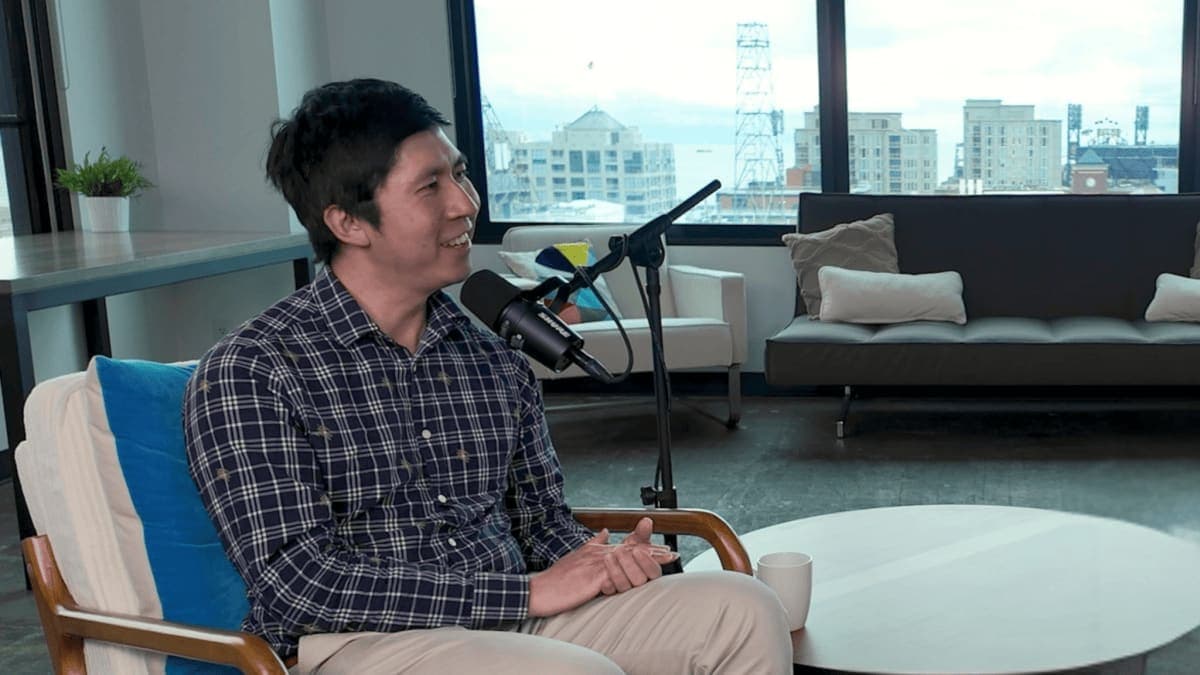
The moment Andrew Dai realised current AI couldn't truly see came during a board game. He photographed the table after a session with friends and asked a leading model to identify the winner. It failed. The symbols, the spatial arrangement, the visual grammar unique to that game - none of it registered in a way that produced an answer.
That failure became the kernel of Elorian, the Palo Alto startup that secured a USD 55 million seed round at a USD 300 million valuation earlier this year. On 16 October 2026, the company released Glimpse, its first model, as a research preview with API access. A chat interface remains waitlist-only.
Dai, formerly at Google DeepMind and now Elorian's chief executive, argues that the dominant multimodal architecture treats vision as a pre-processing step. Most models encode an image into tokens once, then reason about those tokens in language space - like describing a photograph from memory. Glimpse takes a different path: it returns to the source image repeatedly during inference, cropping regions, extracting video frames, and running code to measure or compare what it observes. Elorian calls this mechanism a "visual scratch space."
The analogy Dai offers is simple: pinching to zoom on a phone photo to verify a detail. "Humans can look at Ikea diagrams, with no text, and assemble Ikea furniture," he said. "Why can't AI models?"
Training Small, Benchmarking Against Giants
Elorian trained Glimpse on a few hundred GPUs, a fraction of the compute that frontier labs deploy. The company describes the model as substantially smaller than the systems it benchmarks against, yet claims it outperforms GPT-6 Astra on scientific chart reasoning and short-form video captioning, with competitive results across other visual reasoning evaluations.
Pricing sits at USD 0.60 per million input tokens and USD 3.00 per million output tokens. That places Glimpse below mid-tier models like Sonnet and Sol but above lightweight options such as Haiku and Luna. For enterprises sitting on large video archives - robotics firms, scientific labs, media companies - the cost-performance balance may prove attractive.
The crop-and-zoom technique is not entirely novel. OpenAI integrated similar functionality into its o-series models in 2025. What Elorian claims as differentiation is architectural: Glimpse was designed from the ground up around iterative visual access, rather than bolting it onto an existing text-centric reasoning system.
From Pixels to Action
Elorian emerged from stealth six months ago with backing from Striker Venture Partners, Menlo Ventures, and Altimeter Capital. Nvidia and Google chief scientist Jeff Dean also participated in the round. The initial customer focus is narrow: organisations that generate or analyse video at scale, where existing multimodal models struggle with dense visual information or temporal reasoning.
The longer-term ambition extends beyond passive interpretation. Dai outlined a roadmap that moves from vision to action - building spatial models of scenes and using them to guide decisions, including direct control of robotic systems. That trajectory would place Elorian in competition not just with other vision model developers but with embodied AI efforts at labs like Physical Intelligence, Covariant, and OpenAI's robotics division.
Next year, according to Dai, the company aims to build "the world's best visual reasoning model" - one that leads across every major visual reasoning benchmark. It is an ambitious target for a team that only recently shipped its first product, and one that will be tested as soon as researchers and developers gain API access.
The Limits of Token Conversion
At Opentechwire, we've tracked the multimodal model wave since GPT-4V launched in late 2023. The pattern has been consistent: models that excel at text and code struggle when asked to perform fine-grained spatial reasoning, count objects in cluttered scenes, or interpret domain-specific visual languages like circuit diagrams, musical notation, or, as Dai discovered, board game states.
The root cause is architectural. Encoding an image into a fixed set of tokens compresses information, and that compression is lossy in ways that matter for tasks requiring pixel-level precision. A chart with overlapping lines, a video with subtle motion cues, or a diagram where spatial relationships carry meaning - these all demand the ability to revisit and re-examine the source data.
Glimpse's scratch space mechanism addresses this by allowing the model to "look again" at specific regions or frames. The model can crop, measure distances, compare colours, or run lightweight analysis code during inference. This iterative approach mirrors human vision more closely than the single-pass encoding that dominates today's multimodal systems.
Whether this translates into a sustainable advantage remains an open question. OpenAI, Anthropic, Google, and Meta all have the resources to integrate similar capabilities into their models if the approach proves effective. Elorian's bet is that building the entire system around iterative vision - rather than retrofitting it - will yield efficiency and performance gains that are difficult to replicate.
A Crowded Field, A Narrow Wedge
The vision model landscape has grown dense over the past eighteen months. Google's Gemini family, OpenAI's GPT-4o and GPT-6 series, Anthropic's Claude with vision, and Meta's Llama multimodal variants all compete for enterprise and developer mindshare. Chinese labs including DeepSeek, Zhipu, and Baichuan have released competitive vision models at lower price points.
Elorian enters this field with a specific thesis: that iterative visual reasoning is under-served and under-valued. The company's early customer targets - robotics, scientific imaging, media analysis - represent domains where that thesis can be tested quickly. A robotics firm training manipulation policies needs models that can accurately identify object boundaries and spatial relationships. A scientific lab analysing microscopy video needs frame-by-frame precision. A media company tagging archival footage needs temporal reasoning that doesn't degrade over long clips.
If Glimpse can demonstrate clear advantages in these verticals, the model may carve out defensible territory even as larger labs improve their own vision capabilities. If it cannot, the startup will face the commoditisation pressure that has already compressed margins across the language model market.
The Road to Embodied AI
Dai's comments about moving from vision to action signal an interest in embodied AI, the field focused on systems that perceive and act in physical environments. This is a natural extension of strong visual reasoning: a robot that can see and understand its surroundings still needs to translate that understanding into movement, manipulation, or navigation.
The technical challenges are formidable. Embodied AI requires low-latency inference, robust handling of occlusions and lighting changes, and the ability to predict the outcomes of actions before executing them. It also requires vast amounts of real-world data, which is expensive and time-consuming to collect. Labs like Physical Intelligence have raised hundreds of millions to tackle these problems; OpenAI's robotics work dates back years; Google DeepMind has entire teams dedicated to manipulation and locomotion.
Elorian's advantage, if it has one, is focus. By concentrating on vision first and treating action as a downstream application, the company avoids the sprawling scope that has slowed some embodied AI efforts. If Glimpse can become the preferred vision model for robotics developers - the system they reach for when they need precise, iterative visual reasoning - then Elorian can build action capabilities on top of an established user base.
That scenario is plausible but not guaranteed. Robotics firms often prefer vertically integrated stacks, where vision, planning, and control are co-designed. They may be reluctant to depend on an external API for a core capability, especially one provided by a young startup. Elorian will need to prove not just technical superiority but also reliability, latency, and long-term viability.
What the Benchmarks Don't Measure
Elorian's claim that Glimpse outperforms GPT-6 Astra on scientific chart reasoning and video captioning is striking, but benchmarks are imperfect proxies for real-world utility. Chart reasoning tests often involve synthetic datasets with clean labels and controlled complexity. Video captioning benchmarks reward fluency and coverage but may not penalise subtle errors in spatial or temporal understanding.
The models that succeed in production are often those that fail gracefully, provide calibrated confidence scores, and integrate cleanly into existing workflows. A model that scores highly on academic benchmarks but produces brittle results on edge cases, or requires extensive prompt engineering to be useful, will struggle to retain users.
Glimpse's iterative architecture introduces latency and cost trade-offs. Each crop, zoom, or measurement operation adds compute and time. For applications where speed matters - real-time video analysis, interactive robotics - those trade-offs may be acceptable only if the quality gains are substantial. For batch processing or offline analysis, latency is less critical, but cost per token becomes the binding constraint.
Elorian has not yet published detailed ablation studies, latency profiles, or failure-mode analyses. Those will be necessary to assess whether the architectural choices driving Glimpse represent a fundamental improvement or a niche optimisation.
The Funding Context
Raising USD 55 million at a USD 300 million valuation before launching a product is a vote of confidence from investors, but it also sets high expectations. Striker Venture Partners, Menlo Ventures, and Altimeter Capital are experienced growth investors; their participation suggests they see a path to rapid scaling. Nvidia's involvement is strategic - the company invests in startups that drive demand for its GPUs. Jeff Dean's participation carries symbolic weight, given his role in shaping Google's AI research agenda.
That capital buys Elorian runway, but it also imposes pressure to demonstrate traction. The company will need to convert research preview users into paying customers, expand API capacity, and show that Glimpse solves problems that existing models do not. In a market where model providers compete on price as much as performance, differentiation is fragile.
The funding also highlights a broader pattern in AI: investors continue to back architectural bets even as the returns from such bets have become less predictable. The transformer architecture proved durable, but many subsequent innovations - sparse attention, mixture-of-experts routing, retrieval augmentation - have been absorbed into commodity offerings. Elorian's iterative vision mechanism could follow either path: it could become the new standard, integrated into every major model, or it could remain a specialised feature for niche applications.
A Test of Architectures, Not Just Models
Elorian's launch is less about a single model than a claim about how vision models should be built. The dominant architecture - encode once, reason in text - works well for many tasks but has known failure modes. Iterative visual reasoning offers a potential solution, at the cost of added complexity and compute.
Whether that trade-off is worthwhile will be determined by the market, not by benchmarks. Developers and enterprises will adopt Glimpse if it solves problems they currently cannot solve, or if it solves them more cheaply or reliably than alternatives. If the use cases are too narrow, or if larger labs quickly close the gap, Elorian will need to find a second act.
For now, the company has shipped a product, published performance claims, and opened API access to early users. That is more than many well-funded AI startups have achieved. The next twelve months will reveal whether iterative vision is a genuine architectural advance or a footnote in the multimodal model story.