Google Brings Local Voices to Gemini Across Five Markets
The AI assistant now speaks in 66 regional accents, from Geordie to Multicultural London English, as the company addresses the cultural flattening effect of conversational interfaces.
A Push Against Linguistic Homogenisation
Google has begun rolling out 66 regional dialects for its Gemini assistant across Android and iOS, addressing what the company frames as a flattening effect in conversational AI. The update, which went live this week, covers five markets: the United Kingdom, India, Brazil, Indonesia and South Korea.
The expansion follows a preview at Google I/O earlier this year. Users in the UK can now configure Gemini to respond in Geordie, Scouse or Brummie accents, alongside options including Scots, Welsh, Northern Irish and Multicultural London English. The rollout extends beyond Britain, with localised voice options tailored for the other four countries.
Google worked with native speakers during development to ensure the voices sound authentic rather than caricatured. The company has stated that the dialects will not incorporate what it terms "street slang," focusing instead on sounding like a local speaker in everyday conversation.
The Stakes for Voice Interfaces
Conversational AI has long faced criticism for erasing regional identity. Most assistants default to a neutral, mid-Atlantic register that avoids offending anyone but also fails to reflect how people actually speak. That uniformity carries consequences: it signals to users that their own accent is somehow less legitimate, and it limits the ability of voice interfaces to feel genuinely local.
The problem is particularly acute in markets where linguistic diversity is high. India alone has 22 officially recognised languages and hundreds of regional variations of Hindi, Tamil and other tongues. Indonesia spans more than 700 languages across its archipelago. Even within the UK, accents can shift dramatically within a 50-kilometre radius, carrying deep associations with class, geography and identity.
By offering dialect options, Google is acknowledging that voice is not just a functional layer but a cultural one. Accent is a marker of heritage, and for many users, hearing their own speech patterns reflected back by an assistant can shift the interaction from transactional to relational.
How the System Works
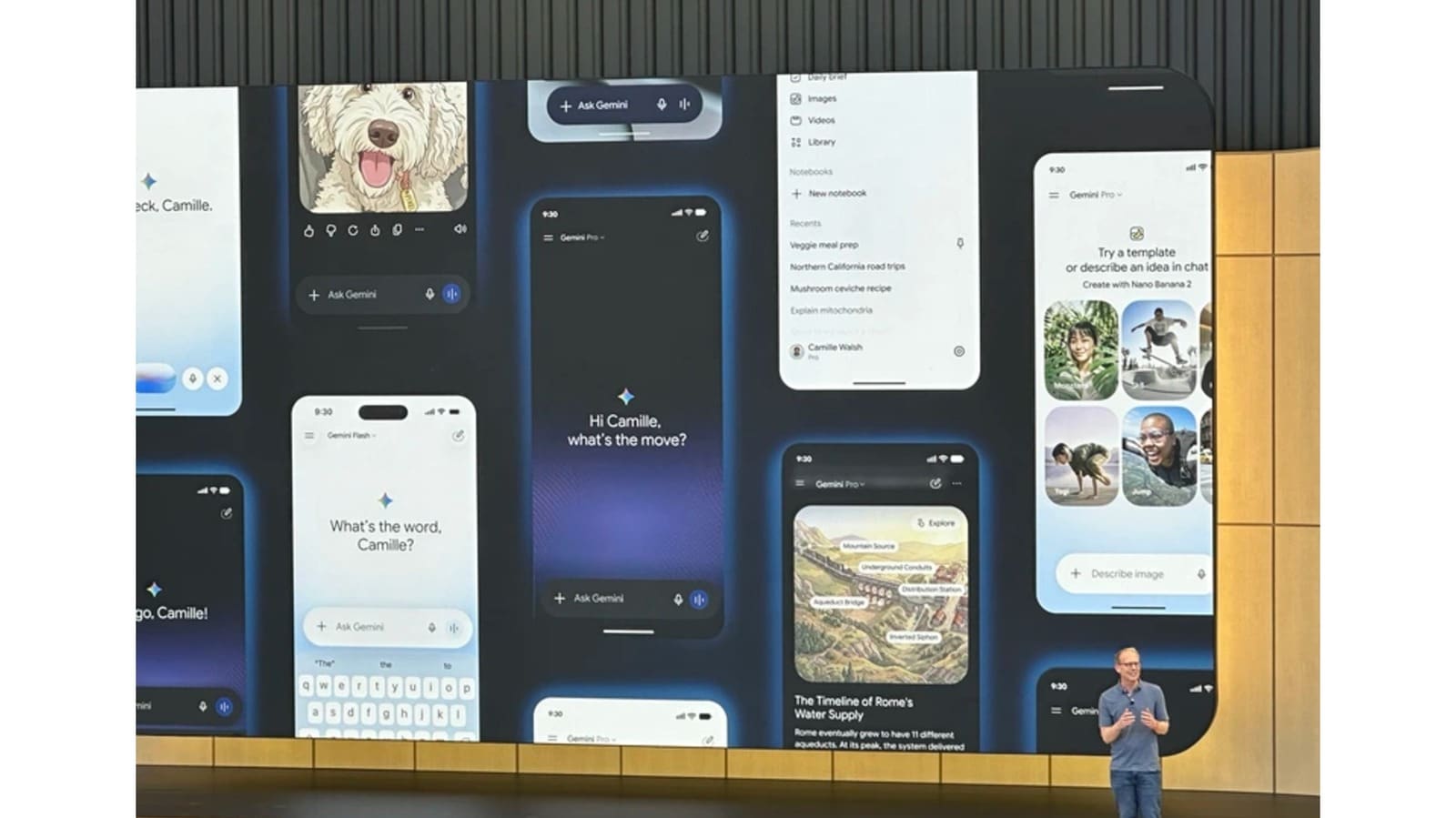
The new voices are accessible through the Gemini app's voice settings menu or via the three-dot overflow menu. Once activated, the assistant will respond using the selected dialect across all interactions, from weather queries to recipe suggestions.
Google has suggested that users test the authenticity of the voices by asking for local food recommendations, which should reveal the "warmth and rhythm" of each accent. The recommendation is telling: it positions the dialects not as technical features but as cultural performances, where prosody and intonation matter as much as vocabulary.
The company has not disclosed the technical architecture behind the voices, but the scale of the rollout suggests a combination of text-to-speech synthesis trained on regional corpora and fine-tuning with native speakers. Achieving natural-sounding regional speech at this scale is non-trivial. Accents are not just about vowel shifts or consonant substitutions; they involve rhythm, stress patterns and micro-variations in pitch that are difficult to model without extensive training data.
The decision to avoid "street slang" is a pragmatic one. Slang dates quickly, and its use by a corporate assistant risks sounding forced or patronising. By focusing on prosody and pronunciation rather than lexicon, Google is aiming for a middle ground: voices that feel local without trying too hard to sound cool.
Regional Context and Adoption
The five markets chosen for the initial rollout are all high-growth regions for Google's AI services, but they also share a common challenge: linguistic fragmentation. In India, the dominance of English-language AI has long been a barrier to adoption outside urban centres. Regional language support has improved in recent years, but accent diversity within those languages remains underserved.
In the UK, accent carries social weight. A Geordie accent from Newcastle signals working-class roots and regional pride; Received Pronunciation still connotes privilege and education. By offering multiple British accents, Google is navigating a minefield of class and regional identity. The inclusion of Multicultural London English, a dialect spoken by younger Londoners with roots in Caribbean, South Asian and African communities, is particularly notable. It is a recognition that British English is not monolithic and that newer, hybrid accents deserve representation.
Brazil and Indonesia present different challenges. Brazilian Portuguese varies significantly between São Paulo, Rio de Janeiro and the Northeast, with differences in rhythm and vowel quality. Indonesian, while standardised, coexists with Javanese, Sundanese and dozens of other languages, each with its own accent when speakers switch to Indonesian. South Korea, meanwhile, has regional dialects such as Jeolla and Gyeongsang that carry strong local identity, though the Seoul standard dominates media and technology.
The success of this rollout will depend on how well the voices are received by the communities they are meant to represent. Accent is deeply personal, and a poorly executed version can feel worse than no representation at all. Google's emphasis on working with native speakers is a hedge against that risk, but the proof will be in user adoption and feedback.
Implications for Conversational AI
The move has broader implications for the industry. If users respond positively to regional voices, other AI platforms will face pressure to follow. Amazon's Alexa and Apple's Siri have experimented with regional accents in the past, but neither has rolled out options at this scale. OpenAI's voice interface for ChatGPT, meanwhile, remains largely accent-neutral.
There is also a question of equity. The 66 dialects Google has added are a start, but they represent a tiny fraction of the world's linguistic diversity. The markets chosen for the rollout are all economically significant to Google, which raises the question of whether smaller language communities will ever see similar support. The economics of training and deploying dialect-specific models are challenging, and the return on investment for less widely spoken accents is unclear.
At the same time, the rollout signals a shift in how tech companies think about voice. For years, the goal was to make assistants sound as neutral and inoffensive as possible. That approach prioritised scale and consistency over cultural resonance. The new strategy accepts that one size does not fit all and that users may prefer an assistant that sounds like them, even if it means more complexity on the back end.
What Comes Next
Google has not announced plans to expand the dialect rollout to additional markets, but the infrastructure is now in place. The next logical step would be to extend coverage to other high-growth regions, such as Southeast Asia beyond Indonesia, sub-Saharan Africa and Latin America outside Brazil.
There is also the question of whether dialect options will extend to Gemini's text-based interactions. Accent is primarily a spoken phenomenon, but regional language use also shows up in word choice, syntax and idiom. A Gemini that can write in Scots or Multicultural London English would be a natural extension of the voice work, though it would raise new questions about standardisation and intelligibility.
For now, the 66 dialects represent a bet that voice AI can be both global and local, that scale and cultural specificity are not mutually exclusive. Whether that bet pays off will depend on execution, user reception and Google's willingness to invest in the long tail of linguistic diversity. The company has taken a step towards making its assistant sound less like a machine and more like a neighbour. The challenge will be sustaining that effort as the technology scales.