Epic Games Delays Marvel Shooter as AI-First Strategy Stalls Development
The Unreal Engine maker's $1.5 billion Disney partnership has been pushed back indefinitely after a mid-project pivot to generative models for all code and artwork.
A High-Stakes Bet Goes Sideways
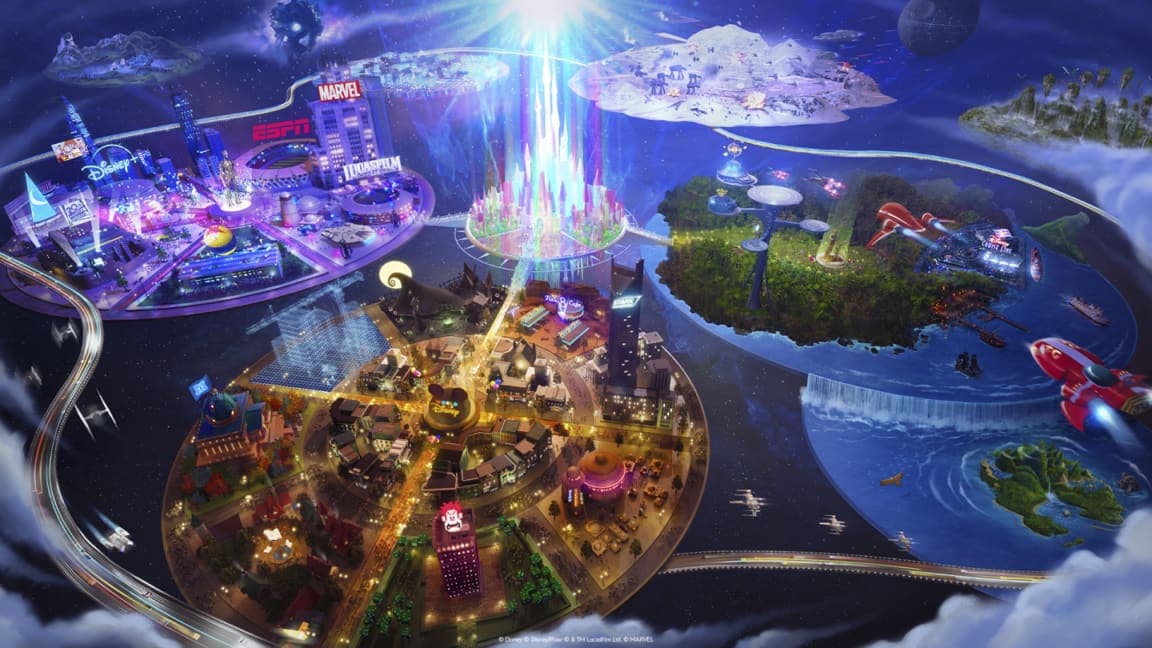
Epic Games has postponed its Marvel- and Star Wars-themed shooter indefinitely, a casualty of the studio's decision to restructure development around generative AI. The project, part of a $1.5 billion collaboration with the Walt Disney Company unveiled in early 2024, had been scheduled for release in March 2027. Instead, the Unreal Engine maker finds itself understaffed and behind schedule after attempting to rewrite its production pipeline mid-flight.
Internal messages reviewed by people familiar with the project reveal the scope of the change: human developers have been reassigned from writing code and creating art to supervising outputs from models including Anthropic's Claude. The new directive eliminates hand-written code altogether and mandates that all visual assets emerge from what Epic describes internally as "full AI workflows."
What the Shift Means in Practice
The pivot is more than a tooling upgrade. Traditional game development relies on programmers who architect systems, write logic, debug edge cases, and optimise performance by hand. Artists model characters, paint textures, rig animations, and iterate on visual direction through manual refinement. Epic's new model inverts that relationship: generative models produce the raw material, and human staff act as curators and prompters rather than creators.
For a shooter built around two of entertainment's most valuable intellectual properties, the stakes are high. Marvel and Star Wars carry rigorous brand standards, complex narrative continuity, and player expectations shaped by decades of films, comics, and games. Translating those requirements into prompts that yield production-ready code and art at scale is a materially different challenge from building a tech demo or a standalone experiment.
The delay suggests that challenge has proven harder than anticipated. At Opentechwire, we've tracked AI adoption across game studios in Seoul, Tokyo, and Shenzhen over the past eighteen months. Most have treated generative tools as accelerators for specific tasks such as texture variation, dialogue branching, or procedural environment population. Few have attempted to remove human authorship from the critical path entirely, and none at the budget tier of a $1.5 billion joint venture.
Why Epic Might Have Pushed So Hard
Epic's willingness to restructure a flagship collaboration around unproven workflows likely reflects both commercial pressure and strategic conviction. The studio has long positioned Unreal Engine as the default platform for real-time 3D across games, film, and virtual production. Demonstrating that generative AI can drive a AAA release would cement that lead and open new licensing revenue as other publishers seek to replicate the model.
Disney, for its part, has publicly committed to integrating AI across its entertainment portfolio. A successful launch would validate that commitment and potentially compress production timelines for future franchise extensions. The partnership was announced with language emphasising "persistent universes" and "interoperability," buzzwords that imply ongoing content updates and cross-platform experiences. Those ambitions demand faster iteration than traditional pipelines allow.
But the indefinite postponement indicates that ambition collided with execution. Understaffing has compounded the slowdown, a detail that raises questions about whether Epic underestimated the human oversight required to shepherd AI-generated assets to shippable quality. Ironically, an approach marketed as efficiency-enhancing appears to have lengthened the critical path.
The Regional Context
Epic's experiment arrives as studios across Asia navigate their own AI integration. South Korea's Krafton has embedded generative tools into its content pipeline but retains human leads for narrative and systems design. NetEase and Tencent have deployed AI for localisation and live-ops tuning, not core authorship. Japan's major publishers have moved cautiously, wary of fan backlash against perceived dilution of craftsmanship.
The contrast is instructive. Incremental adoption allows studios to measure productivity gains, identify failure modes, and retain institutional knowledge. Epic's all-in posture forfeits those guardrails. If the delayed shooter eventually ships and meets quality bars, it will reshape industry assumptions about what generative models can shoulder. If it stumbles, it will serve as a cautionary tale about mistaking capability demos for production readiness.
What Comes Next
Epic has not commented publicly on the delay or the internal workflow changes. Disney has similarly remained silent. The lack of a revised launch window suggests the project is in triage rather than a predictable finishing phase. Whether the AI-first model will be scaled back, doubled down on, or quietly shelved in favour of hybrid workflows remains unclear.
For now, the postponement stands as the most visible stumble yet in the game industry's rush to operationalise generative AI. It underscores a lesson that developers in Shanghai, Bangalore, and Singapore have learned through smaller-scale deployments: models can generate plausible outputs at speed, but plausibility is not the same as shippability. The gap between the two still requires human judgment, and that judgment does not compress on command.
Epic's next move will be watched closely. The studio retains enormous technical credibility and deep pockets. But credibility and capital cannot substitute for a proven workflow when the deliverable is a shooter carrying two of the world's most scrutinised franchises. The March 2027 date has come and gone on the roadmap. What replaces it will tell us whether AI-first development is a frontier worth crossing or a detour the industry can ill afford.