Samsung Memory Profits Surge Nine-Fold as AI Chip Demand Reshapes Bonus Payouts
The Seoul giant's third-quarter operating profit climbed to $80 billion, with memory workers set to receive 10.5% of unit profits as AI infrastructure spending accelerates across Asia.
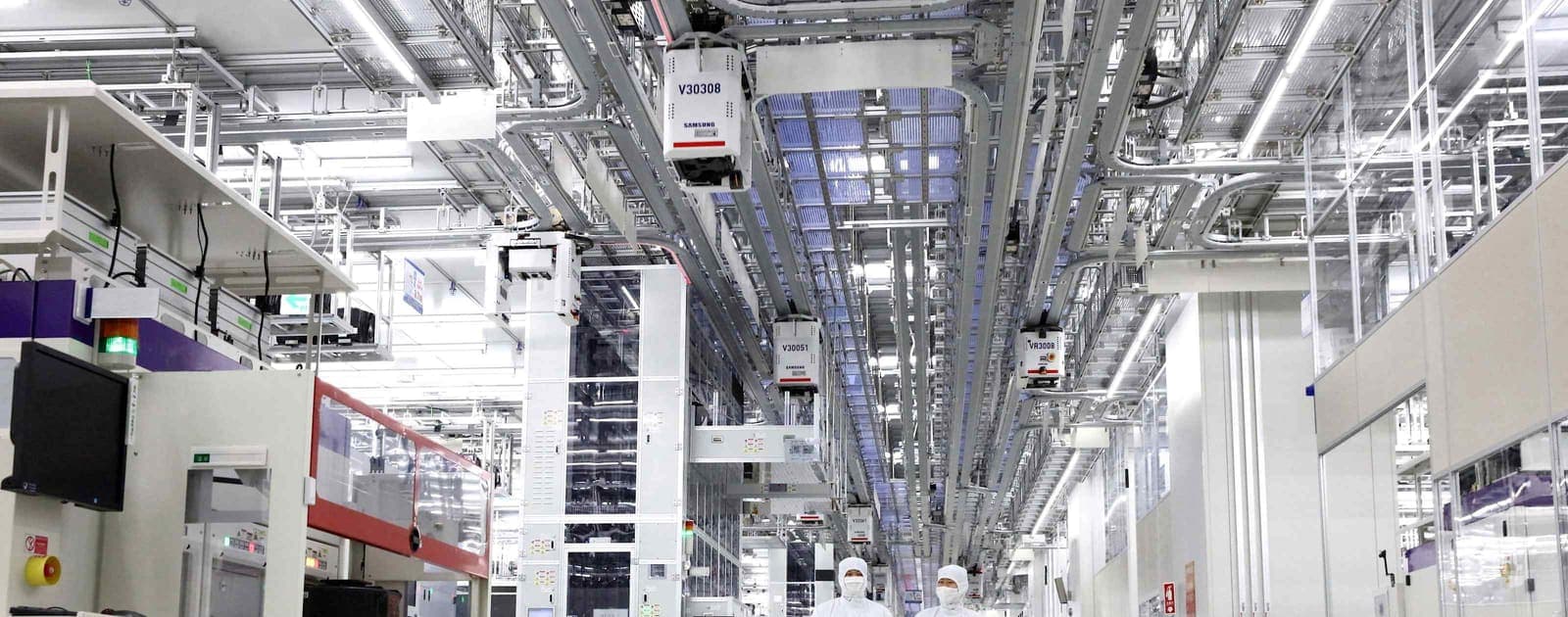
A Windfall Year for Memory
Samsung Electronics reported operating profit of $80 billion for the third quarter of 2026, a near nine-fold increase from the same period last year, according to the company. The Seoul-based manufacturer attributes the surge to sustained demand for advanced memory chips, the components that underpin training and inference workloads in artificial intelligence systems.
The profit jump marks a sharp reversal from the cyclical downturn that squeezed memory makers through much of 2023 and early 2024. At Opentechwire, we've tracked how hyperscale cloud providers and AI-focused infrastructure builders have shifted purchasing patterns over the past eighteen months, moving from cautious inventory management to aggressive capacity expansion. Samsung's results suggest that shift has translated into pricing power and volume growth for suppliers of high-bandwidth memory and advanced DRAM.
What makes this quarter particularly notable is not just the headline profit figure, but the internal agreement Samsung struck with its memory chip workers' union. The company has committed to allocate 10.5 per cent of the memory unit's operating profit to employee bonuses. Given the scale of the division's earnings, that percentage translates into substantial payouts for workers on the fabrication lines and in process engineering roles.
Union Leverage in a Tight Labour Market
The bonus formula reflects a broader dynamic in Asia's semiconductor industry. Talent retention has become a strategic priority as fabs compete not only with each other but with design houses, cloud providers, and AI start-ups for engineers with expertise in advanced packaging, yield optimisation, and materials science. Samsung's willingness to formalise profit-sharing at this level signals that labour negotiations carry more weight when a firm's operating margins are expanding rapidly.
The 10.5 per cent figure is the result of direct bargaining with the union representing memory fabrication employees. Unlike earlier bonus structures that relied on discretionary management decisions or company-wide performance metrics, this arrangement ties payouts explicitly to the profitability of the memory division. That distinction matters: it insulates workers from cross-subsidisation with underperforming business units and creates a clearer line of sight between their output and their compensation.
For workers in Hwaseong, Pyeongtaek, and other Samsung memory sites, the third-quarter results mean bonuses that could reach several months' salary. The company has not disclosed the exact payout schedule or individual amounts, but the union agreement makes the calculation transparent. If the memory unit continues to post strong operating profit in the fourth quarter, the year-end bonus pool will reflect that performance directly.
AI Infrastructure Spending Drives Demand
The underlying driver of Samsung's profit surge is the continued build-out of AI infrastructure across North America, Europe, and increasingly within Asia. Training large language models and running inference at scale requires high-bandwidth memory, low-latency interconnects, and dense compute configurations. Samsung's product mix has shifted to prioritise HBM3 and HBM3E, the high-bandwidth memory generations that pair with GPUs and AI accelerators in data centre racks.
Demand for these products has outpaced supply for much of 2026, allowing Samsung and its competitors to command premium pricing. The company has also benefited from design wins with hyperscale customers that specify Samsung memory for next-generation AI clusters. Those contracts typically lock in volume commitments and pricing terms that extend across multiple quarters, providing revenue visibility that was absent during the downturn.
Asia's role in this demand picture is evolving. While the largest AI training runs still occur in US-based data centres operated by the major cloud providers, inference workloads are increasingly distributed. Samsung has seen growing orders from cloud and edge infrastructure operators in Singapore, Seoul, Tokyo, and Mumbai. These deployments prioritise lower latency and data residency, which in turn drives demand for memory capacity closer to end users.
Margin Expansion and Capital Intensity
Operating profit of $80 billion in a single quarter reflects both volume growth and margin expansion. Samsung's memory division has been running its fabs at high utilisation rates, and the shift toward advanced products has improved the revenue-per-wafer metric. HBM3E commands a significant premium over commodity DRAM, and the technical barriers to entry mean fewer suppliers can compete at that performance tier.
That margin expansion comes with capital intensity. Samsung continues to invest in next-generation fabrication capacity, advanced packaging facilities, and R&D for the memory architectures that will power AI workloads in 2027 and beyond. The company has not broken out capital expenditure by division for the third quarter, but industry observers expect memory capex to remain elevated as long as demand forecasts hold.
The risk, as always in the memory business, is that today's supply constraints become tomorrow's oversupply. If multiple manufacturers ramp capacity simultaneously and AI infrastructure spending plateaus, pricing could erode quickly. Samsung's management has signalled confidence that AI-driven demand will support current investment levels, but the memory cycle has a long history of boom-and-bust dynamics that defy linear extrapolation.
Implications for the Broader Memory Market
Samsung's results set a benchmark for the rest of the memory industry. SK hynix, Micron, and other players are expected to report similarly strong quarters, though each has a different product mix and customer base. The profit-sharing agreement with Samsung's union may also influence labour negotiations elsewhere in the sector, particularly in South Korea and Taiwan, where semiconductor workers are organised and capable of collective bargaining.
For buyers of memory, the third-quarter results confirm that pricing pressure will persist into the fourth quarter and likely into early 2027. Hyperscale customers with long-term supply agreements are insulated to some degree, but smaller cloud providers, enterprise buyers, and hardware manufacturers without similar contracts face continued cost headwinds. That dynamic may accelerate consolidation among infrastructure operators that lack the scale to secure favourable terms.
The bonus payout to Samsung's memory workers also carries a message about value capture in the semiconductor supply chain. Fabrication remains capital- and labour-intensive, and the shift toward advanced memory products has not reduced the importance of process expertise on the factory floor. By formalising profit-sharing, Samsung acknowledges that retaining that expertise is worth a measurable percentage of operating income, not just a discretionary gesture during good quarters.