DeepSeek Suffers Five-Hour Outage Amid Compute Capacity Questions
The Chinese AI startup's V4-Pro and V4.1-Flash models went dark for five hours, raising fresh questions about infrastructure strain under US export restrictions.
Outage Window
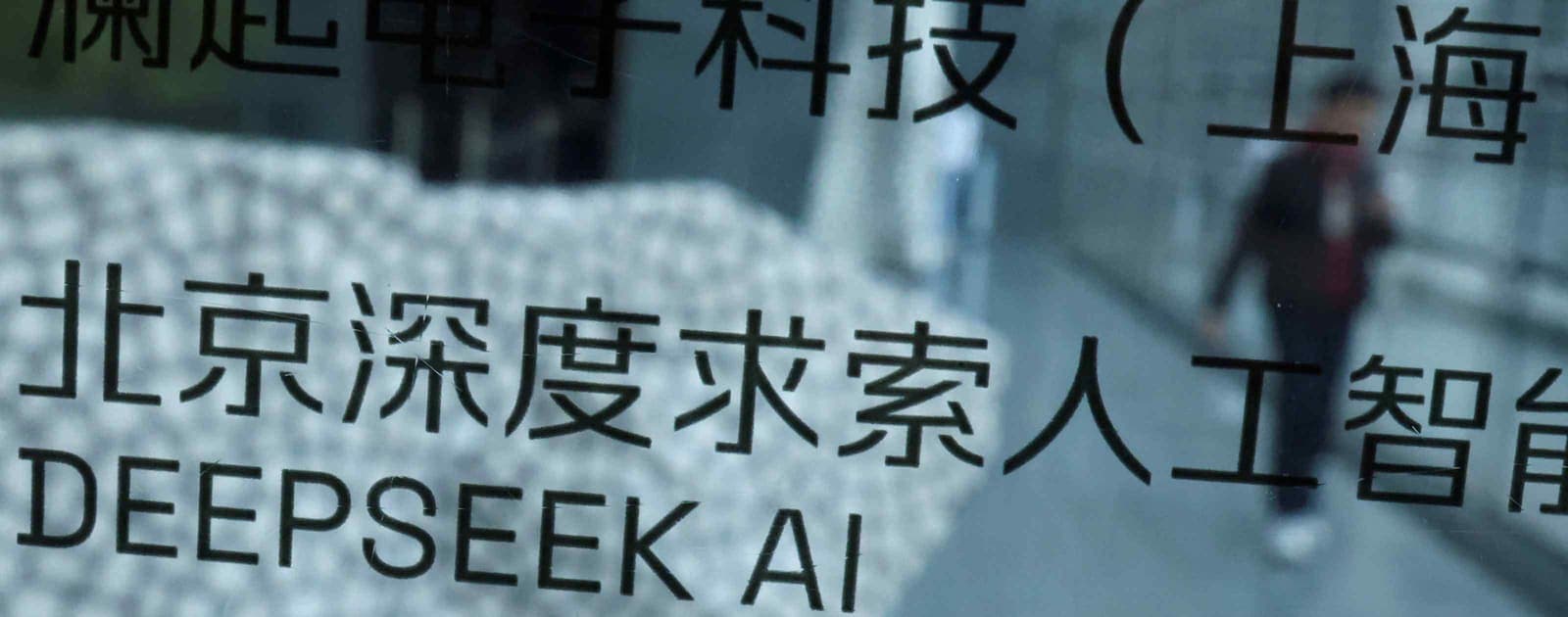
DeepSeek's production AI services dropped offline for approximately five hours on Thursday morning, with both the V4-Pro and V4.1-Flash models becoming inaccessible to users between 8 a.m. and 1 p.m. local time. The Hangzhou-based startup has issued partial refunds to affected subscribers but has not publicly identified the root cause of the disruption.
For a company that has positioned itself as a cost-efficient alternative in the global inference market, a five-hour blackout is more than an operational hiccup. It surfaces a tension that runs through the entire Chinese AI sector: how to sustain high-availability services when access to cutting-edge compute hardware remains constrained by Washington's semiconductor export regime.
Compute Scarcity and Reliability Trade-offs
The immediate trigger remains undisclosed, but the incident arrives at a moment when Chinese AI labs are navigating acute hardware bottlenecks. US export restrictions on advanced GPUs from Nvidia and AMD have forced domestic players to rely on older-generation chips, domestically manufactured accelerators with narrower performance envelopes, and creative workarounds in model architecture and training efficiency.
DeepSeek has built its reputation on delivering competitive inference at lower cost, partly through algorithmic optimisation that reduces reliance on brute-force compute. Yet optimisation has limits. When user demand spikes or when infrastructure fails, the lack of redundant capacity can translate directly into downtime. A five-hour window suggests more than a transient network fault; it points to either a hardware failure with limited spare inventory or a cascading load issue that strained already-tight resource allocation.
Other Chinese AI startups have reported similar pressures. At Opentechwire, we have tracked multiple instances over the past year where inference latency has spiked or service windows have narrowed during peak usage, often without public explanation. The pattern suggests that many operators are running closer to capacity ceilings than their US or European counterparts, who enjoy deeper hardware buffers and faster access to replacement parts.
Subscriber Impact and Disclosure Norms
DeepSeek has moved quickly to issue partial refunds, a step that signals awareness of service-level expectations among its paying user base. But the absence of a detailed post-mortem stands in contrast to transparency norms that have become standard among leading AI providers elsewhere. When OpenAI or Anthropic experience outages, incident reports typically follow within hours, outlining root cause, affected endpoints, and remediation steps.
Chinese AI companies operate in a different regulatory and competitive environment. Disclosure of infrastructure weaknesses can invite scrutiny from both domestic regulators and international observers eager to assess the durability of China's AI ecosystem under export controls. That calculus may explain the terse communication, but it also leaves enterprise customers and developers with limited visibility into reliability risks.
For developers building applications on top of DeepSeek's API, Thursday's outage is a reminder that vendor risk assessments must account for geopolitical supply-chain factors as much as technical architecture. A startup that cannot quickly replace a failed GPU cluster because of export restrictions faces fundamentally different uptime economics than one with open access to global hardware markets.
Infrastructure Strategy Under Constraint
The incident also raises questions about how Chinese AI labs are approaching redundancy and failover design. In a hardware-abundant environment, best practice is to over-provision compute and distribute inference loads across geographically dispersed clusters. Under constraint, that playbook becomes prohibitively expensive. DeepSeek and its peers are instead exploring software-layer resilience: model quantisation, dynamic batching, and hybrid scheduling across heterogeneous hardware.
These techniques can stretch available compute further, but they introduce new failure modes. A scheduling algorithm that aggressively packs workloads onto limited GPUs may leave little headroom when a node goes offline. A model fine-tuned for a specific chip architecture may not migrate gracefully to backup hardware if that hardware has different memory bandwidth or instruction sets.
China's Ministry of Industry and Information Technology has signalled plans to add AI-related technologies to its export control list, a move that will further complicate cross-border hardware flows in both directions. For DeepSeek, that means even temporary access to foreign chips for disaster recovery or burst capacity is likely to become more difficult, not less.
Competitive Implications
The outage comes as Chinese AI startups are competing for both domestic market share and international credibility. DeepSeek has attracted attention from developers outside China for its pricing and performance claims, positioning itself as a viable alternative to US-headquartered incumbents. A multi-hour service interruption, even an isolated one, complicates that narrative.
Enterprise customers evaluating AI vendors weigh uptime as heavily as inference speed or cost per token. A single outage does not disqualify a provider, but it does shift the risk calculus. For organisations subject to their own service-level agreements, relying on a vendor whose hardware supply chain is subject to external restrictions introduces a variable that cannot be mitigated through technical integration alone.
At the same time, DeepSeek's ability to restore service within five hours and issue refunds demonstrates operational maturity. The question is whether the company can invest in the redundancy and transparency measures that would prevent similar incidents from eroding customer confidence over time.
What Comes Next
DeepSeek has not indicated whether it will publish a detailed incident report. If it does, the level of technical detail will offer a signal about how Chinese AI companies plan to navigate the tension between operational transparency and strategic sensitivity. If it does not, the silence will itself be informative, suggesting that infrastructure vulnerability remains a topic the sector prefers to manage quietly.
For the broader Chinese AI ecosystem, Thursday's outage is a data point in a larger stress test. The country's labs have demonstrated impressive algorithmic ingenuity under hardware constraint, but sustaining high-availability services at scale requires more than clever code. It requires supply-chain depth, redundant capacity, and the ability to recover quickly when systems fail. Under the current export control regime, those capabilities remain unevenly distributed.