Claude Collapses Three Interfaces Into One as Anthropic Chases Workplace Productivity
The AI firm's new unified chat experience lets users generate documents, presentations and multi-step workflows without switching modes - a bid to simplify an interface that confused even power users.
A Unified Interface After User Confusion
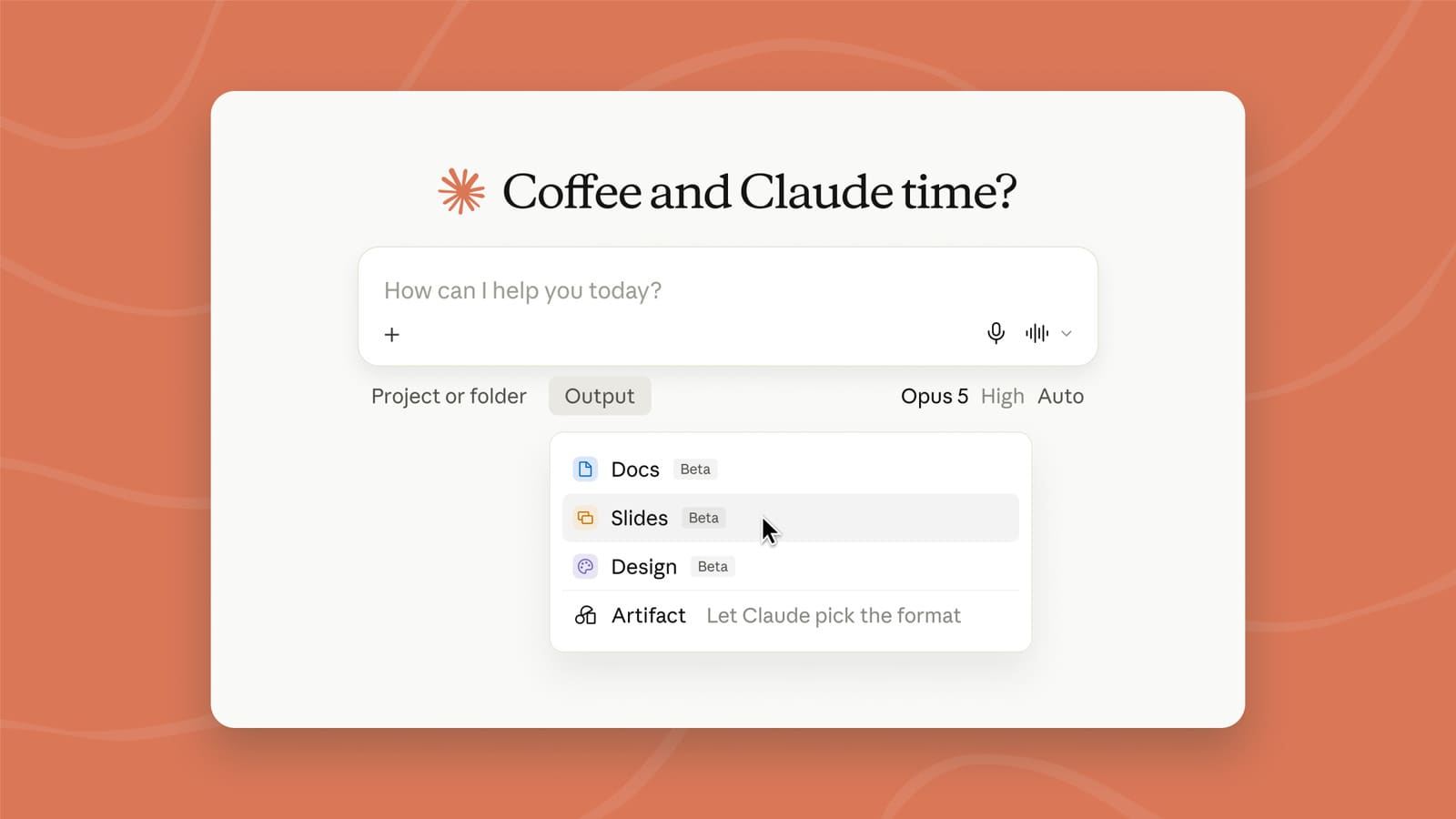
Anthropic has begun rolling out a consolidated version of Claude that eliminates the need to choose between three separate modes. The AI assistant can now produce editable documents, slide decks and execute multi-step agentic tasks from a single chat interface, according to the company's 16 September announcement.
The redesign addresses a problem Anthropic itself acknowledged: users were unsure which mode to use for a given task. The company had previously segmented capabilities across three environments - standard chat, Design for visual artefacts, and Cowork for complex multi-step projects. Work initiated in one mode did not transfer to another, forcing users to restart tasks if they picked the wrong entry point.
Under the new system, Claude determines the appropriate tooling based on the user's request. A prompt to generate a one-page briefing now produces a private document inside the chat thread. Users can edit inline, share with colleagues, or export to Google Docs or Microsoft Word. Similarly, asking for a presentation drops slides directly into the conversation, editable in-app or downloadable as PowerPoint or PDF.
Agentic Workflows Move Into the Main Thread
The consolidation brings Cowork's agentic capabilities - previously walled off in a separate mode - into every conversation. Cowork uses multi-step reasoning to read source documents, synthesise information, and generate derivative materials such as spreadsheets or formatted reports. That functionality is now accessible without switching contexts.
Artifacts, the company's term for saved outputs such as HTML snippets, diagrams or draft documents, remain available in a sidebar but are now part of the unified interface rather than a Design-only feature. The change means a user can ask Claude to draft a technical specification, refine it across several turns, save it as an artefact, and then pivot to generating a slide summary - all within one thread.
At Opentechwire, we have tracked the evolution of conversational AI interfaces as vendors attempt to layer agentic capabilities onto chat-based products. The challenge is architectural: chat threads optimise for linear back-and-forth, while complex workflows often require branching, iteration and access to external tools. Anthropic's approach sidesteps explicit mode selection by routing tasks behind the scenes, a pattern that mirrors how frontier labs are embedding tool use and function calling into base models rather than exposing them as user-facing switches.
Rolling Out to Paid Tiers First
The unified interface is being deployed to Pro and Max subscribers over the next few weeks across web, desktop and mobile clients, Anthropic said. Team and Free plan users will receive access "soon," though the company did not specify a timeline.
The staggered rollout reflects Anthropic's positioning of advanced features as premium offerings. Pro and Max tiers, priced at higher monthly rates, have historically received early access to expanded context windows, priority compute and beta capabilities. The company competes directly with OpenAI's ChatGPT Plus and Team plans, Microsoft's Copilot subscriptions, and Google's Gemini Advanced, all of which bundle document generation and workspace integrations.
The Productivity Play in a Crowded Field
Anthropic's consolidation arrives as the productivity segment of generative AI grows more contested. OpenAI has integrated ChatGPT with Canvas, a persistent workspace for iterative editing. Google embeds Gemini across Workspace apps, allowing inline document and slide generation. Microsoft's Copilot sits inside Office 365, with tight hooks into Word, Excel and PowerPoint.
Claude's differentiation has historically rested on longer context windows and a reputation for nuanced reasoning. The company offers a 200,000-token context limit on paid plans, enabling users to load entire codebases or lengthy research papers into a conversation. The new interface leverages that capacity by allowing users to reference uploaded files while generating derivative documents or presentations.
Yet the move also narrows the gap between Claude and competitors. By embedding document and slide creation into chat, Anthropic is adopting a pattern already present in ChatGPT, Gemini and Copilot. The agentic layer - Cowork's ability to chain tasks and read source material - offers a point of distinction, but the extent to which that capability outperforms rivals' function-calling and plugins remains an open question.
Design Choices That Shape Workflow
The interface consolidation reflects a broader tension in AI product design: whether to offer users explicit control over modes and tools, or to abstract complexity behind a single conversational entry point. Anthropic initially chose the former, carving out dedicated spaces for visual work and multi-step projects. The company has now pivoted toward the latter, betting that inference-time routing can match user intent without manual mode selection.
That choice has implications for how professionals adopt Claude. A unified interface lowers the learning curve for new users, who no longer need to internalise a taxonomy of modes. But it also removes explicit signalling about what the system can do. Power users who understood when to invoke Cowork or Design must now trust that Claude will apply the right tooling implicitly.
The risk is that the system misroutes tasks, generating a static document when the user expected an agentic workflow, or vice versa. Anthropic has not disclosed how Claude classifies incoming requests or whether users can override its decisions. The company's emphasis on "Claude can now figure out what a task needs" suggests reliance on prompt interpretation, a method that can falter with ambiguous or under-specified requests.
What the Shift Signals About Anthropic's Roadmap
The "One Claude" branding points to a broader strategy: positioning the assistant as a general-purpose productivity layer rather than a collection of specialised tools. By collapsing interfaces, Anthropic is aligning Claude with the mental model of a single, capable agent - a framing that suits enterprise sales and consumer onboarding alike.
The timing also matters. Anthropic raised significant capital over the past year, with participation from Google, Salesforce and other strategic investors. The company has positioned itself as a safety-focused alternative to OpenAI, emphasising constitutional AI and interpretability research. But investor expectations require revenue growth, and the productivity segment offers a clear path to subscription and enterprise licensing revenue.
The unified interface makes Claude easier to pitch to corporate buyers who want a single seat licence that covers document drafting, presentation creation and workflow automation. It also simplifies pricing communication, as users no longer need to understand which tier unlocks which mode.
Whether this consolidation improves the user experience will depend on execution. If Claude reliably infers task type and applies the right tooling, the change removes friction. If it guesses wrong or forces users into workarounds, the old mode-based system may prove easier to navigate. Anthropic's rollout over the coming weeks will offer early signals, particularly as feedback from Pro and Max users informs refinements before the feature reaches free-tier accounts.
For now, the move underscores a pattern we have seen across the sector: AI labs converging on a narrow set of interface paradigms, with chat as the universal front end and agentic capabilities surfaced through natural language rather than buttons or menus. The question is no longer whether AI assistants can generate documents and presentations - they all can. The question is whose routing logic, context handling and export integrations work well enough to displace the tools professionals already use.