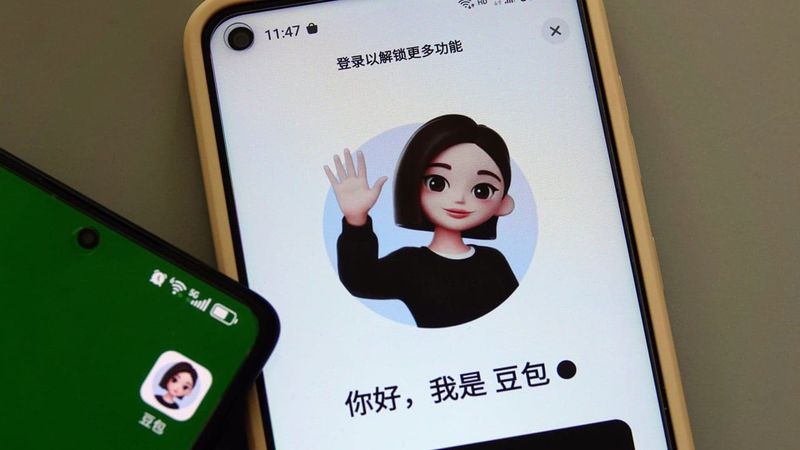
ByteDance's Hongguo Beats Top Chinese Streamers With AI-Driven Short Drama
The three-year-old platform now surpasses legacy video services by leaning on generative models and bite-sized storytelling tailored for mobile audiences.

A New Front-Runner in Chinese Video
ByteDance's Hongguo has climbed past four of China's most established streaming platforms, a trajectory built on two interlocking bets: bite-sized dramas that run minutes rather than hours, and synthetic content generated by AI models. Launched in 2023, Hongguo capitalised on a domestic appetite for short-form narrative that predated its arrival but found no unified home among legacy services still anchored to episodic television formats.
The platform's use of ByteDance's own Seedance video model, alongside third-party generative tools, has allowed creators to produce animated sequences, background assets and even entire scenes without traditional production pipelines. That speed advantage translates into volume - Hongguo's catalogue has expanded faster than platforms reliant on conventional filming, editing and post-production workflows.
Why Short Drama Resonates in China
China's short-drama sector grew in parallel with mobile-first consumption habits. Commuters, lunch-break viewers and late-night scrollers prefer stories that resolve in under ten minutes, a rhythm incompatible with the multi-episode arcs that dominate professional studios. Hongguo structured its interface around vertical video and swipe-based discovery, borrowing interaction patterns from Douyin - ByteDance's domestic TikTok sibling - and applying them to scripted fiction.
Where competitors treated short drama as a side category, Hongguo made it the core offering. That focus attracted both amateur writers experimenting with episodic storytelling and semi-professional teams seeking faster monetisation cycles. The platform's recommendation algorithm, trained on billions of user interactions across ByteDance's ecosystem, surfaces niche genres - revenge plots, workplace intrigue, time-travel romances - that traditional broadcasters would dismiss as too narrow.
Generative Models as Production Infrastructure
Hongguo's reliance on AI-generated assets marks a departure from the labour-intensive model that underpins incumbents. Seedance, ByteDance's text-to-video system, enables creators to generate animated characters, stylised environments and transition effects by describing scenes in natural language. The output quality remains uneven - facial expressions can drift, lighting sometimes flickers - but the trade-off between polish and speed favours creators prioritising iteration over perfection.
Third-party tools further lower the barrier. Independent writers now script, generate and publish multi-episode arcs within weeks, a timeline that would require months and substantial capital under traditional production. ByteDance has not disclosed what share of Hongguo's library is AI-assisted, but industry observers note a marked uptick in animated shorts since mid-2025, when Seedance access expanded beyond internal teams.
Implications for Legacy Streaming Services
The four platforms Hongguo has overtaken - names ByteDance did not specify - each carry libraries dominated by licensed television series, reality shows and feature films. Their user interfaces remain optimised for lean-back viewing on tablets or smart TVs, a mismatch for audiences who consume video on smartphones during fragmented downtime. Hongguo's ascent suggests that format, not just content quality or star power, drives engagement in mobile-native markets.
Legacy services face a structural challenge: their cost bases assume professional crews, studio rentals and post-production houses, all of which become liabilities when competing against AI-accelerated workflows. Adapting those operations to support short-form output at Hongguo's pace would require renegotiating contracts, retraining creative teams and overhauling content management systems - a multi-year undertaking with uncertain return.
Risks Embedded in the Model
Hongguo's growth carries risks that ByteDance has yet to address publicly. AI-generated content can amplify copyright ambiguity: models trained on vast datasets may reproduce elements of existing works without clear provenance, exposing the platform to infringement claims. China's copyright enforcement has historically been uneven, but as the short-drama market matures, rights holders may press for stricter accountability.
Quality control presents another friction point. The ease of AI-assisted production invites a flood of low-effort uploads, and Hongguo's recommendation system must continuously refine its ability to separate engaging narratives from formulaic filler. If the algorithm fails to maintain a quality threshold, user retention will erode - a pattern observed in earlier waves of user-generated video platforms that prioritised volume over curation.
Monetisation remains opaque. ByteDance has not disclosed Hongguo's revenue model in detail, but short-drama platforms in China typically blend advertising, microtransactions for premium episodes and virtual gifting. Whether those streams can sustain the infrastructure costs of hosting and serving AI-generated video at scale is an open question, particularly if regulatory scrutiny over generative content intensifies.
What Comes Next for AI-Driven Entertainment
Hongguo's success will likely prompt incumbents to accelerate their own generative-content experiments, though ByteDance's head start in both model development and user data gives it a durable advantage. Competitors lacking in-house AI capabilities will need to license external tools or partner with model providers, adding cost and integration complexity.
The format may also migrate beyond China. Short-form scripted content has gained traction in Southeast Asia and Latin America, regions where mobile penetration outpaces fixed broadband and where audiences demonstrate similar preferences for bite-sized storytelling. ByteDance's experience scaling Hongguo could inform international rollouts, either as standalone apps or as features within TikTok itself.
For now, Hongguo's rise underscores a broader shift: entertainment platforms that treat AI as production infrastructure, rather than a novelty feature, can outpace rivals constrained by traditional workflows. Whether that advantage persists as generative models commoditise, and whether quality can keep pace with quantity, will determine whether Hongguo's lead is structural or transient.