Bharat Semi Raises $24 Million to Build AI-Powered Image Sensors for Defence and Industrial Markets
New Delhi startup secures design wins with General Atomics and Kaynes Semicon ahead of 2027 production launch, betting on integrated chip architecture to undercut conventional systems
A Bet on Integration
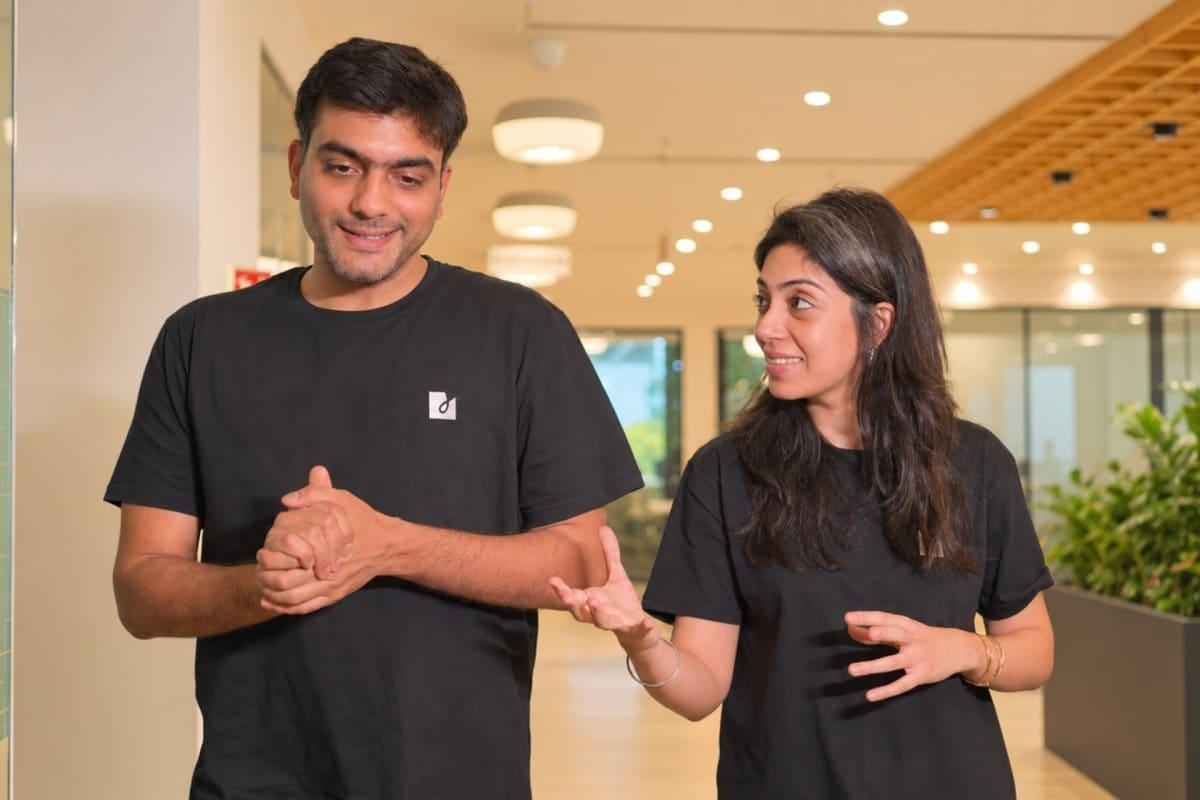
Bharat Semi, a semiconductor design house based in New Delhi, has closed a $24 million all-equity seed round to finance development of programmable image sensors that combine capture, processing and artificial intelligence inference on a single die. The nearly five-year-old startup, which has yet to generate revenue, announced design wins with General Atomics, a US defence technology contractor, and Kaynes Semicon in India. Initial commercial production is scheduled for 2027.
The financing was led by Info Edge Group, South Park Commons and Indus Bridge Ventures, with participation from Valour Capital, Micromax, Gaingels and individual backers. Co-founder Vrinda Kapoor said the capital will fund engineering expansion, product development and market entry. The company employs approximately 75 people across India and the United States, with 10 to 12 staff in Santa Clara handling engineering and business development. Headcount in the US is expected to reach around 20 by mid-2027, and the startup has begun recruiting engineers in Europe.
Bharat Semi's approach collapses three discrete components in a conventional imaging pipeline into one chip. Traditional systems pair an image sensor with a separate image signal processor and a system-on-chip to handle computation. By moving processing and AI workloads onto the sensor itself, the startup claims it can reduce total system cost by at least 70 per cent. The architecture also cuts the volume of data that must travel between components, lowering latency and power consumption in applications where real-time decisions matter.
Market Positioning and Use Cases
The startup is targeting smart home devices, industrial automation, surveillance infrastructure and aerospace platforms. Kapoor offered examples that illustrate the value proposition: air-conditioning units that detect an empty room and adjust output without relying on cloud connectivity, and drones that interpret visual information locally even when onboard computing resources are constrained. In both scenarios, the sensor itself performs tasks that would otherwise require additional silicon elsewhere in the system.
First-generation prototypes are already in the hands of design partners. A second generation, incorporating more sophisticated AI capabilities, is expected to reach prototype stage by mid-2027, with customer sampling planned for the end of that year. The timeline reflects the long lead times inherent in semiconductor development, particularly for a fabless startup that must co-ordinate with foundry partners and navigate the qualification cycles of aerospace and defence customers.
India's Semiconductor Ambitions
Bharat Semi's fundraise arrives as India channels billions of dollars into building domestic semiconductor capacity. The government has approved incentive schemes to attract fabrication plants and assembly facilities, hoping to position the country as an alternative manufacturing hub for companies seeking to reduce dependence on China. To date, however, India has not established itself as a major node in global chip production. Most of the country's semiconductor activity remains concentrated in design services and back-end assembly rather than front-end wafer fabrication.
The AI boom has opened a parallel opportunity for Indian startups to design specialised chips for niche applications. Unlike memory or logic production, which demands enormous capital and mature ecosystems, the market for custom sensors and accelerators allows smaller players to compete on architecture and software rather than manufacturing scale. Bharat Semi is betting that integrating intelligence at the edge of the imaging pipeline will appeal to customers who need to process visual data locally, whether for reasons of cost, latency, security or power.
Team and Technical Leadership
Kapoor, a South Park Commons fellow with a background in healthcare technology, co-founded the company in late 2021 with Vinayak Dalmia, who serves as managing director and previously worked at McKinsey and in private equity. The startup's chief technology officer, Boyd Fowler, held the same role at OmniVision, an established image sensor manufacturer. That combination of domain expertise and operational experience has helped Bharat Semi secure early design wins despite its pre-revenue status.
The defence sector represents a particularly demanding customer base. General Atomics, known for unmanned aerial systems and directed energy weapons, requires sensors that can withstand harsh environments, meet stringent reliability standards and deliver predictable performance over long service lives. Winning a design slot with such a customer signals that Bharat Semi's architecture has passed preliminary technical and commercial hurdles, though it does not guarantee volume production or revenue.
Kaynes Semicon, meanwhile, is part of India's push to build domestic electronics manufacturing capacity. A design win with a local partner may smooth the path to government procurement and industrial automation projects within India, where cost sensitivity and data sovereignty concerns can favour locally designed components.
Fabless Strategy and Separate Fabrication Project
Bharat Semi intends to remain fabless, outsourcing wafer production to third-party foundries while concentrating internal resources on chip design and software. That model is standard in the industry for startups and even many established players, because building and operating a fabrication plant requires capital outlays in the billions of dollars and expertise that takes years to accumulate.
In 2024 the company announced plans for a separate semiconductor fabrication project in India, involving a technology partnership with the US Space Force. Kapoor said that initiative remains in development and that the startup is working to identify domestic partners to build and operate the facility. The fabrication project is distinct from Bharat Semi's image sensor business, and none of the new seed capital will be allocated to finance the proposed plant.
The distinction is important. Fabless design and fab ownership are different businesses with different risk profiles, capital requirements and timelines. By keeping the two efforts separate, Bharat Semi can pursue its core sensor roadmap without tying progress to the uncertainties of greenfield fabrication in a country still building its semiconductor infrastructure.
Challenges Ahead
The path from prototype to production is long and littered with technical and commercial obstacles. Bharat Semi must demonstrate that its integrated architecture delivers the promised cost and performance advantages in real-world deployments, not just in laboratory conditions. It must also navigate foundry allocation, yield ramp and the qualification processes of customers in aerospace and defence, where certification cycles can stretch for years.
Competition is another consideration. Established image sensor suppliers have deep relationships with original equipment manufacturers, proven supply chains and the financial resources to invest in their own edge AI features. Startups entering the space must offer a compelling reason for customers to take on the risk of a new vendor, particularly in applications where reliability and long-term support are non-negotiable.
India's semiconductor ecosystem, while growing, still lacks the density of talent, suppliers and infrastructure found in Taiwan, South Korea or the United States. Bharat Semi's decision to maintain operations in both India and the US reflects that reality. The Santa Clara presence gives the company proximity to customers, foundry partners and a deep pool of experienced chip designers. The Indian base offers cost advantages and access to engineering talent, but scaling a global semiconductor company from New Delhi remains an experiment with few precedents.
A Test Case for Indian Hardware
Kapoor framed the company's mission in broader terms: "It's a story of can we build a global technology company out of India." That ambition extends beyond Bharat Semi's own fortunes. If the startup can ship competitive products, win repeat orders from demanding customers and scale revenue, it will provide a template for other Indian hardware ventures. If it stumbles, the outcome will reinforce scepticism about India's ability to move beyond services and design work into product companies that own intellectual property and capture margin.
The $24 million seed round is substantial for an Indian hardware startup, but modest by the standards of semiconductor ventures in the US or China, where Series A rounds for chip companies routinely exceed $50 million. Bharat Semi will need to husband its capital carefully, hitting technical milestones on schedule and converting design wins into purchase orders before it returns to the market for additional funding.
The 2027 production target is less than two years away. Whether Bharat Semi can deliver on its cost and performance claims, satisfy the qualification requirements of aerospace and defence customers, and establish a foothold in global markets will become clear soon enough. For now, the startup has capital, design wins and a technical thesis. Execution will determine whether integrated AI image sensors become a meaningful category and whether India can claim a role in defining it.