China's AI Talent War Shifts to Customer-Facing Engineers
ByteDance, Tencent and Alibaba are offering packages approaching US$150,000 for forward-deployed engineers who bridge models and business - a signal that commercialisation, not research, now drives hiring.
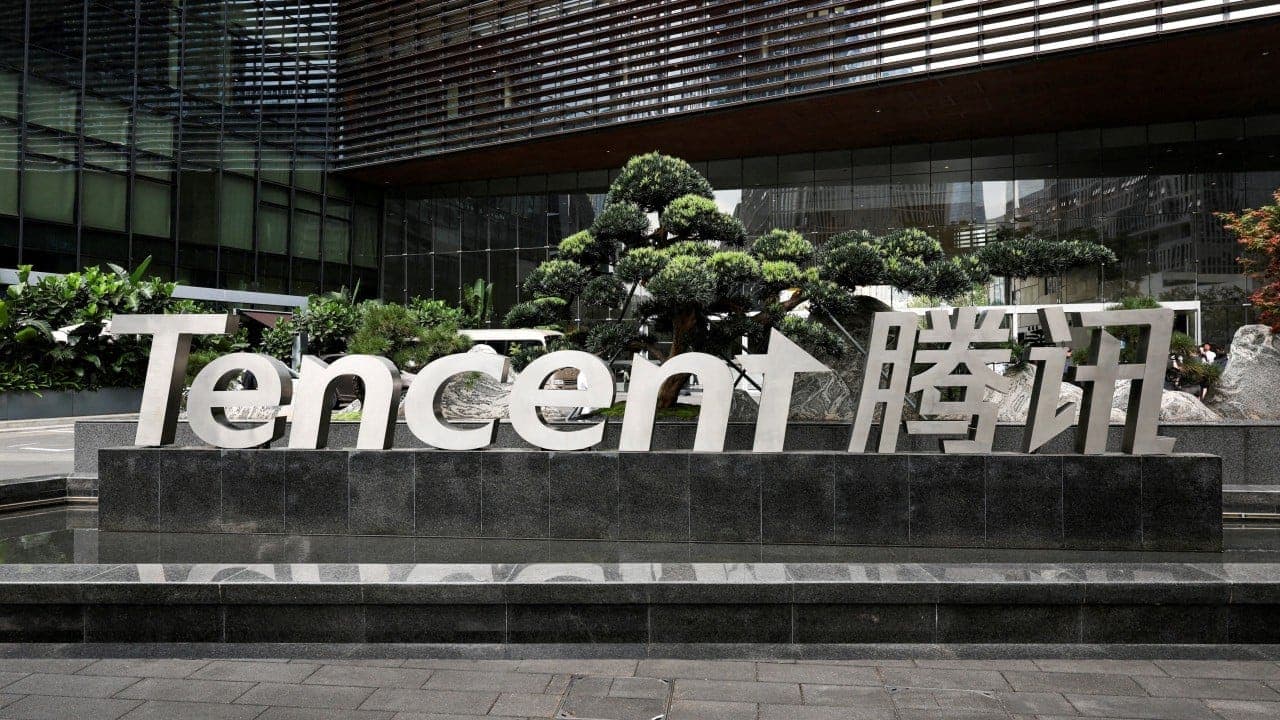
The New Bottleneck in China's AI Stack
Annual compensation packages nearing 1 million yuan - roughly US$150,000 - have become the going rate for a role that barely existed eighteen months ago. ByteDance, Tencent and Alibaba are competing for forward-deployed engineers, professionals who sit between AI models and paying customers, translating technical capability into revenue-generating applications.
The hiring surge reflects a strategic pivot across China's tech sector. After years of pouring capital into foundation models and research labs, the industry's attention has turned to a harder problem: making large language models useful enough that enterprises will pay recurring fees. Forward-deployed engineers, or FDEs, are the workforce tasked with solving that problem, working on-site with clients to customise, integrate and maintain AI systems within existing business workflows.
At Opentechwire, we've tracked similar commercialisation waves in SaaS and cloud infrastructure. The pattern is familiar - early-stage technology requires human interpretation before it scales - but the speed and salary levels in this cycle stand out. Companies that six months ago advertised research scientist roles at comparable pay are now redirecting budgets toward customer-facing engineering, a shift that signals where executives believe the next margin lies.
What Forward-Deployed Engineers Actually Do
The role borrows its name from Palantir, the US data analytics firm that pioneered the model of embedding engineers inside client organisations. In the AI context, FDEs handle fine-tuning, prompt engineering, API integration, latency optimisation and data pipeline design. They are expected to understand both the statistical behaviour of transformer models and the operational realities of supply-chain software, call-centre routing or compliance reporting.
According to ByteDance, the company has expanded its FDE headcount across verticals including retail, logistics and financial services. Tencent's cloud division has built similar teams focused on manufacturing and healthcare clients, while Alibaba Cloud has deployed engineers to work with e-commerce platforms and local government agencies.
The technical requirements are narrow but deep. Candidates typically hold degrees in computer science or adjacent fields, have experience with PyTorch or TensorFlow, and can write production-grade Python. More important, they need to diagnose why a model that performed well in testing fails when exposed to a client's messy, unlabelled data - and then fix it without escalating to the research team.
Why the Role Emerged Now
Two forces converged to create demand for FDEs. First, China's foundation model landscape has matured to the point where multiple vendors offer comparable performance on standard benchmarks. Differentiation now happens at the application layer, where speed of deployment and quality of integration determine whether a client renews a contract.
Second, enterprise buyers have grown sceptical of vendor promises. Early pilots often stalled because in-house IT teams lacked the expertise to adapt general-purpose models to specific workflows, and vendors lacked the bandwidth to provide hands-on support. FDEs fill that gap, functioning as a hybrid of solutions architect, data engineer and account manager.
The salary levels reflect both scarcity and urgency. China's AI talent pool remains concentrated in research and infrastructure roles; the supply of engineers comfortable working in client environments, under non-technical stakeholders and with legacy systems is far smaller. Companies are effectively paying a premium to retrain machine-learning engineers for customer-facing work, a process that includes soft skills many candidates have never needed.
Training Pipelines and Internal Mobility
Recognising the talent shortage, several firms have launched internal programmes to convert existing engineers into FDEs. Alibaba Cloud runs a three-month rotation that pairs cloud engineers with experienced FDEs on client projects, covering everything from stakeholder communication to on-premise deployment constraints. ByteDance has built a similar curriculum, emphasising scenario-based problem-solving and cross-functional collaboration.
These programmes are pragmatic responses to a market that cannot supply enough ready-made candidates. They also reveal a longer-term bet: that customer-facing AI engineering will become a permanent discipline, not a transitional phase before models become simple enough for clients to self-serve.
Whether that bet holds depends on how quickly AI tooling matures. If low-code platforms and improved APIs reduce the need for bespoke integration work, demand for FDEs may plateau. If, however, enterprise AI remains as context-dependent and fragile as it is today, the role could become as entrenched as DevOps or site reliability engineering.
Regional Context and Competitive Pressure
China's focus on forward-deployed talent mirrors broader patterns across Asia. In Singapore, cloud providers have expanded customer success engineering teams to support AI adoption among mid-sized enterprises. In South Korea, Samsung SDS and LG CNS have hired similar profiles to help conglomerate subsidiaries deploy generative AI in internal operations. In India, IT services firms including TCS and Infosys have rebranded portions of their consulting workforce as "AI transformation engineers," blending implementation with strategy.
What distinguishes the Chinese market is the scale and velocity of hiring. The country's tech sector employs more AI researchers than any other, and the pivot toward commercialisation is proportionally larger. The companies driving this shift - ByteDance, Tencent, Alibaba - operate platforms with hundreds of millions of users, giving them both the capital and the urgency to move faster than competitors in other markets.
Export controls on advanced chips have also shaped talent strategy. With access to cutting-edge GPUs constrained, Chinese firms have doubled down on efficiency and application-layer innovation, areas where forward-deployed engineers contribute directly. Optimising inference costs, reducing latency on domestic hardware and squeezing performance from older architectures are all tasks that benefit from engineers embedded with clients who understand real-world constraints.
The Margin Question
Compensation approaching US$150,000 per engineer makes sense only if those engineers generate significantly more than that in retained revenue or cost savings. The business model rests on two assumptions: that enterprise clients will pay subscription fees high enough to cover the cost of hands-on support, and that FDEs will eventually become less necessary as both models and clients mature.
Neither assumption is guaranteed. If clients balk at pricing that reflects the true cost of human-mediated AI, vendors will face a margin squeeze. If models remain too brittle or too general-purpose to deploy without expert help, the FDE workforce will need to scale in step with customer acquisition, limiting operating leverage.
At Opentechwire, we've seen similar dynamics play out in previous enterprise software cycles. The question is not whether forward-deployed engineering adds value - it clearly does - but whether that value can be delivered at a cost structure that supports venture-scale or public-market growth expectations. For now, Chinese tech giants are betting that the answer is yes, and they are willing to pay top-tier salaries to test that hypothesis in the market.
What Comes Next
The rapid build-out of FDE teams suggests that China's AI sector has entered a new phase, one where the hard problems are less about model architecture and more about organisational change management, data governance and workflow redesign. These are not problems that research labs solve; they require engineers who can navigate client politics, legacy infrastructure and budget cycles.
If the strategy succeeds, forward-deployed engineering may become a standard function across the global AI industry, much as solutions engineering became standard in SaaS. If it fails - if the costs prove unsustainable or if better tooling renders the role obsolete - the current hiring wave will be remembered as a transitional experiment, expensive but necessary, in the messy middle stage of AI commercialisation.
For now, the job postings keep appearing, the salary bands keep rising, and the message from China's tech giants is clear: the next frontier in AI is not in the lab. It is in the client's conference room, on the client's servers, inside the client's data pipelines. And the engineers who can operate in that environment are worth paying for.