The Case for On-Device AI: Cerebras Envisions Local Assistants That Know You Better Than the Cloud
Andrew Feldman says the next wave of consumer AI will run in your home, not just in distant data centres - and it will have your credit card details.
The Infrastructure Executive Who Uses What He Builds
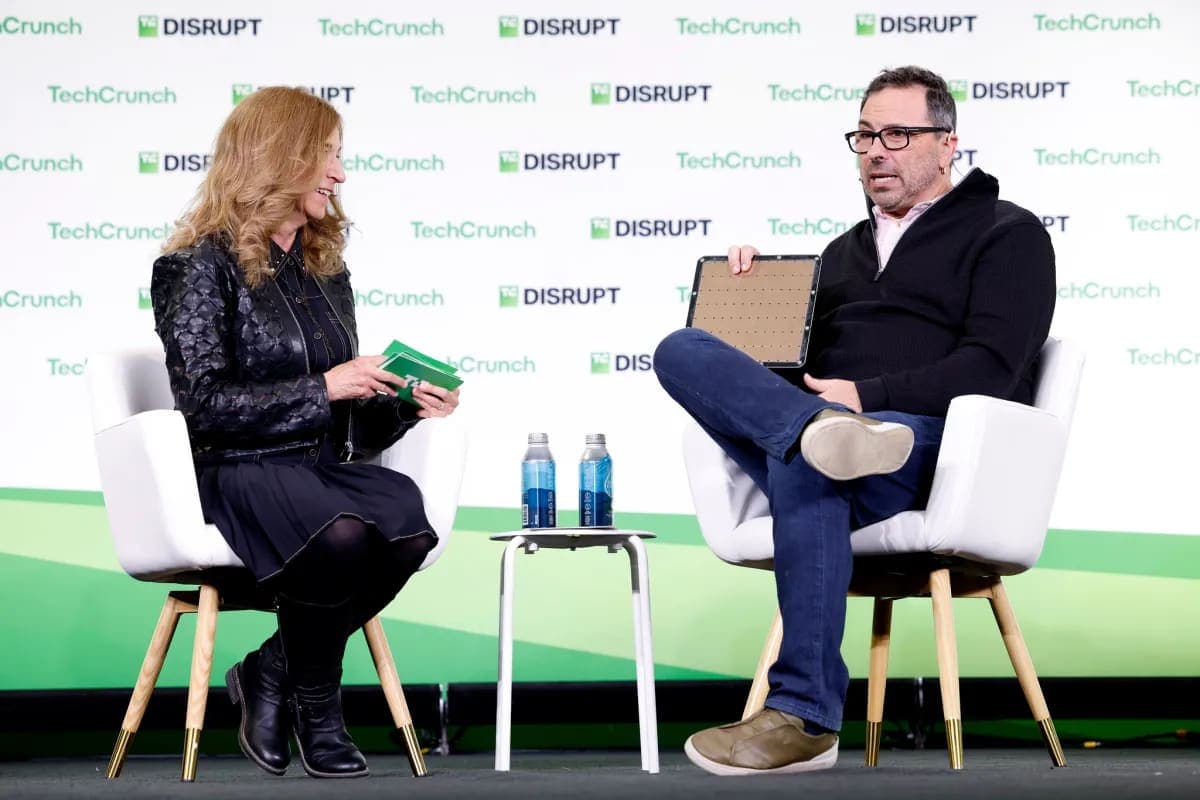
Andrew Feldman runs a company that makes the chips powering large-scale AI training. He also runs his own day using what he calls "a collection of agents" - software that sweeps his calendar, pulls background on meeting participants, and handles the logistical overhead that used to consume hours of manual work. For Cerebras Systems' co-founder and CEO, AI is both product and daily tool.
Speaking at an industry event in San Francisco last week, Feldman sketched a picture of consumer AI that diverges from the centralised, cloud-first model dominating today's landscape. He sees a near-term future in which households run their own AI assistants locally, devices that learn individual habits and operate within a defined security boundary. "Just like your cell phone, they'll do some work on device and some work going back to the cloud," Feldman said. The distinction matters: local processing means lower latency, tighter privacy controls, and less dependence on network connectivity.
Why Local Inference Changes the Privacy Equation
The hybrid architecture Feldman describes - on-device computation with selective cloud calls - addresses two friction points that have slowed consumer AI adoption outside early-adopter circles. First, latency: voice commands and contextual queries feel more responsive when the initial inference happens on local silicon rather than waiting for a round trip to a distant server farm. Second, trust: keeping sensitive data - calendar entries, purchase history, personal preferences - on a device you control is a simpler mental model than scattering it across third-party cloud infrastructure.
Feldman envisions these local assistants holding payment credentials and making purchases autonomously. "They will certainly have access to credit cards and be able to buy things for you," he said. That capability implies a level of trust and personalisation that today's cloud-based chatbots have not yet achieved at scale. For an assistant to spend money on your behalf, it needs to understand not just what you say you want, but what you actually need - and it needs to do so reliably enough that you grant it financial authority.
At Opentechwire, we've tracked the gradual shift from cloud-only AI models to edge and on-device inference across mobile chipsets from Qualcomm, MediaTek, and Apple's Neural Engine line. Consumer hardware is catching up to the computational demands of running large language models locally, even if those models are smaller, distilled versions of their cloud-trained counterparts. Cerebras, known for its wafer-scale chip architecture used in training and inference at data-centre scale, has a clear interest in seeing inference workloads proliferate - whether in the cloud or at the edge.
The Agent Economy and Its Missing Applications
Feldman pointed to recent high-profile consumer AI products - he mentioned Meta's AI initiatives and a well-funded startup recently valued at ten billion US dollars - as evidence that agentic software is finding traction beyond enterprise pilot programmes. Yet he remains deliberately vague about what the killer applications will be. "One of the reasons I love being in infrastructure is because I don't need the consumer-facing idea," he said. "I like building the platforms that other people's ideas take flight on."
That stance reflects a broader pattern in the AI value chain: infrastructure providers are scaling capacity and improving performance, but the specific consumer use cases that justify a dedicated home appliance remain under construction. Feldman's own workflow - automated calendar management, pre-meeting research briefs - represents optimisation of existing tasks rather than entirely new behaviours. The question for founders building on top of platforms like Cerebras' inference stack is whether incremental productivity gains are enough to warrant new hardware in the home, or whether a more transformative application is needed.
Security Perimeters and Spending Authority
The notion of a "security perimeter" around a home AI assistant is both reassuring and underspecified. Feldman did not detail what that perimeter entails - whether it involves local encryption, air-gapped operation for sensitive tasks, or user-configurable access controls. But the framing acknowledges a core consumer anxiety: if an assistant is powerful enough to act on your behalf, it is also powerful enough to be exploited.
Granting an AI agent access to payment methods introduces a new class of risk. Mistakes in intent recognition, adversarial prompt injection, or simple software bugs could result in unintended purchases. The liability and recourse mechanisms for autonomous agent transactions are still being worked out in both technical and legal domains. Cerebras, as a chip supplier rather than a consumer product company, is insulated from those downstream questions - but the ecosystem it enables will need answers before widespread adoption.
What the Chip Maker Gains from the Appliance Vision
For Cerebras, the proliferation of AI appliances - or even just more capable on-device agents - represents expanded addressable markets. The company's wafer-scale engine architecture is designed for training and high-throughput inference in data centres, but a world in which every household runs continuous inference workloads creates demand for efficient, low-power chips at the edge. Cerebras does not currently manufacture consumer-grade silicon, but its position in the AI infrastructure stack gives it visibility into where compute bottlenecks will emerge as models grow and deployment patterns shift.
Feldman's optimism about near-term home AI also serves a narrative function: it signals to developers, investors, and enterprise customers that the AI build-out has room to run beyond the current wave of cloud-based large language models. The infrastructure thesis depends on sustained demand for compute, and consumer appliances represent a new frontier once enterprise and developer tooling markets mature.
The Open Questions on Consumer Readiness
Feldman's timeline - "not very far away" - is deliberately imprecise, but it implies deployment within the next few product cycles rather than a decade-long horizon. That raises practical questions. Current consumer AI products, from smart speakers to mobile assistants, have struggled to move beyond simple command-and-control tasks. Adding payment authority and deeper personalisation requires not just better models, but better interfaces, clearer user controls, and a trust-building process that has historically taken years in consumer electronics.
The hybrid on-device and cloud architecture Feldman describes is technically feasible today, but the software layer - agent frameworks, task planning, error recovery - is still experimental. The difference between a useful assistant and an expensive frustration often comes down to reliability in edge cases, and consumer tolerance for AI mistakes is lower when money is involved.
Cerebras is betting that the infrastructure will be ready when the applications arrive. Whether consumers are ready to invite another always-on, financially empowered device into their homes is a separate question - and one that will be answered by the founders building on top of the platforms Feldman is laying down.