Bengaluru's Humyn Labs Secures $47 Million to Supply Physical AI Training Data
The startup collects footage of everyday human tasks across 20 countries, targeting US robotics developers hungry for real-world datasets as the race to build embodied intelligence accelerates.
A Bengaluru Bet on the Embodied AI Supply Chain
Humyn Labs, a Bengaluru-based startup founded in February, has closed $47 million in Series A financing to supply training datasets for robotics and embodied AI developers. The round comprises $26 million in equity, led by Accel, with participation from Prosus Ventures, BeeGlobal, Bajaj Finance's Finserv Intelligence and Bajaj Alts AI Opportunities Fund, Dallas Venture Capital, Lighthouse Canton, and Jump Trading. An additional $21 million in venture debt, led by Lighthouse Canton with Trifecta Capital participating, brings the total to $47 million.
The capital injection arrives as AI labs and robotics firms confront a bottleneck that text and image datasets cannot solve: teaching machines to navigate three-dimensional environments, manipulate objects, and mimic the fluid, context-dependent movements humans perform without conscious thought. Language models scaled on web text; physical AI requires video of hands folding laundry, assembling components, or preparing meals, annotated frame by frame so algorithms can learn spatial reasoning and motor control.
Humyn Labs positions itself as a supplier in that emerging value chain. The company deploys proprietary two-camera hardware to record people performing routine tasks in homes and workplaces across more than 20 countries in Latin America and Asia. Brazil, India, and South Korea serve as its primary collection hubs. Proprietary software then processes and labels the footage, tagging hand movements, object interactions, and sequences of actions so machine-learning models can extract patterns.
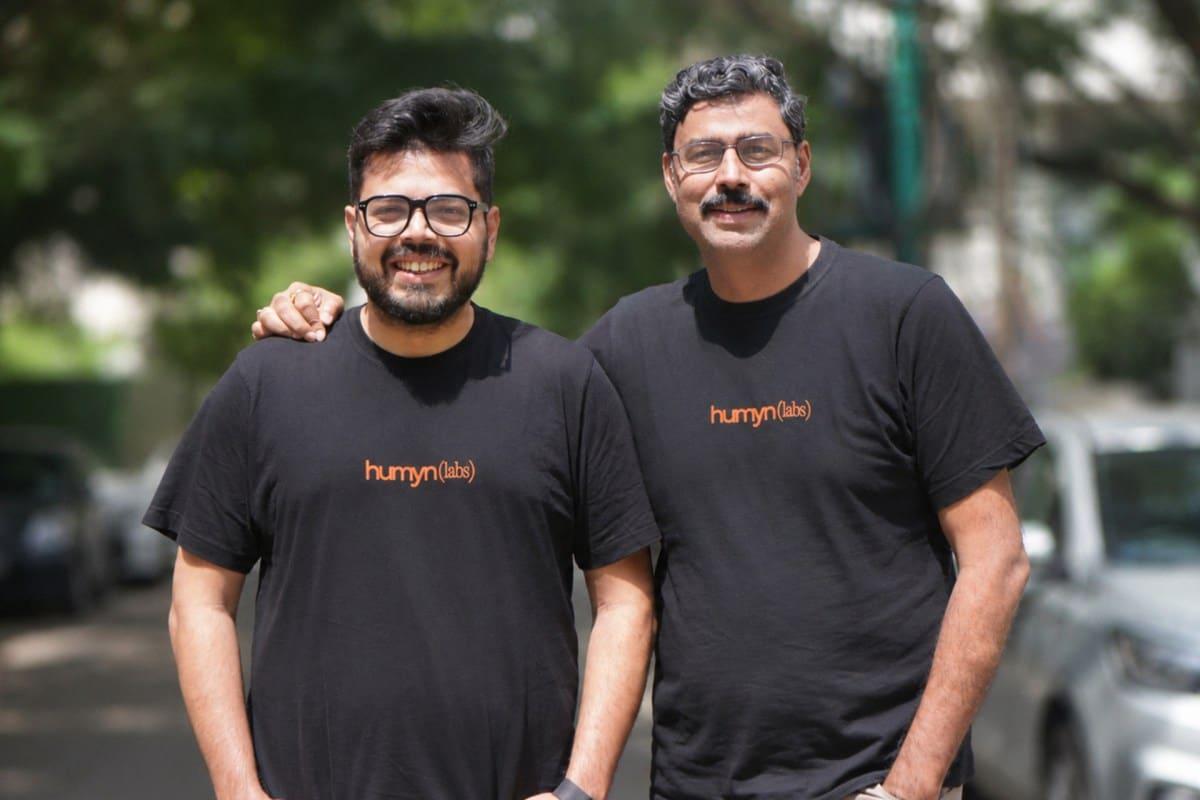
Co-founder Manish Agarwal, formerly chief executive of Indian gaming company Nazara Technologies, launched Humyn Labs alongside Ishank Gupta, a former executive at brewing conglomerate AB InBev. The pair previously founded Kratos Studios, now operating as KGeN, which maintains a contributor network across emerging markets. That network provides Humyn Labs with on-the-ground reach to recruit participants and coordinate data collection inside private residences and workplaces, the founders said.
The Economics of Real-World Data Collection
Humyn Labs reports 12 paying customers, a mix of frontier AI labs, robotics companies, and developers of world models. Approximately 90 per cent of revenue originates from the United States, according to co-founder Gupta, though the startup declined to name specific clients. Between April and October, Humyn Labs generated $10 million in revenue. It has signed contracts worth another $20 million and is negotiating a further $20 million in deals yet to be finalised.
That revenue trajectory explains the venture debt component. Humyn Labs compensates data collectors and local partners on daily or weekly cycles, but AI lab customers typically remit payment 30 to 60 days after delivery. The $21 million in debt financing bridges the working-capital gap without diluting equity further, Agarwal said. The structure reflects a broader pattern in data-services businesses: high upfront labour costs, deferred customer payments, and thin operating margins that make cash-flow management as critical as technical execution.
The startup's customer base skews heavily toward the United States, a geography where labour costs make in-house data collection prohibitively expensive at scale. Outsourcing to lower-wage markets in Asia and Latin America offers a cost arbitrage that mirrors earlier waves of software development and business-process outsourcing. The difference is that physical AI data collection cannot be fully automated; it requires human bodies performing tasks in varied settings, captured under controlled conditions, then annotated by workers who understand context and intent.
India's Emerging Role in the Physical AI Stack
Over recent months, India has become a focal point for startups supplying training data for embodied AI. Human Archive and BuildAI, both based in the country, are tapping India's large, digitally connected workforce to record people performing everyday activities. The model leverages India's established position in global IT services and extends it into a new domain: not writing code or answering customer-service calls, but generating the raw material that trains robots to fold shirts or assemble electronics.
Humyn Labs competes in this space alongside international players such as Mecka AI, XDOF, and MicroAGI, all of which are building datasets for robotics training. The competitive dynamic hinges on three variables: the volume of footage collected, the diversity of environments and tasks captured, and the quality of annotation. Agarwal emphasised that scale, diversity, and quality must function in tandem; a dataset that excels in one dimension but falters in another loses value for customers training models that must generalise across unpredictable real-world conditions.
The startup's geographic spread, spanning Latin America and Asia, offers diversity that a single-country operation cannot match. Cultural differences in how people cook, clean, organise spaces, or handle objects introduce variation that helps models avoid overfitting to narrow contexts. A robot trained exclusively on footage from South Korean apartments may struggle in Brazilian kitchens; Humyn Labs' multi-region approach is designed to mitigate that risk.
Privacy, Consent, and the Home as Data Source
Recording people inside their homes raises questions that text scraping or image collection from public datasets do not. Privacy advocates have flagged concerns about informed consent, data retention, and the potential for footage to be repurposed beyond its original intent. Humyn Labs collects video of people performing their usual work or household chores, rather than staging scripted activities, Agarwal said. The company works with local partners to identify collection sites and supervise the process.
Agarwal described the arrangement as one in which participants are compensated but require oversight to ensure the footage meets technical specifications. The phrasing, "the worker is a worker who is incentivised, but he needs to be monitored and supervised for the right input," underscores the transactional nature of the relationship. It also highlights a tension inherent in the model: participants are paid for access to their daily routines, yet the footage becomes intellectual property that feeds commercial AI systems, with no ongoing stake in the value those systems generate.
Regulatory frameworks for this type of data collection remain underdeveloped in many of the countries where Humyn Labs operates. India has no comprehensive data-protection law equivalent to the European Union's General Data Protection Regulation, though the Digital Personal Data Protection Act, passed in 2023, is expected to take effect in phases. Brazil's Lei Geral de Proteção de Dados offers stronger protections, but enforcement varies. South Korea's Personal Information Protection Act is more mature, yet its application to video collected for AI training purposes remains a grey area.
The absence of clear rules creates both opportunity and risk. Startups can move quickly, but they also operate without the legal certainty that would shield them from future liability if regulations tighten or if participants challenge the terms under which their data was collected.
The Working-Capital Challenge in Data Services
The $21 million venture debt component of Humyn Labs' financing is not incidental; it reflects the structural cash-flow mismatch in data-services businesses. Paying workers daily or weekly while waiting 30 to 60 days for customer payments creates a funding gap that equity alone cannot efficiently fill. Debt is cheaper than equity in terms of dilution, but it introduces repayment obligations and covenants that constrain operational flexibility.
This dynamic is familiar to anyone who has studied the economics of outsourcing. Indian IT-services giants such as Tata Consultancy Services and Infosys have long managed similar mismatches, using a combination of working-capital loans, factoring arrangements, and customer advances to smooth cash flow. Humyn Labs, at a much earlier stage, is applying the same playbook. The difference is that the startup is not yet profitable and must balance debt servicing with continued investment in hardware, software, and geographic expansion.
The $20 million in signed contracts and another $20 million in negotiations suggest demand is robust, but converting pipeline into cash remains the operational test. If customer payments slow, or if a major contract falls through, the debt burden could become a constraint. Conversely, if Humyn Labs executes smoothly, the debt will have allowed the company to capture market share without surrendering additional equity to investors.
The Competitive Landscape and Path Forward
Humyn Labs enters a market where the winners are not yet determined. Physical AI is still in its infrastructure-building phase; the models being trained today are prototypes, and the datasets feeding them are experimental. No dominant standard for annotation, no consensus on what constitutes sufficient diversity, and no clear sense of how much data is enough. That uncertainty creates openings for new entrants but also means that early revenue does not guarantee long-term defensibility.
The startup's 51 full-time employees, most based in Bengaluru, support a distributed network of local partners across collection sites. That structure keeps fixed costs low but introduces coordination complexity. Maintaining consistent quality across 20 countries, each with different languages, cultural norms, and logistical challenges, requires systems and oversight that scale less easily than software.
Humyn Labs' ability to sustain its growth will depend on whether it can convert its early customer relationships into long-term contracts, expand its dataset library faster than competitors, and build annotation tools that reduce the manual labour required per hour of footage. The $47 million provides runway, but the underlying question is whether the market for physical AI training data will consolidate around a few large suppliers or fragment into specialised niches.
For now, the bet is that US robotics developers will continue to pay for datasets collected in emerging markets, and that Bengaluru can serve as the operational hub for a global data-collection network. Whether that bet pays off will become clearer as the first wave of commercially deployed robots moves from labs into factories, warehouses, and homes.