Beijing Channels State Capital Into Hua Hong as Legacy Chip Strategy Accelerates
Multi-billion yuan infusions into China's second-largest foundry underscore a national pivot to mature-node self-sufficiency under tightening export restrictions
Strategic Capital Deployment
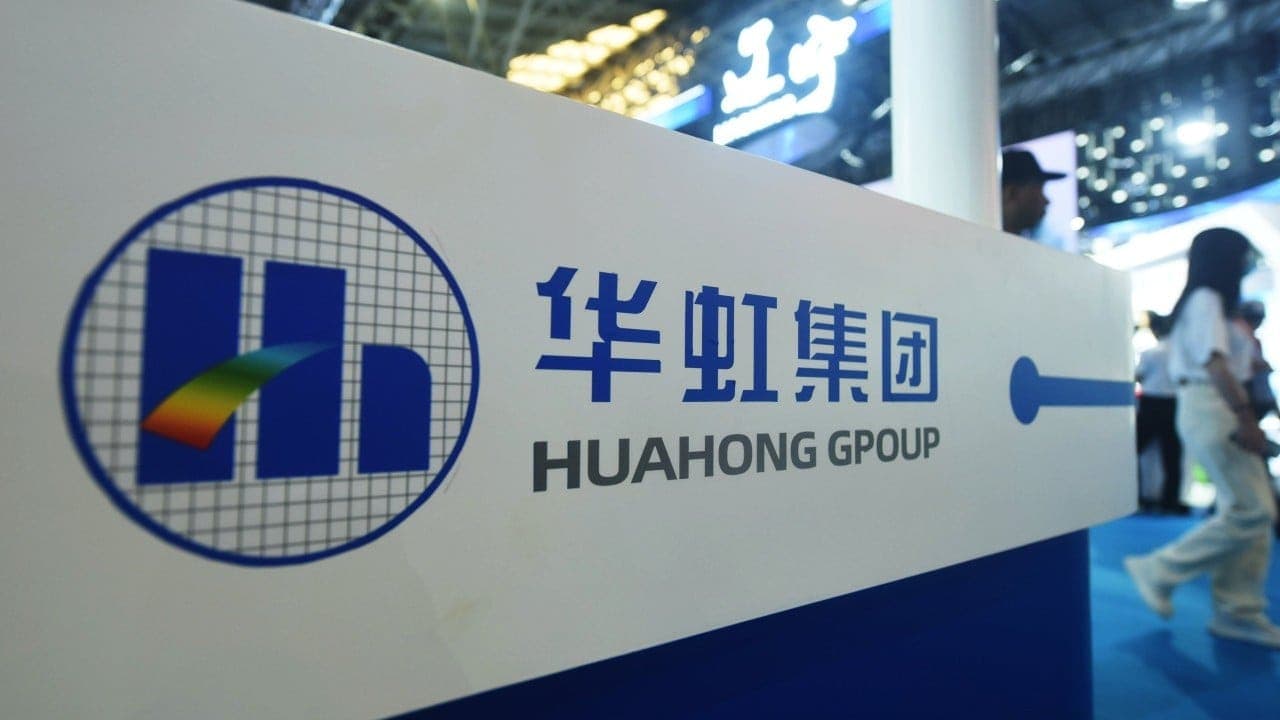
China's industrial policy apparatus is channelling billions of yuan into Hua Hong Semiconductor Manufacturing Corporation and related production facilities, marking a decisive shift in how Beijing approaches semiconductor self-reliance. The funding wave targets both the Shanghai-based parent entity and a new fabrication plant in Wuxi, positioning Hua Hong - the nation's second-largest contract chipmaker by revenue - as a critical node in the government's mature-node manufacturing strategy.
The scale and coordination of the capital injections reflect a calculated response to Washington's expanding technology restrictions. Where earlier rounds of state backing cast a wide net across the semiconductor value chain, recent allocations concentrate firepower on foundries capable of producing chips at 28-nanometre and above - nodes largely outside the scope of the most stringent US export controls yet essential for automotive, industrial, and consumer electronics applications across Asian supply chains.
At Opentechwire, we've tracked a pattern in which state-directed investment in Chinese semiconductors has evolved from broad-spectrum support to targeted reinforcement of specific chokepoints. The Hua Hong infusions fit squarely within that evolution, prioritising production capacity over leading-edge research and signalling that Beijing's near-term ambitions centre on volume and reliability rather than transistor density.
The Hua Hong Ecosystem
Hua Hong operates a network of fabs in Shanghai, Wuxi, and Shenzhen, specialising in power management integrated circuits, microcontrollers, and embedded memory - devices that underpin electric vehicles, renewable energy inverters, and smart-home platforms. Unlike SMIC, which maintains a dual focus on mature and advanced nodes, Hua Hong has concentrated its process roadmap on 90-nanometre through 28-nanometre technologies, a segment experiencing robust demand as automakers and industrial equipment vendors diversify their foundry relationships.
The Wuxi facility, which began ramping production in late 2024, is designed for 300-millimetre wafer processing at 55-nanometre and 40-nanometre nodes. Industry data suggest the plant's monthly output will reach approximately 40,000 wafer starts by mid-2027, adding meaningful incremental capacity to a domestic foundry sector that has struggled to meet local demand even as international customers reduce their exposure to geopolitical risk.
State capital flowing into the parent company and the Wuxi site is structured through a combination of equity stakes and low-cost debt facilities coordinated by the China Integrated Circuit Industry Investment Fund, commonly known as the Big Fund. The fund's third phase, launched in mid-2024 with a reported capitalisation exceeding USD 40 billion, has prioritised equipment self-sufficiency and capacity expansion at nodes unaffected by the 2022 and 2023 US Commerce Department rules.
Policy Context and Export Control Pressures
Washington's October 2022 export restrictions, subsequently tightened in 2023 and 2024, imposed licensing requirements on equipment and intellectual property used to manufacture chips below 14 nanometres and certain memory technologies. Whilst these measures directly constrain advanced-node development, they have had a secondary effect: redirecting Chinese foundry investment toward mature nodes where equipment can still be sourced domestically or from non-US suppliers, and where end-market demand remains strong.
European and Japanese equipment makers have navigated a complex compliance landscape, supplying deposition, etch, and lithography tools for mature-node fabs whilst adhering to multilateral controls on advanced systems. The result has been a bifurcated equipment market in which Chinese foundries can still acquire the machinery necessary for 28-nanometre and above production, albeit with longer lead times and higher procurement costs.
For Hua Hong, this environment creates both opportunity and constraint. The company benefits from surging domestic demand for power semiconductors and automotive chips - categories less sensitive to cutting-edge process nodes - but faces persistent challenges in securing next-generation lithography and metrology equipment should it wish to push below 28 nanometres. State funding mitigates the financial risk of capacity expansion in a sector marked by long payback periods and uncertain access to critical inputs.
Regional Competitive Dynamics
Across the Taiwan Strait, TSMC and United Microelectronics Corporation continue to dominate the global foundry market, including mature-node segments. TSMC's 28-nanometre capacity remains heavily utilised, supporting clients in automotive and Internet of Things applications, whilst UMC has expanded its 22-nanometre and 28-nanometre footprint in Taiwan and Singapore. Both foundries benefit from established customer relationships, proven yield performance, and unrestricted access to the full spectrum of semiconductor manufacturing equipment.
South Korea's DB HiTek and Taiwan's Vanguard International Semiconductor also compete in the mature-node space, serving regional fabless companies and integrated device manufacturers. The funding rounds we've followed across the region suggest that investors view legacy-node capacity as a hedge against supply-chain disruption, with capital flowing into brownfield expansions and equipment upgrades rather than greenfield mega-fabs.
Hua Hong's state-backed expansion must therefore achieve two objectives simultaneously: satisfy domestic policy mandates for self-sufficiency and compete on cost and quality with established regional players. The former is assured by government support; the latter remains an open question, contingent on yield ramp-up, customer qualification timelines, and the ability to recruit and retain process engineers in a tight labour market.
Implications for the Foundry Landscape
The capital committed to Hua Hong forms part of a broader industrial strategy that treats semiconductor manufacturing as critical infrastructure rather than a purely commercial venture. This framing allows Beijing to sustain investment through cyclical downturns and geopolitical headwinds, insulating domestic foundries from the margin pressures that discipline capacity decisions at publicly traded competitors.
For multinational fabless companies and integrated device manufacturers, the expansion of Chinese mature-node capacity introduces a complex calculus. On one hand, additional supply sources can alleviate bottlenecks and improve pricing leverage; on the other, reliance on state-supported foundries carries regulatory and reputational risks in jurisdictions where supply-chain security has become a policy priority. Several Asia-Pacific fabless firms have adopted a dual-sourcing strategy, qualifying both Chinese and non-Chinese foundries for equivalent process nodes to maintain flexibility.
Equipment vendors, meanwhile, face persistent uncertainty. Increased investment in Chinese fabs theoretically expands the addressable market for deposition, etch, and inspection tools, but export licensing delays and the threat of further restrictions dampen visibility. Japanese and European suppliers have reported longer sales cycles and heightened due-diligence requirements when engaging with Chinese customers, even for mature-node equipment outside current control lists.
The Path Ahead
Hua Hong's trajectory over the next 24 months will offer a high-resolution view of whether state-directed capital can bridge the gap between policy ambition and commercial execution in semiconductors. The company must navigate yield improvement at the Wuxi fab, customer diversification beyond domestic automotive and industrial clients, and the integration of domestically produced equipment - a requirement that carries both strategic and technical risk.
Beijing's willingness to channel multi-billion yuan commitments into a single foundry underscores the centrality of mature-node production to its technology strategy. Unlike leading-edge logic, where the gap between Chinese and global capabilities has widened, legacy nodes represent a domain where equipment access, process knowledge, and capital can combine to deliver meaningful self-sufficiency within a politically acceptable timeframe.
Whether that sufficiency translates into competitiveness beyond China's borders remains the central question. For now, the state funds are placing their bet, and Hua Hong is tasked with converting capital into wafers, yield, and ultimately, strategic autonomy in a technology domain that has become inseparable from national interest.