Battery Storage Undercuts Gas Turbines as Data Centre Power Costs Climb
Four-hour battery systems now cost less than open-cycle gas turbines in all 43 markets Wood Mackenzie tracked, a crossover driven by AI infrastructure demand and supply-chain bottlenecks.
The Crossover Point
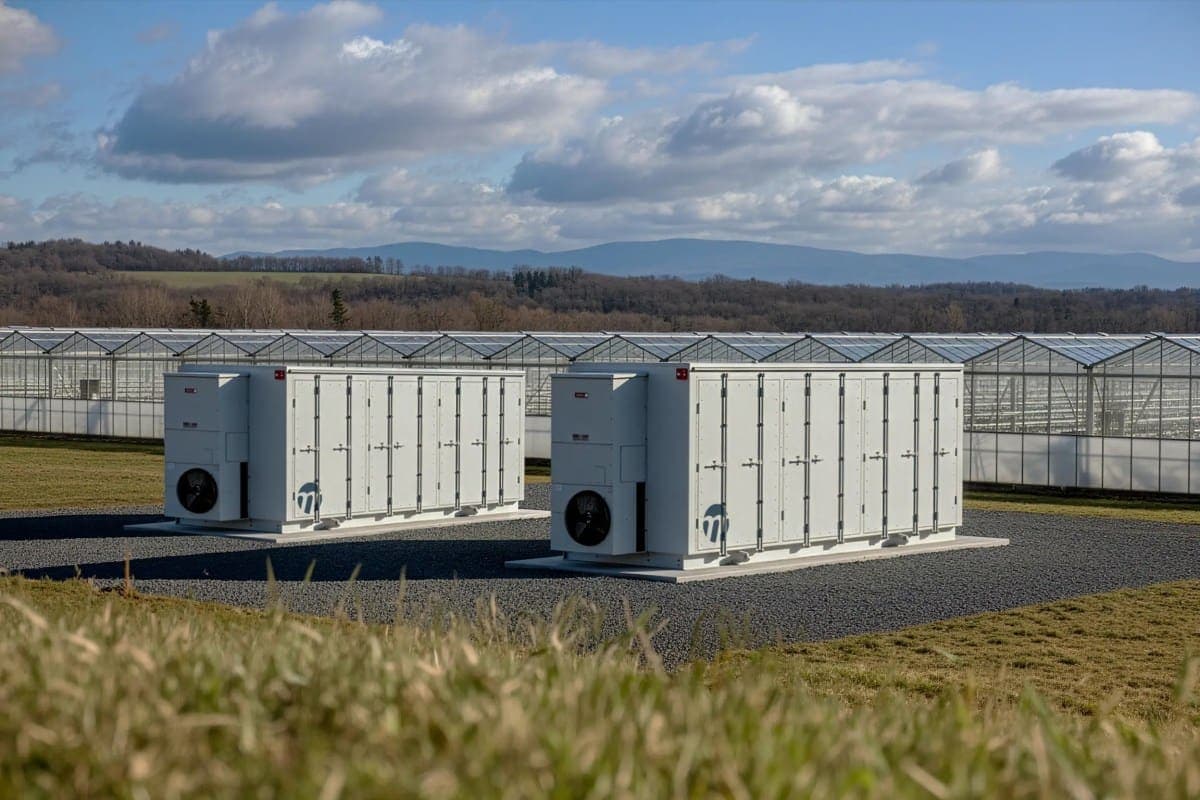
Four-hour battery storage systems now cost less than open-cycle gas turbines in every market Wood Mackenzie surveyed, spanning 43 jurisdictions across six continents. The consultancy's latest analysis marks a decisive shift in the economics of data centre power infrastructure, one accelerated by AI workloads and the procurement frenzy they have triggered.
Open-cycle turbines, simpler to manufacture than their closed-cycle counterparts, have become a bottleneck. Lead times for open-cycle units now stretch two to four years, whilst closed-cycle turbines face waitlists extending into the early 2030s. Data centre developers, under pressure to secure any available generating capacity, have been buying turbines without regard to price, pushing procurement costs upward across the board. That scramble has knock-on effects for utilities, which rely on open-cycle turbines as peaking plants during periods of high demand. When turbine costs rise, so do the expenses utilities must absorb or pass on.
Battery storage, by contrast, faces no comparable supply constraint. Manufacturing capacity for lithium-ion cells has scaled rapidly, and project timelines remain shorter. Wood Mackenzie expects the cost of electricity from batteries to continue falling, whilst gas turbine power will only become more expensive in the decades ahead.
Regional Divergence
Solar remains the cheapest form of new power generation in all markets Wood Mackenzie examined, though the picture in North America is more complicated. Tariffs and import restrictions have placed pressure on solar pricing, particularly for smaller-scale installations. Utility-scale solar fares better: 168 gigawatts of capacity in the United States benefit from safe-harbour provisions in the One Big Beautiful Bill, which preserved tax credits for projects begun or completed before the end of 2027. Those provisions insulate a significant portion of near-term solar deployment from recent policy shifts.
In the Middle East and Africa, Wood Mackenzie forecasts that four-hour batteries will be 33 per cent cheaper than gas peaking by 2035, displacing gas across every market in the region. China's energy storage costs sit 55 per cent below those of neighbouring countries, a gap that reflects both manufacturing scale and policy support. Ahmed Jameel Abdullah, principal analyst at Wood Mackenzie, described the economic shift as "decisive and widening."
The narrowing role of natural gas in the US market is already visible in project pipelines and utility procurement strategies. As battery costs continue to fall and turbine lead times remain extended, the rationale for gas peaking plants weakens, even in markets where gas has historically been the marginal source of electricity.
AI Infrastructure and Power Demand
The surge in data centre construction, driven by generative AI and large-language-model training, has rewritten the assumptions underpinning electricity demand forecasts. Data centres now represent one of the fastest-growing categories of load in the United States and other major markets, and their appetite for reliable, on-demand power has reshaped procurement behaviour. Developers have prioritised speed and certainty, often opting for on-site generation rather than waiting for grid connections or utility upgrades.
That urgency has made open-cycle turbines attractive despite their inefficiency and higher operating costs. They can be deployed more quickly than closed-cycle units, and they offer a level of control that grid power does not. But as procurement timelines lengthen and prices rise, the calculus shifts. Battery storage, paired with solar or wind, can deliver comparable reliability at lower cost, provided the project can tolerate the intermittency of renewable generation.
The economics of battery storage improve as utilisation increases. Four-hour systems, the benchmark in Wood Mackenzie's analysis, can handle daily cycling and provide both capacity and ancillary services. For data centres with flexible workloads or the ability to shift compute tasks, batteries paired with renewables can meet a significant portion of demand. For always-on facilities, hybrid configurations combining batteries, solar, and grid power are becoming more common.
Implications for Grid Planning
The shift in relative costs between batteries and gas turbines has implications beyond data centres. Utilities planning new capacity must now weigh the declining cost of storage against the rising expense of gas peaking. In markets with high renewable penetration, batteries can absorb excess generation during periods of low demand and discharge during peaks, smoothing the load curve and reducing the need for fossil-fuel backup.
Regulatory frameworks, however, have not always kept pace. In many jurisdictions, batteries remain classified as generation rather than transmission or distribution assets, limiting their eligibility for certain incentives and complicating interconnection. Policy support for storage varies widely, and in some markets the lack of clear rules around participation in capacity markets or ancillary services has slowed deployment.
Wood Mackenzie's findings suggest that the economic case for batteries is now strong enough to overcome many of these barriers. Where policy is supportive, storage deployment is accelerating. Where it lags, developers are finding workarounds, including behind-the-meter installations and merchant projects that bypass utility procurement altogether.
The Path Forward
The cost trajectory for battery storage is not guaranteed. Lithium prices, whilst lower than their 2022 peak, remain volatile, and supply chains for critical minerals face geopolitical risk. Manufacturing capacity for battery cells is concentrated in a small number of countries, and trade policy can shift quickly. Yet the underlying trend is clear: batteries are becoming cheaper, whilst gas turbines are becoming more expensive and harder to procure.
For data centre developers, the implications are immediate. Projects that locked in turbine orders two or three years ago may now face higher costs than if they had waited and opted for batteries. Those planning new facilities must account for longer lead times and the possibility that turbine prices will continue to rise. Battery storage, once seen as a complement to gas generation, is increasingly a direct substitute.
At Opentechwire, we have tracked the convergence of energy and compute infrastructure for several years, and the pace of change has accelerated. The data centre sector is now a major force in electricity markets, and the choices developers make about power generation ripple outward, affecting utilities, manufacturers, and policymakers. The shift from gas to batteries is not merely a question of cost; it is a reflection of broader changes in how we think about reliability, resilience, and the role of fossil fuels in a grid increasingly dominated by renewables.
Wood Mackenzie's analysis underscores a reality that many in the sector have been slow to acknowledge: the economics of data centre power are no longer what they were even two years ago. Battery storage has crossed a threshold, and the consequences will shape infrastructure decisions for the next decade.