Alibaba's XuanTie Architecture Crosses 6 Billion Chip Shipments
The Hangzhou giant's RISC-V processor IP now powers automotive and AI systems as China's semiconductor industry pivots to open-source instruction sets
A Volume Milestone in Open Silicon
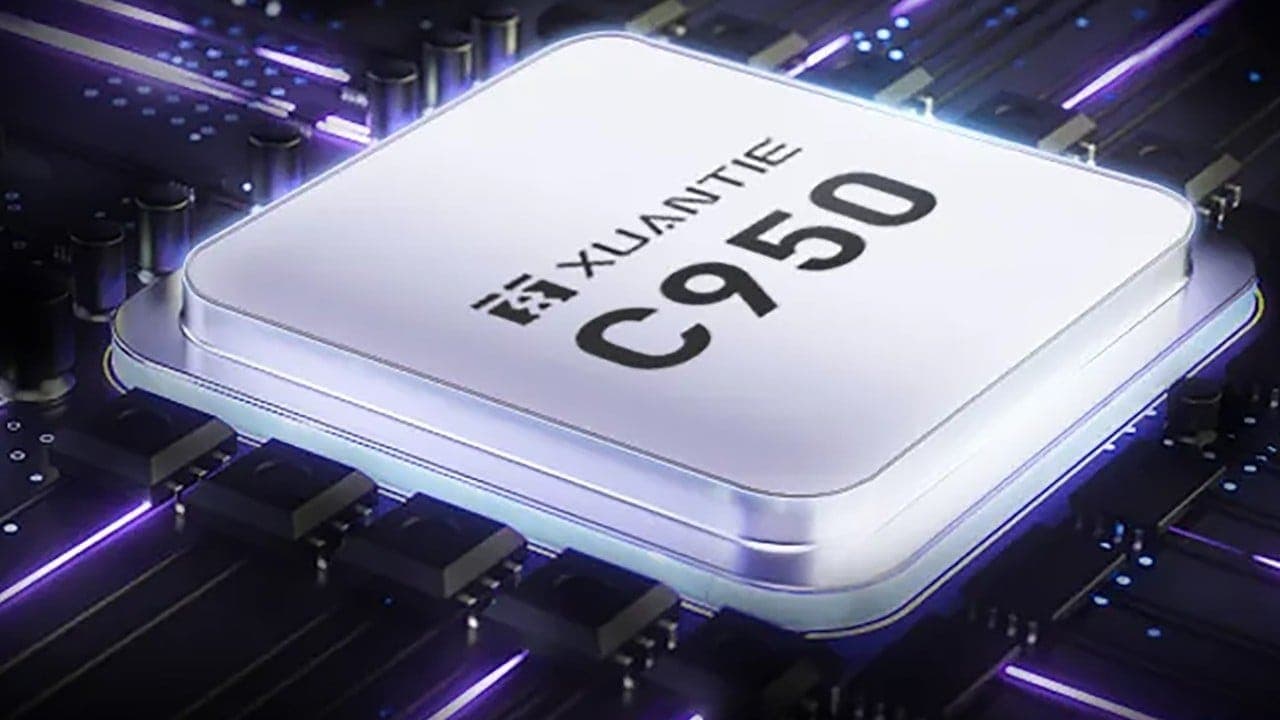
Alibaba Group's research division has logged more than six billion chip shipments incorporating its XuanTie RISC-V processor cores, according to Damo Academy chief scientist Meng Jianyi. He shared the figure at the RISC-V Summit China in Shenzhen on 20 October, underscoring the traction that open instruction-set architectures have gained inside China's semiconductor supply chain.
At Opentechwire, we've tracked XuanTie's evolution since Alibaba first released the cores in 2019. The six-billion mark is notable less for its absolute scale than for its velocity: the architecture is now embedded in automotive controllers, AI inference accelerators, and edge IoT modules shipping from factories across Guangdong, Jiangsu, and Zhejiang. That distribution pattern reflects deliberate prioritisation by Chinese OEMs and chip designers who see RISC-V as a hedge against licensing friction in ARM and x86 ecosystems.
Automotive and AI as the New Beachheads
Meng highlighted two verticals driving current adoption. In automotive systems, XuanTie cores are appearing in domain controllers for electric-vehicle battery management, advanced driver-assistance telemetry, and in-cabin infotainment stacks. Several Tier 1 suppliers in the Pearl River Delta have designed XuanTie-based SoCs into production models slated for 2027 launch windows, though Alibaba has not disclosed which nameplates will carry the silicon.
On the AI side, the focus is inference rather than training. XuanTie's lower power envelope and customisable vector extensions make it a practical choice for edge deployments where latency and thermal budgets matter more than raw FLOPS. Alibaba itself uses XuanTie cores in its own data-centre infrastructure for lightweight preprocessing tasks, and the IP is available to third parties through the company's semiconductor licensing arm, T-Head.
The architecture's open-source lineage allows integrators to add custom instructions without renegotiating licence terms, a flexibility that ARM's recent shift toward higher royalty tiers has made comparatively expensive. That commercial calculus is steering design wins toward RISC-V, particularly among fabless houses that lack the volume to justify ARM's Total Access programme.
China's Strategic Calculus on Instruction Sets
The six-billion figure arrives as Beijing continues to channel subsidies and procurement preferences toward indigenous processor architectures. RISC-V is not Chinese in origin - it emerged from UC Berkeley in 2010 - but its permissive licensing and lack of a single corporate gatekeeper have made it a natural rallying point for firms navigating export-control constraints on advanced x86 and ARM server chips.
Alibaba has committed engineering resources to upstream RISC-V International working groups, contributing to the ratification of vector and hypervisor extensions. That upstream engagement positions Damo Academy as a technical anchor within the broader ecosystem, a role that carries soft influence as the standard matures.
Yet adoption at this scale also exposes fragmentation risk. Unlike ARM, which enforces architectural compliance through licensing, RISC-V permits vendors to diverge in their extensions and system-software stacks. The result is a landscape where software compiled for one RISC-V implementation may require porting to run on another, a friction that has historically limited the architecture's reach in client computing and high-performance server markets.
The IP Licensing Model and Ecosystem Gaps
Alibaba offers XuanTie cores under a dual model: free access to basic configurations for academic and non-commercial use, and commercial licences for production integration. T-Head has signed deals with more than 40 chip companies, spanning consumer electronics, industrial automation, and telecommunications infrastructure.
Still, ecosystem maturity lags behind ARM and x86. Compiler toolchains, operating-system support, and third-party IP blocks - memory controllers, interconnects, security engines - remain thinner for RISC-V. Alibaba has invested in LLVM back-end optimisation and maintains a downstream Linux distribution, but the burden of system integration still falls more heavily on the licensee than it would with a mature ARM Cortex-A or Intel Atom platform.
That gap is narrowing. Over the past 18 months we've seen Canonical, Red Hat, and SUSE all extend enterprise Linux support to RISC-V server profiles, and Imagination Technologies, Cadence, and Synopsys have each announced RISC-V-compatible IP. The question is whether that pace of ecosystem build-out can keep up with the volume ramp that Alibaba and its peers are now pushing into the market.
What the Shipment Figure Reveals - and Conceals
Six billion chips is an aggregate across seven years and dozens of SKU variants, so it does not map neatly onto current run-rate or revenue. Many of those units are low-complexity microcontrollers in white-goods appliances, fitness wearables, and industrial sensors - applications where the instruction set is largely invisible to the end user and where margins are thin.
Higher-value opportunities lie in automotive and AI, but those segments also demand longer qualification cycles, functional-safety certification, and tighter silicon-software co-optimisation. Alibaba's ability to convert volume into strategic influence will depend on whether XuanTie cores can move up the performance ladder into applications that set platform standards rather than simply fill cost-optimised niches.
The Shenzhen summit itself is a signal of that ambition. RISC-V International has held its China event annually since 2021, and attendance has grown each year. This year's programme featured sessions on machine-learning acceleration, automotive functional safety, and data-centre disaggregation - topics that a decade ago would have been the exclusive domain of ARM and Intel developer conferences.
Implications for the Broader Semiconductor Landscape
Alibaba's shipment milestone adds one more data point to the case that RISC-V is no longer a research curiosity or a niche embedded play. It is becoming a volume architecture, at least within certain geographies and application domains. Whether that volume translates into the kind of network effects that cemented x86 and ARM's dominance - software ecosystems, developer mindshare, standards convergence - is still an open question.
For now, the architecture's centre of gravity remains in China, where policy alignment, subsidy flows, and trade constraints have aligned to create a uniquely favourable environment. The test will come if and when RISC-V vendors attempt to scale outside that protected market, competing head-to-head with incumbents on performance, power, and total cost of ownership in regions where licensing friction is less acute.
Alibaba's role in that story is both technical and geopolitical. By open-sourcing its cores and contributing to international standards bodies, it positions itself as a neutral infrastructure provider. By embedding those cores in AI and automotive systems, it ensures that Chinese OEMs have a credible alternative to Western IP. The six-billion-chip milestone is less an end point than a marker of where the open-silicon experiment now stands.