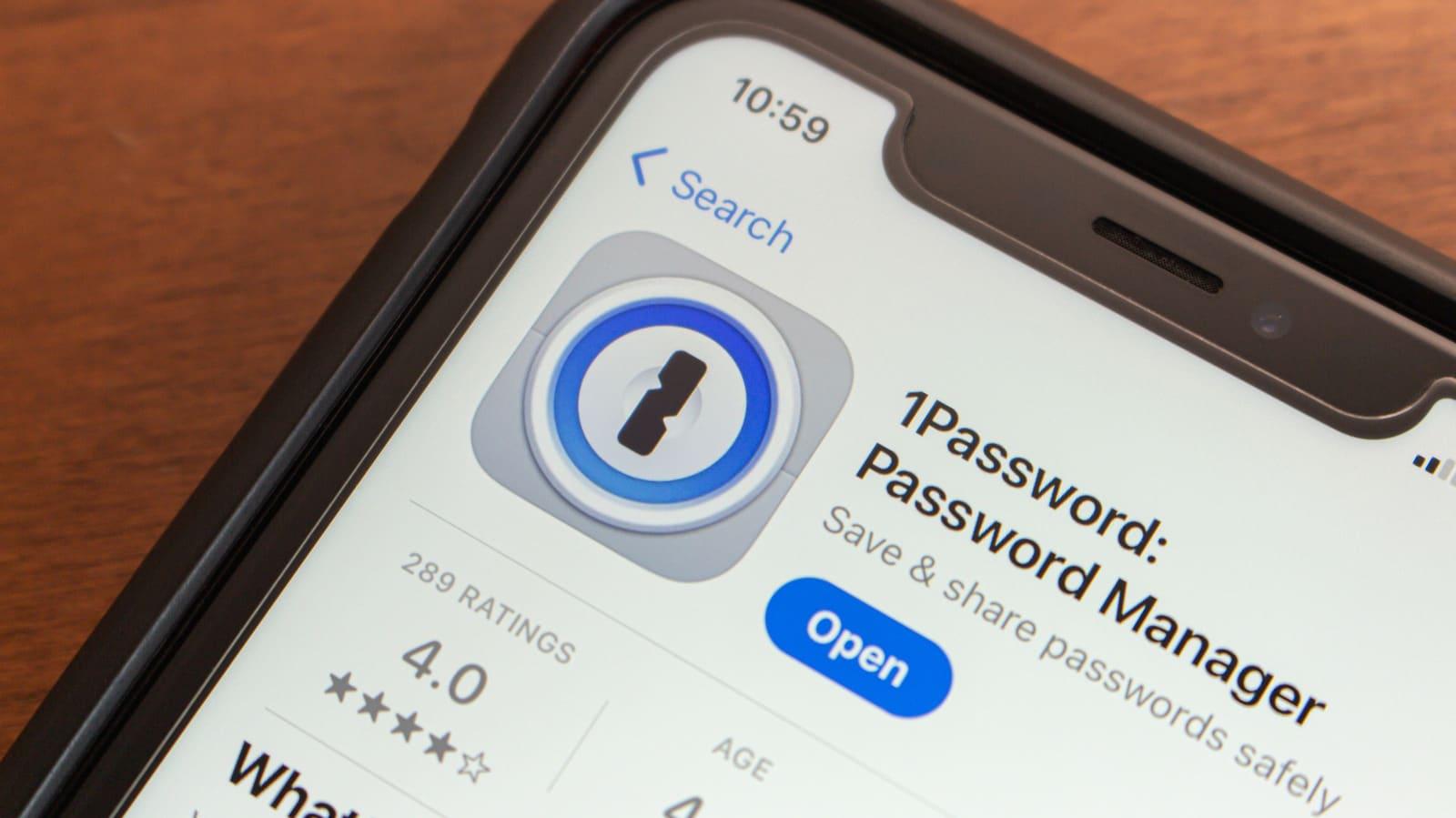
1Password Confirms Breach After Attacker Injects Code Into Backend Systems
The password manager disclosed that an intruder accessed customer metadata and source code through a compromised employee GitHub account, though encrypted vaults remain secure.
The Incident Timeline
1Password began examining indicators of compromise on 19 November, after detecting unusual activity tied to an employee's corporate GitHub account. The investigation revealed that an intruder had gained control of the credentials and used them to reach the company's source code repositories, where they inserted malicious code into backend infrastructure.
The scope of the intrusion extended beyond read-only access. By injecting code into production systems, the attacker positioned themselves to extract specific categories of customer information, including account holder names, email addresses, account creation dates and timestamps of the most recent sign-in activity. Public keys associated with user accounts were also taken, though 1Password emphasised that these cryptographic artefacts do not weaken the security model of its vaults.
What Was Taken and What Was Not
The stolen data falls into two buckets: customer metadata and internal source code. The metadata - names, email addresses and account activity logs - represents the kind of information that sits outside the encrypted boundary of a password vault. Public keys, which are used to verify identity in cryptographic operations, were part of the haul, but they cannot be used to decrypt stored credentials.
Source code from 1Password's own repositories was also exfiltrated. The company clarified that this code does not contain customer data, though the theft of proprietary code raises separate concerns around intellectual property and the potential for adversaries to study the platform's inner workings for future attacks.
What the attacker did not obtain - and could not obtain, given 1Password's architecture - were the contents of user vaults. The service is built on a zero-knowledge model, meaning the company does not hold the secret keys required to decrypt vault data. Master passwords, recovery keys and the secret keys that guard each vault remain inaccessible to 1Password itself, and therefore were not exposed in the breach.
Response Measures
Upon confirming the compromise, 1Password revoked the stolen access token and disabled the affected GitHub account. The company also deployed additional detection tools designed to flag similar patterns of credential abuse and code injection in future incidents.
The response reflects a containment posture rather than a fundamental overhaul of access controls. The speed with which the attacker moved from credential theft to code injection suggests that existing safeguards - two-factor authentication requirements, anomaly detection on repository access - either were not in place or failed to trigger alerts before the malicious code was deployed.
Phishing Risk Remains the Practical Threat
While 1Password's assertion that vaults remain secure is grounded in its cryptographic design, the exposure of email addresses shifts the risk surface. Attackers now hold a verified list of 1Password users, complete with account metadata that can be weaponised in targeted phishing campaigns.
The company has warned users to expect a rise in fake account recovery emails, password reset prompts and invitations that mimic legitimate 1Password communications. These messages may reference accurate account details - creation dates, recent sign-in times - to lend credibility. The goal is to trick users into divulging their master passwords or secret keys on attacker-controlled sites.
This is where the breach moves from theoretical to operational. A vault protected by strong encryption is only as secure as the human behaviour surrounding it. If a user can be convinced to enter credentials into a fake recovery page, the attacker gains what the breach itself could not deliver.
What This Reveals About Supply-Chain Exposure
The 1Password incident is the latest in a pattern of breaches that exploit developer infrastructure. GitHub accounts, with their access to source code and continuous integration pipelines, have become high-value targets. A single compromised developer credential can open pathways not just to code, but to build systems, deployment pipelines and - in this case - the ability to inject malicious logic into production environments.
The fact that the attacker was able to insert code into 1Password's backend suggests that repository access carried with it the ability to modify live systems, or that the injected code passed through automated deployment processes without triggering review. Either scenario points to a gap in the boundary between development and production.
For password managers, which hold a uniquely sensitive position in the security ecosystem, these gaps carry outsized consequences. Users trust these platforms to be the most hardened link in the chain. When that link is compromised - even if the vault contents remain safe - the trust calculus shifts.
The Zero-Knowledge Model Holds, But Context Matters
1Password's architecture performed as designed. The zero-knowledge model ensured that even with access to backend systems, the attacker could not decrypt user data. This is not a theoretical claim - it is borne out by the fact that no vault contents were exposed.
Yet the breach underscores a tension in how security is communicated. "Your vaults are safe" is technically accurate, but it does not capture the full picture. Metadata was stolen, source code was taken, and the attack surface for phishing has widened. Users are now more vulnerable to social engineering, which operates outside the bounds of encryption.
The incident also raises questions about how 1Password manages access to its most sensitive systems. A GitHub account with the ability to both read source code and inject backend logic represents a concentration of privilege that, once compromised, offers an attacker significant leverage. Segmenting access - so that code review does not confer deployment rights, or so that backend systems require separate authentication - could limit the blast radius of future intrusions.
1Password has advised users to remain alert for phishing attempts and to verify the authenticity of any communication requesting credentials. The company has not disclosed whether it will implement additional controls around developer access or change how code moves from repository to production. For now, the breach is contained, the vaults remain encrypted, and the next move belongs to the phishing campaigns that are almost certain to follow.