Xiaomi's Dual-Screen Flagship Raises Questions About Design Trade-Offs
The 18 Pro series delivers strong cameras and performance, but its rear display struggles to justify higher prices amid a global memory shortage
A Second Screen Reaches Global Markets
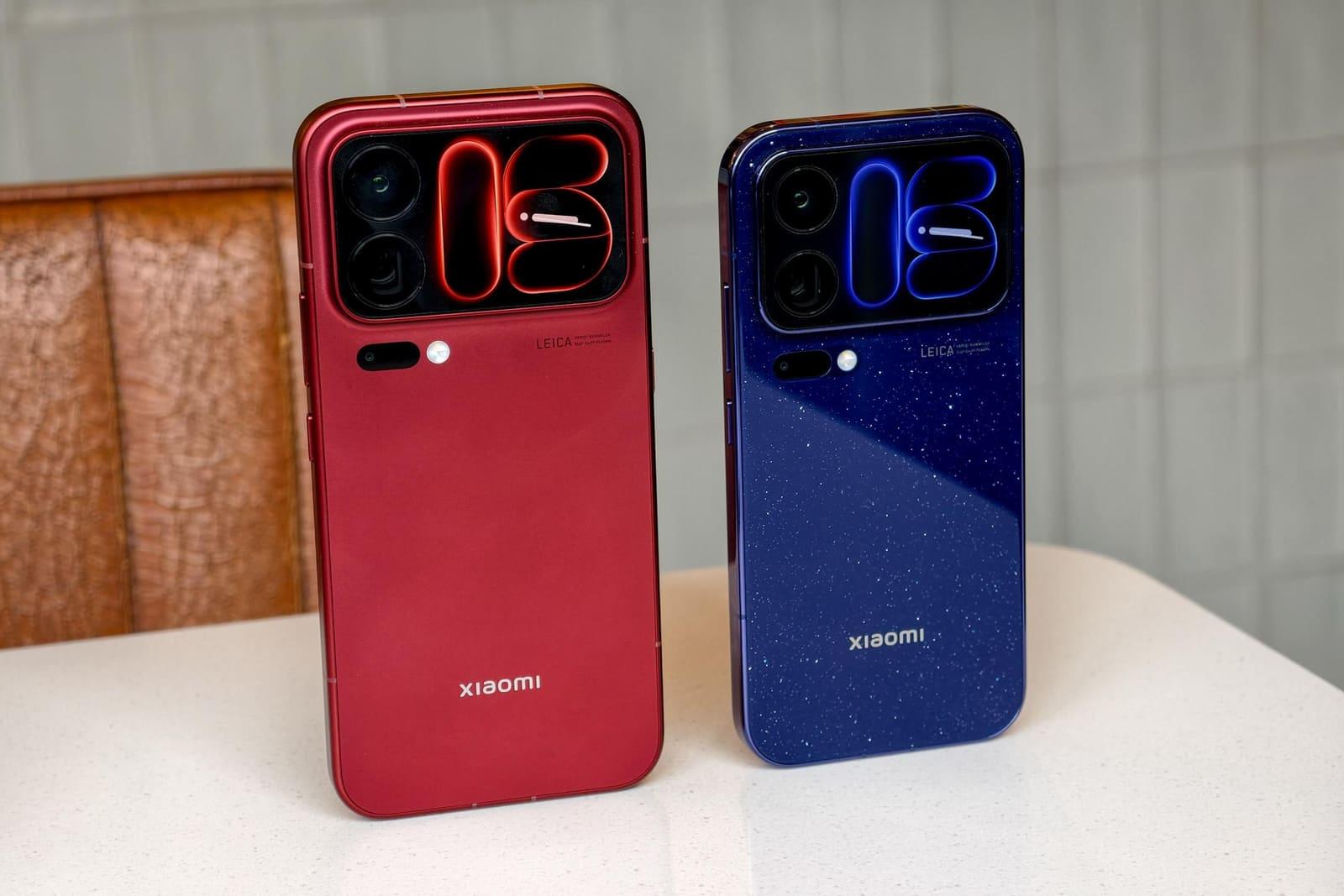
Xiaomi has shipped its 18 Pro and 18 Pro Max with rear displays, marking the first time the company's dual-screen flagship design has left China. The feature debuted domestically on last year's 17 Pro series, reviving a concept the manufacturer last attempted in 2021 with the Mi 11 Ultra. Positioned around the primary camera array, the secondary panels measure 2.7 inches on the standard Pro and 2.9 inches on the Max variant.
The UK pricing sits at £1,199 for the 18 Pro (approximately $1,570) and £1,399 for the Pro Max (approximately $1,830), placing both models in direct competition with Apple's latest Pro-tier iPhones. Those figures represent increases over previous generations, driven partly by ongoing volatility in DRAM markets that has pushed memory costs higher across the industry.
Both devices run Qualcomm's Snapdragon 8 Elite Gen 6 chipsets, with the Pro Max receiving the higher-binned Extreme variant. Screen sizes mirror Apple's strategy: 6.4 inches on the Pro, 6.9 inches on the Max. Battery capacity diverges more sharply, with 6,000mAh in the smaller model and 7,050mAh in the larger, though Xiaomi notes that non-European markets receive higher-capacity cells. Charging speeds reach 90W wired on the Pro and 100W on the Pro Max.
Limited Use Cases for the Rear Panel
The rear display supports interactive wallpapers, music playback controls, and notification alerts. Its implementation of the latter reveals constraints: application icons scale large enough that notification text is truncated to a few words, no quick-reply or email-triage functions are available, and the interface displays only the most recent alert rather than a scrollable list. The functionality falls somewhere between a notification LED and the cover screens found on foldable devices, without matching the utility of either.
Xiaomi has integrated a natural-language tool powered by Google's Gemini 4 Argon to generate custom applications for the rear screen. Users can create simple utilities or basic games through conversational prompts, but the resulting software cannot access the internet or communicate with other installed applications. A pomodoro timer or rudimentary arcade game represents the upper bound of complexity; anything requiring external data or deeper system integration remains out of reach.
The most practical application emerges when the rear display functions as a camera viewfinder. With the main sensor facing away from the user, the secondary screen allows self-portraits shot with the primary 200-megapixel camera rather than the weaker front-facing module. The interface scales awkwardly at this size, but photo capture, video recording, and multi-shot photo booth modes all function. For users prioritising image quality in self-portraits, this alone may validate the design.
Strong Imaging, With Caveats
Both the main and telephoto cameras use 200-megapixel sensors with large surface areas, delivering consistent results across varied lighting conditions. The telephoto lens includes a 12cm minimum focusing distance, effectively doubling as a macro shooter. The 18 Pro Max distinguishes itself with a LOFIC sensor in the main camera, expanding dynamic range to 16 stops and improving highlight retention in high-contrast scenes. Day-to-day differences between the two models remain subtle.
Xiaomi's collaboration with Leica continues, offering three shooting profiles: Leica Vibrant, Leica Authentic, and a new Xiaomi Original mode that splits the tonal difference between the German optics firm's two established looks. An Essential Moments feature applies AI-driven simulations of vintage Leica film aesthetics, available in 35mm and 75mm focal lengths.
The ultrawide camera sits below the rear display, physically separated from the main and telephoto lenses. Its 17mm focal length provides minimal additional field of view compared to the 23mm main lens, and its smaller sensor produces noticeably softer images, particularly in low light. The lens placement near the bottom edge of the phone body also increases the likelihood of accidental finger obstruction during shooting. The front-facing camera delivers adequate quality for video calls but is largely redundant given the rear display's viewfinder capability.
Privacy Features and Interface Refinements
Xiaomi has implemented a privacy display that adjusts pixel output to narrow the viewing angle, making on-screen content difficult to read from the side. The technology closely resembles Samsung's approach on the Galaxy S26 Ultra, with one notable extension: Xiaomi's version can be applied to individual apps within split-screen or floating window configurations, leaving unprotected applications fully visible while obscuring others. Notification filtering also ties to per-app settings, a level of granularity absent from Samsung's implementation. Effectiveness appears slightly reduced compared to the Korean manufacturer's version, though the added flexibility may offset that for users who frequently multitask.
Battery endurance reaches one full day under typical use, with lighter workloads stretching into a second day. However, longevity falls short of recent flagships from Oppo and Vivo, despite comparable or larger cell capacities. The discrepancy suggests that the rear display and dual-screen power management impose measurable overhead.
The Cost of Novelty
The 18 Pro series delivers competent imaging outside the ultrawide lens, solid performance from current-generation Qualcomm silicon, and a more flexible privacy feature set than its closest Samsung rival. Yet the rear display's narrow range of genuine utility raises questions about the engineering and cost trade-offs required to integrate it.
The ultrawide camera's compromised sensor and awkward placement, combined with battery life that trails competitors despite larger cells, suggest that accommodating a second screen has influenced other design decisions. With flagship smartphone pricing climbing industry-wide, and memory shortages adding further pressure, the proportion of the retail price attributable to a feature with limited daily relevance becomes harder to justify.
Xiaomi's willingness to bring the dual-screen concept to global markets tests whether a broader audience will value the design differently than Chinese consumers did with the 17 Pro. Early returns indicate that outside the camera viewfinder use case, the rear panel remains a solution in search of a problem. For buyers weighing the 18 Pro against single-screen alternatives at similar or lower prices, the calculation hinges on whether one exceptional selfie capability outweighs the compromises elsewhere in the package.