The Head Table at the Xi-Trump Dinner Reveals Washington's New China Strategy
Tech executives driving the AI infrastructure boom sat alongside the two leaders, signalling that semiconductor access and compute diplomacy now define the bilateral relationship.

A Seating Chart That Speaks Volumes
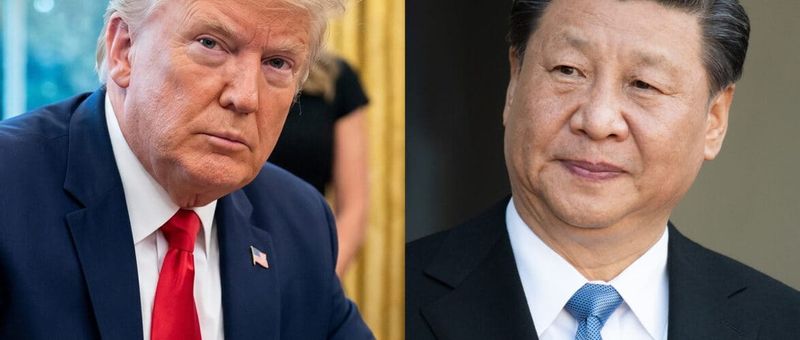
The White House state dinner on Thursday offered more than protocol and toasts. The composition of the head table, where President Xi Jinping, Chinese first lady Peng Liyuan, and US President Donald Trump hosted a select group of American guests, functioned as a public signal about what Washington now considers central to its relationship with Beijing: technology, and specifically the companies building the infrastructure for artificial intelligence.
Industry observers noted that the executives seated in those positions represent firms at the centre of the global AI supply chain. Their presence reflects a shift in how both capitals are approaching bilateral engagement. Where trade negotiations once revolved around tariffs on steel or soybeans, the current dialogue increasingly hinges on semiconductor access, data centre capacity, and the export rules governing advanced chips.
At Opentechwire, we've tracked this evolution across the region. Over the past eighteen months, every major policy conversation between Washington and its counterparts in Seoul, Tokyo, and Taipei has involved compute restrictions, fab investment, or the terms under which hyperscalers can build in jurisdictions Beijing considers strategically sensitive. Thursday's dinner suggests that dynamic has now reached the head-of-state level.
Why AI Infrastructure Commands Diplomatic Attention
The firms driving the AI boom operate at the intersection of hardware manufacturing, cloud services, and model deployment. They require stable access to advanced nodes, rare-earth materials, and cross-border data flows. Any disruption to these inputs can delay product launches, inflate capital expenditure, or force architecture redesigns that cascade through the entire stack.
For Washington, maintaining an edge in AI development means ensuring that American companies can secure the compute resources they need while preventing adversaries from accessing the same capabilities. For Beijing, the calculus is inverted: securing indigenous chip production and training infrastructure to reduce dependency on foreign suppliers.
The result is a zero-sum competition in which the executives present at Thursday's dinner hold considerable leverage. Their investment decisions, fab partnerships, and willingness to lobby for regulatory carve-outs shape the boundaries of what both governments can achieve. Seating them alongside the two presidents acknowledges that reality.
The Tactical Role of Tech Leaders in Bilateral Talks
Industry executives have long participated in diplomatic events, but their role has historically been ceremonial. What has changed is the degree to which their operational concerns now drive policy outcomes. When a hyperscaler announces a multi-billion-dollar data centre in a contested market, that decision can influence export control timelines, intellectual property enforcement, and even military posture in the region.
Analysts observing the dinner noted that the presence of these figures signals an attempt to institutionalise a channel between the private sector and both governments. Rather than relying on formal trade negotiations, which can stall over unrelated issues, this approach allows for direct input from the companies whose supply chains are most affected by regulatory changes.
The risk is that such a channel creates opportunities for regulatory capture. If policy becomes too closely aligned with the interests of a handful of dominant firms, smaller competitors and emerging players in markets across Asia may find themselves locked out of critical infrastructure or subject to rules written by incumbents. That tension has already surfaced in debates over semiconductor subsidies in India, Vietnam, and Malaysia, where local governments are weighing whether to align with US-led consortia or pursue independent fab strategies.
Export Controls and the Limits of Engagement
The state dinner unfolded against the backdrop of a tightening export control regime. Over the past two years, Washington has expanded restrictions on advanced logic chips, photolithography equipment, and even the software tools used to design custom accelerators. These measures are intended to slow Beijing's progress in AI model training and military applications.
Yet the companies seated at the head table have argued, in public filings and private meetings, that overly broad controls harm American competitiveness. If Chinese customers cannot purchase US chips, they will fund domestic alternatives or source from third-country suppliers willing to skirt the rules. The executives have pushed for a more granular approach that targets military end-users while preserving commercial access.
Thursday's seating arrangement suggests that argument is gaining traction. By elevating tech leaders to the same table as the two presidents, the White House appears to be signalling that it views their concerns as integral to the broader strategic calculus, rather than a distraction from it.
Whether that translates into policy concessions remains unclear. Export controls are set by interagency committees, not dinner guests, and the Pentagon retains significant influence over which technologies are deemed too sensitive for commercial export. But the symbolism matters. It tells Beijing that any future negotiation over chip access will involve not just diplomats, but the companies whose revenue depends on it.
Regional Implications for Asia's Tech Ecosystem
The dinner's composition also carries implications for the rest of Asia. Governments in Seoul, Taipei, and Tokyo have spent the past year navigating competing pressures: Washington wants them to restrict chip exports to the mainland, while their own semiconductor industries depend on Chinese demand for legacy nodes and assembly services.
The presence of American tech executives at the head table may embolden those governments to push back on US demands. If Washington is willing to seat industry leaders alongside Xi Jinping, then Seoul and Taipei can argue that their own firms deserve similar consideration when crafting export rules. That could lead to a more fragmented regulatory landscape, in which different jurisdictions apply different thresholds for advanced chips, making enforcement more difficult.
Alternatively, the dinner could accelerate a consolidation of interests. If the largest American firms and the Chinese government find common ground on certain issues, such as data centre standards or AI safety protocols, that consensus could become the de facto global framework. Smaller players in Southeast Asia and South Asia would then face a choice: adopt those standards or risk being excluded from the supply chain.
The Absence of a Broader Industrial Policy
One notable aspect of the dinner was what it did not include: representatives from sectors outside the AI infrastructure ecosystem. No automotive executives, no renewable energy firms, no industrial automation specialists. That absence underscores how narrow the current policy focus has become.
While AI is undeniably important, the exclusive attention it receives risks neglecting other areas where US-China competition is equally consequential. Battery supply chains, rare-earth refining, and advanced manufacturing equipment all face similar export control dilemmas, yet they do not command the same diplomatic bandwidth.
This imbalance may reflect the lobbying power of the tech sector, which has more resources and better access to policymakers than industries with less concentrated market structures. It may also reflect a genuine belief in Washington that AI represents a winner-take-all technology, in which dominance confers durable strategic advantage.
Either way, the result is a bilateral relationship increasingly defined by the priorities of a small group of companies. That creates opportunities for rapid decision-making and close coordination, but it also introduces fragility. If those companies' interests diverge from broader national objectives, or if their market positions weaken, the entire diplomatic framework could require renegotiation.
What Comes Next
The state dinner will not resolve the underlying tensions between Washington and Beijing. Export controls will continue to tighten, supply chains will continue to diversify, and both governments will continue to pursue technological self-sufficiency. But the event does suggest that the pathway for managing those tensions now runs through the private sector as much as through traditional diplomatic channels.
For tech executives, that creates both opportunity and risk. Opportunity, because their input can shape the rules that govern their operations. Risk, because closer association with government policy makes them targets for criticism when those policies fail or produce unintended consequences.
For the rest of Asia, the dinner serves as a reminder that the region's role in the AI supply chain gives it leverage, but only if governments can coordinate their positions. If Seoul, Taipei, Tokyo, and Singapore each negotiate separately with Washington and Beijing, they will be played off against one another. If they present a unified stance, they can extract concessions that serve their own industrial strategies.
The head table at Thursday's dinner was small, but the implications of who sat there extend across the entire region. How those implications unfold will depend on whether the next round of negotiations includes a broader set of voices, or whether the current configuration becomes the new normal.