Why the Tilde Symbol Remains Essential to Modern Code
From bitwise operations to memory management, a six-decade-old keyboard character continues to shape how software runs across platforms and languages.
A Character Older Than Most Programming Paradigms
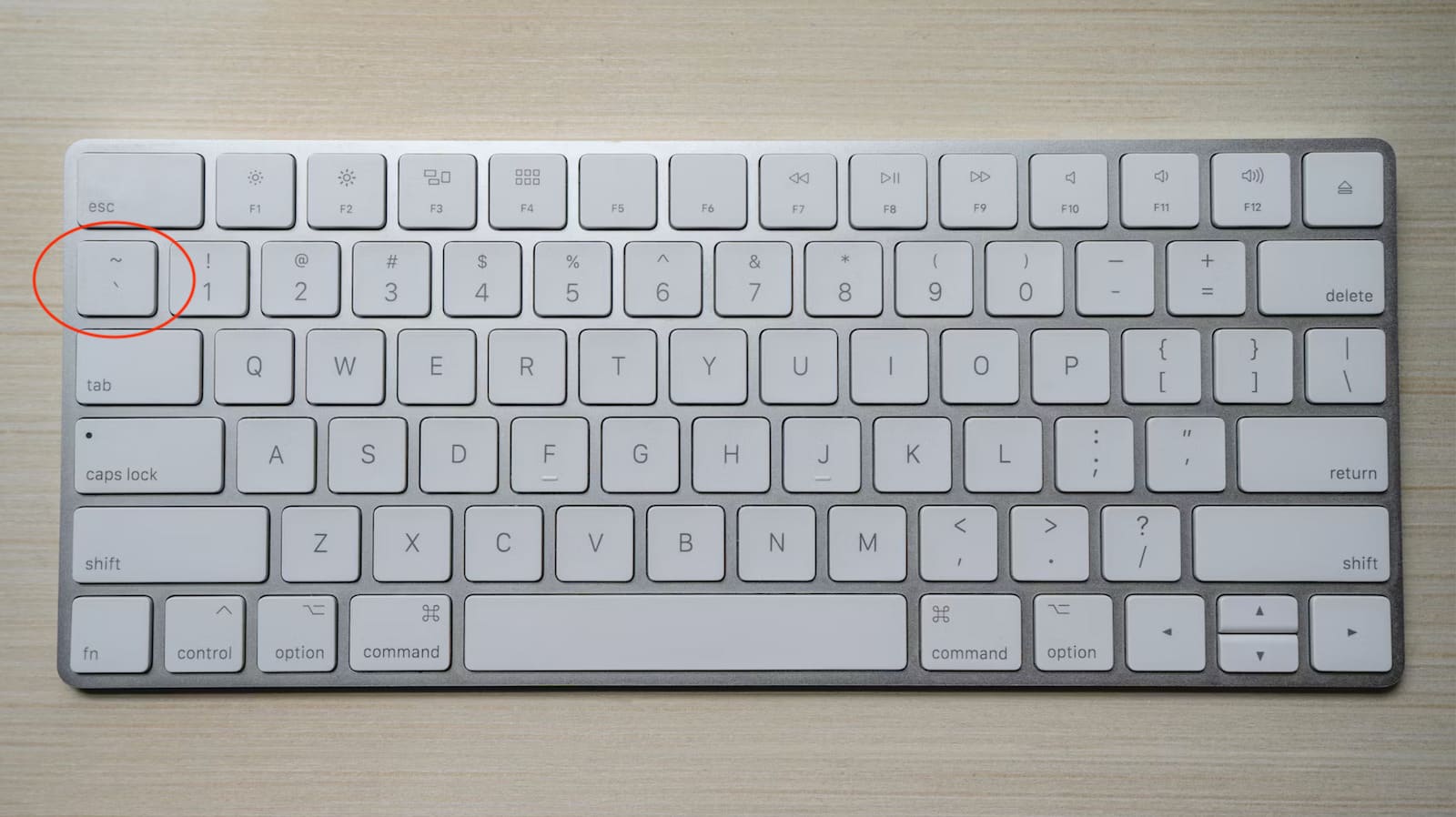
The tilde character (~) first entered computing vocabulary in 1965, when mainframe operators needed symbols beyond alphanumerics for emerging programming tasks. Positioned to the left of the numeral one on most keyboard layouts, this typographic mark has outlasted dozens of computing standards and language revisions. While casual users encounter it mainly when typing Spanish or Portuguese words containing accent marks, software engineers rely on it for operations that determine how applications allocate memory, manipulate data at the binary level, and structure visual interfaces.
Unlike many programming symbols that serve narrow purposes within single languages, the tilde has carved distinct roles across multiple ecosystems. Its longevity stems from solving fundamental problems that persist regardless of hardware generation or software architecture: flipping binary states, signalling object lifecycle events, and selecting groups of related code elements. Each use case reflects design choices made decades apart, yet the character remains present on every standard keyboard shipped worldwide.
Inverting Binary States at Machine Level
Programming languages including JavaScript, C, C++, and Python assign the tilde a bitwise NOT operation. This function inverts every bit in a binary number, transforming zeroes into ones and ones into zeroes. Applied to the binary sequence 0010, the operator produces 1101. The transformation occurs at the lowest level of data representation, directly manipulating how information exists in memory before any higher-level interpretation.
Early video game developers exploited this property to invert colour palettes without manually recalculating pixel values. By applying a bitwise NOT to colour data, entire scenes could shift from light to dark or swap foreground and background tones in a single operation. The technique conserved processing cycles when computing power measured in kilohertz, not gigahertz. Contemporary use cases involve indexing algorithms that locate missing entries in data structures and optimisation routines that compress file metadata.
The double tilde operator (~~) extends this concept in languages such as JavaScript, where it truncates decimal values to integers. Developers use it as shorthand for the Math.floor function when handling positive numbers, though the syntax has drawn criticism for sacrificing readability. The practice illustrates how a symbol designed for binary manipulation adapts to higher-level type coercion tasks.
Regional adoption patterns show variation in how frequently developers reach for bitwise operators. Software engineering communities in Bangalore and Hangzhou, where embedded systems and hardware integration projects remain prominent, report higher tilde usage than web-focused development hubs. The character's relevance correlates with proximity to machine-level programming, a domain where Asia-Pacific manufacturers maintain significant market share in semiconductor design and IoT device production.
Managing Object Lifecycle in Memory-Intensive Applications
Languages with manual memory management, particularly C++ and C#, employ the tilde to declare destructor functions. A destructor executes when an object exits scope or receives an explicit deletion command, triggering cleanup routines that release allocated memory and close file handles. The syntax places a tilde immediately before the class name, distinguishing destructors from constructors that share the same identifier.
Game engines rely heavily on this mechanism. When a player character moves through an open-world environment, objects outside the view frustum - enemy models, particle effects, terrain chunks - must vanish from memory to prevent resource exhaustion. A destructor tagged with a tilde ensures that texture buffers, physics simulation data, and audio streams associated with the deleted object return to the available memory pool. Without systematic cleanup, even modest scenes would exhaust available RAM within minutes of gameplay.
The practice carries particular weight in mobile game development, a sector where Seoul-based studios and Tokyo-based publishers command substantial global market share. Smartphones and tablets operate under tighter memory constraints than desktop systems, making efficient destructor implementation a prerequisite for stable performance. Profiling tools used by Asian development teams frequently highlight destructor call frequency as a key performance indicator, and optimisation efforts often centre on reducing unnecessary allocations that trigger cleanup overhead.
Enterprise applications handling real-time data streams - financial trading platforms, logistics tracking systems, sensor networks - similarly depend on predictable destructor behaviour. A memory leak caused by an improperly defined destructor can degrade system performance over hours or days, a failure mode that becomes catastrophic in always-on infrastructure. Code review standards at Singapore-based fintech firms and Jakarta-based e-commerce platforms routinely flag missing or incorrect tilde placement in class definitions.
Selecting Non-Adjacent Elements in Styling Hierarchies
Cascading Style Sheets (CSS) designate the tilde as a general sibling selector, matching all elements that share a parent and appear after a specified reference point in the document structure. This differs from the adjacent sibling selector (+), which targets only the immediately following element. The general sibling syntax allows batch styling changes across components that share hierarchical relationships but lack direct proximity.
Web developers use this selector to modify interface states in response to user actions. A checked checkbox, for example, can trigger visual updates across multiple sibling elements - labels, icons, status indicators - without requiring JavaScript event handlers. The technique reduces code complexity and improves rendering performance by delegating state-dependent styling to the browser's native CSS engine.
Browser-based games and progressive web applications, categories experiencing rapid growth in markets with high mobile internet penetration, leverage the general sibling selector to manage in-game menus and settings panels. By structuring HTML elements as siblings and applying tilde-based selectors, developers achieve responsive interface updates with minimal scripting overhead. The approach aligns with bandwidth conservation strategies relevant to users in regions where data costs remain significant.
Traditional game engines built on C++ or C# rarely incorporate CSS for core rendering logic, as these environments prioritise frame-rate consistency and low-level graphics control. However, companion applications - game launchers, online stores, social features - frequently employ web technologies where the tilde selector proves useful. Platform holders operating digital storefronts in Asia-Pacific markets, including those based in Shenzhen and Taipei, maintain design systems that standardise tilde selector patterns for interface consistency across desktop and mobile clients.
Symbol Persistence Across Keyboard Standards
The tilde's continued presence on physical keyboards reflects both historical inertia and ongoing utility. ANSI and ISO keyboard layouts, dominant in North American and European markets respectively, position the character differently, yet both standards allocate dedicated key space. Asian markets employ diverse input methods - QWERTY variants, Hangul layouts, pinyin systems - but international programming conventions ensure the tilde remains accessible, often through modifier key combinations.
Mechanical keyboard enthusiasts and custom layout designers occasionally propose removing underused symbols to accommodate additional modifier keys or macro functions. The tilde consistently survives such proposals due to its programming relevance. Keyboard manufacturers in Taiwan and South Korea, which supply the majority of global mechanical switch production, maintain tilde keycap moulds across hundreds of product lines, evidence of sustained demand.
Cloud development environments and browser-based IDEs introduce a layer of abstraction that theoretically could eliminate reliance on physical keyboard layouts. However, developer surveys conducted across Jakarta, Bangalore, and Ho Chi Minh City indicate strong preference for local keyboard input over virtual alternatives, citing muscle memory and typing speed. The tilde's position left of the numeral row has become standardised in programmer training materials and online tutorials, reinforcing its spatial association even as computing moves toward remote and containerised workflows.
Educational Pathways and Symbol Literacy
Computer science curricula in Asia-Pacific universities increasingly emphasise systems programming and embedded development, domains where bitwise operations and manual memory management remain foundational. University programmes in Hangzhou, Seoul, and Singapore dedicate coursework to pointer arithmetic and low-level optimisation, contexts in which the tilde appears frequently. This educational focus contrasts with bootcamp models prevalent in some Western markets, which prioritise web frameworks and higher-level abstractions.
The divergence influences how early-career developers perceive the tilde. Engineers trained in systems-oriented programmes encounter it as a fundamental operator before learning any specific application domain. Bootcamp graduates may first meet the symbol in CSS tutorials or legacy codebases, framing it as a specialised tool rather than a core language feature. Regional hiring patterns reflect these differences: hardware companies and game studios in Asia-Pacific markets often filter candidates based on low-level programming competency, where tilde fluency serves as a proxy for systems knowledge.
Online learning platforms report that tutorials covering bitwise operators and manual memory management attract disproportionate viewership from IP addresses in China, India, and South Korea compared to aggregate global traffic. The data suggests sustained interest in programming domains where the tilde retains practical relevance, even as cloud services and managed runtimes abstract away many low-level concerns in mainstream application development.
Performance Trade-Offs in Modern Architectures
Contemporary processor designs execute bitwise operations in single clock cycles, making tilde-based inversion highly efficient. However, compiler optimisation has advanced to the point where explicitly writing bitwise NOT may produce identical machine code to more readable alternatives. Developers face a tension between concise syntax and code maintainability, a debate that recurs in open-source projects and corporate style guides.
Gaming studios operating under tight performance budgets - particularly those targeting mobile platforms or older console hardware - continue to profile tilde usage in hot code paths. A destructor that executes thousands of times per frame can become a bottleneck if it performs excessive cleanup work, prompting engineers to refactor object hierarchies or pool allocations. Performance analysis tools developed by Tokyo-based and Seoul-based engine teams include tilde-specific profiling markers, reflecting the operator's significance in resource-constrained environments.
Web performance optimisation follows different constraints. CSS selector specificity and parsing overhead influence page load times, but the general sibling selector introduces minimal cost compared to JavaScript-driven DOM manipulation. Front-end frameworks popular in Southeast Asian markets, where mobile-first design dominates, incorporate tilde selectors into component libraries as a standard pattern for state-dependent styling.
Enduring Utility Amid Abstraction Trends
High-level languages and managed runtimes have reduced the frequency with which developers write explicit memory management or bitwise code. Garbage collectors automate resource cleanup, eliminating most destructor use cases. Type systems and compiler checks catch errors that once required manual bit manipulation to diagnose. Yet the tilde persists in foundational layers that underpin these abstractions.
Operating system kernels, database engines, network stacks, and graphics drivers - infrastructure software that enables higher-level development - remain written in languages where the tilde performs essential work. Engineers maintaining these systems, many employed by semiconductor firms and cloud providers with significant Asia-Pacific operations, continue to read and write tilde operators daily. The character's relevance has shifted from widespread use to concentrated importance in specialised domains.
The tilde exemplifies how programming conventions encode decades of incremental decisions. A symbol chosen in 1965 for reasons lost to incomplete documentation now carries semantic weight across languages designed generations apart. Its presence on every keyboard shipped worldwide represents a form of path dependence: removing it would break compatibility with millions of lines of existing code, while retaining it costs nothing beyond a single keycap. For developers writing performance-critical systems or managing complex interface states, that keycap remains indispensable.