Cloud Architect Wang Jian Turns His Gaze to Space Infrastructure
The engineer who built Alibaba's cloud platform now argues that satellite networks and orbital computing represent AI's logical next layer.
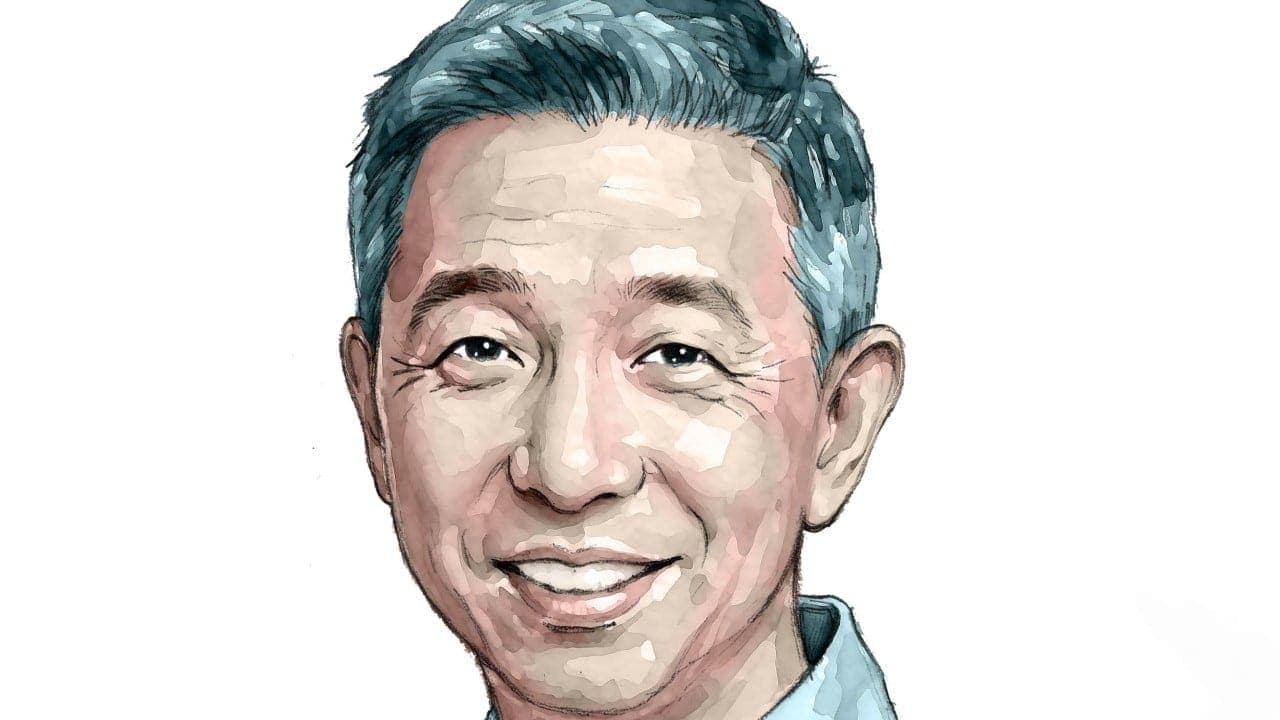
The Engineer Who Built Before the Hype Arrived
Wang Jian started building cloud infrastructure in 2009, years before most enterprises understood why they would need it. As chief architect at Alibaba Group Holding, he persuaded leadership to commit capital to data centres and virtualisation technology when e-commerce still seemed like the company's entire future. The timing mattered. By the time large language models required distributed training across thousands of GPUs, the pipes were already in place.
Now Wang is applying the same logic to a different domain. He believes the next constraint on AI development will not be chip supply or model architecture, but the physical infrastructure needed to move data between ground stations, edge devices, and orbital platforms. At the Chinese Academy of Engineering, where Wang now serves as an academician, his focus has shifted upward to satellite constellations and space-based compute.
The argument rests on a practical observation. Current AI systems depend on centralised data centres connected by terrestrial fibre networks. That model works for applications where users sit near backbone infrastructure. It breaks down across oceans, deserts, and polar regions where cable economics do not pencil out. Wang's thesis is that low Earth orbit satellite networks can provide the coverage and latency needed for AI inference at global scale, particularly for autonomous systems that cannot tolerate round trips to distant clouds.
Why Orbit Economics Have Changed
The cost structure of space deployment has shifted in ways that make Wang's vision more plausible than it would have been a decade ago. Reusable launch vehicles have reduced the price per kilogram to orbit by an order of magnitude. Miniaturisation means a satellite that once required a dedicated launch can now ride as a secondary payload. Manufacturing techniques borrowed from consumer electronics have compressed production cycles.
These changes matter because AI inference workloads are latency-sensitive. A self-driving vehicle or industrial robot cannot wait 200 milliseconds for a packet to travel to a regional data centre and back. Placing compute resources in low Earth orbit, roughly 500 to 1,200 kilometres above the surface, cuts that latency window significantly for users far from fibre infrastructure. Wang has pointed to maritime shipping, aviation, and resource extraction as sectors where this trade-off favours orbital deployment.
The engineering challenge is not trivial. Satellites in low Earth orbit move quickly relative to ground stations, requiring handoffs between spacecraft as they pass overhead. Thermal management in vacuum is harder than in an air-conditioned data centre. Radiation disrupts memory and logic circuits, demanding error correction overhead. But Wang's background in distributed systems gives him a framework for these problems. He treats the satellite constellation as a mesh network with nodes that happen to be moving at 7.8 kilometres per second.
The Data Sovereignty Angle
There is a second dimension to Wang's interest in space infrastructure that he discusses less publicly but that shapes the strategic calculus. Data residency regulations now require certain categories of information to remain within national borders. Cloud providers have responded by building in-country data centres, but that model struggles in regions with small digital economies or restrictive investment climates.
Satellites offer a different path. A constellation operated by a single entity can provide coverage across jurisdictions without placing physical infrastructure on foreign soil. The data still transits national airspace, but the legal and operational frameworks are less settled than for terrestrial networks. Wang sees this ambiguity as an opportunity for countries and companies that move quickly to establish norms.
China has been explicit about its ambitions in this area. The national satellite internet project, sometimes referred to as "Guowang," aims to deploy thousands of spacecraft to provide broadband coverage and compete with systems like Starlink. Wang's involvement with the Chinese Academy of Engineering places him adjacent to these planning efforts, though he speaks in general terms about technology rather than specific programmes.
The geopolitical subtext is harder to ignore. Control over space-based communication infrastructure could determine which AI platforms achieve global reach. If a single constellation dominates low Earth orbit, its operator gains leverage over data routing, service availability, and potentially content filtering. Wang frames the issue in technical terms, but the implications extend well beyond engineering.
Scepticism From the Ground
Not everyone in the cloud industry shares Wang's enthusiasm for orbital computing. Critics point out that satellite bandwidth remains expensive compared to fibre, even after recent cost declines. Spectrum allocation is contested, with regulators struggling to prevent interference as more constellations launch. The orbital environment is increasingly crowded, raising collision risk and complicating space traffic management.
There is also the question of whether edge computing on the ground can solve the latency problem without the complexity of space deployment. Telecoms operators are placing small data centres at cell tower sites and in factories, pushing inference closer to end users. For many applications, this approach delivers sufficient performance at lower cost and with simpler maintenance.
Wang acknowledges these trade-offs but argues that edge and orbit are complementary rather than competitive. Ground-based edge works well in dense urban areas with reliable power and connectivity. Orbital infrastructure makes sense for sparse regions, mobile platforms, and scenarios where terrestrial networks are unavailable or untrusted. He expects both layers to coexist, with workloads routed based on location, latency requirements, and data sensitivity.
What Comes After the Infrastructure
The pattern in Wang's career has been to build infrastructure before the applications that justify it become obvious. Alibaba Cloud ran at a loss for years while the company's e-commerce business subsidised its expansion. Only later did third-party enterprises, government agencies, and AI researchers begin consuming enough compute to turn the unit profitable.
Wang appears to be applying the same patience to space. Current demand for orbital AI inference is minimal. Most machine learning workloads still run in conventional data centres, and most users live within range of terrestrial networks. But Wang is betting that autonomous vehicles, drone logistics, satellite imaging analysis, and other applications will create demand for low-latency compute in places where fibre cannot reach.
The timeline remains uncertain. Satellite constellations take years to deploy, and regulatory approvals move slowly. The business case depends on adoption curves that are difficult to forecast. But Wang's track record suggests he is comfortable with long development cycles. He spent the better part of a decade convincing colleagues that cloud computing mattered. He may spend another decade making the case for space.
At the Chinese Academy of Engineering, Wang now has a platform to shape research priorities and advise on national technology strategy. His advocacy for space infrastructure aligns with broader government interest in satellite networks, quantum communication, and other domains where China seeks to reduce dependence on foreign technology. Whether orbital AI becomes a genuine frontier or remains a niche application will depend on factors beyond any single engineer's vision. But Wang has demonstrated before that building infrastructure ahead of demand can be a defensible strategy, provided you are willing to wait for the world to catch up.