Unitree's R&D Spending Surges 250% as Robotics Maker Trades Profit for AI Ambition
The Hangzhou firm's first public earnings reveal a strategic bet on artificial intelligence, with quarterly revenue up 70 per cent even as net profit slides.
A Revenue Sprint, a Profit Squeeze
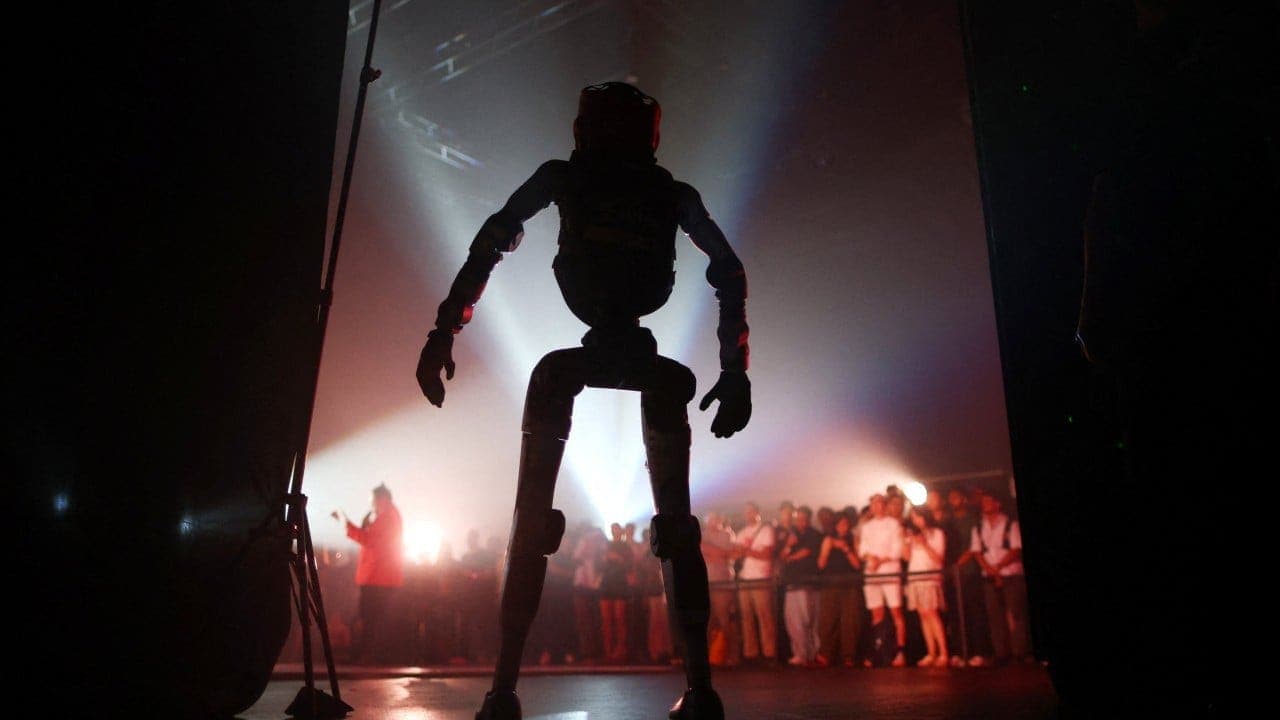
Unitree Robotics posted quarterly revenue of 665 million yuan (US$99.7 million) for the three months ending 30 September, a 70 per cent increase from the same period a year earlier, according to the company's first financial disclosure since its public listing. Yet net profit excluding non-recurring items fell 17 per cent to 105 million yuan, a divergence that underscores the cost of the Hangzhou-based firm's push into artificial intelligence.
The earnings, released on 28 October, lay bare a trade-off familiar to hardware companies chasing machine-learning capabilities: revenue growth can mask a sharp uptick in capital intensity. For Unitree, that intensity is concentrated in research and development, which climbed 250 per cent year-on-year in the quarter. The company did not itemise how much of that spending went to AI specifically, but the jump coincides with its public commitment to embed vision models and reinforcement-learning stacks into its quadruped and humanoid platforms.
At Opentechwire, we have tracked similar patterns among robotics makers in Shenzhen and Seoul, where the race to ship autonomous systems has compressed product cycles and inflated engineering headcount. Unitree's trajectory suggests it is betting that today's margin compression will translate into defensible intellectual property and faster time-to-market for next-generation units.
The AI Tax on Hardware Margins
The 250 per cent rise in R&D outpaced revenue growth by a factor of more than three, a ratio that points to either a step-change in engineering scope or a deliberate front-loading of capability development ahead of a product refresh. Unitree has historically competed on price, offering quadruped robots at a fraction of the cost of Boston Dynamics' Spot. Maintaining that price advantage while integrating on-device inference and real-time path planning requires either subsidy from investors or a willingness to accept lower near-term returns.
The drop in net profit, though modest in percentage terms, signals that the company is choosing the latter. Excluding one-off items, profit fell by roughly 22 million yuan quarter-on-quarter, even as top-line growth remained brisk. That gap is consistent with a ramp in both component costs, such as edge AI accelerators and higher-resolution sensors, and salaries for machine-learning engineers, whose compensation in tier-one Chinese cities has climbed steadily over the past 18 months.
Industry data from China's robotics sector shows that companies shipping autonomous mobile robots or humanoid prototypes now allocate between 18 and 25 per cent of revenue to R&D, up from 12 to 15 per cent in 2023. Unitree's spending, if calculated as a share of the 665 million yuan in quarterly revenue, would place it at the upper end of that range, suggesting the firm is running a higher risk-reward profile than many peers.
What the Numbers Say About Product Strategy
Revenue growth of 70 per cent in a single quarter, absent a major acquisition or geographic expansion, typically reflects either volume gains or a shift in product mix towards higher-priced units. Unitree's catalogue includes the Go2, a sub-$2,000 quadruped aimed at developers and hobbyists, and the G1, a humanoid platform priced around $16,000. The latter carries significantly higher bill-of-materials costs but also commands a larger gross margin per unit, provided production scale can absorb fixed engineering expenses.
The company has not disclosed unit shipments or a breakdown by product line, so it remains unclear whether the revenue jump stems from selling more Go2 units into education and research markets or from early traction with the G1 among industrial customers. Either way, the 250 per cent R&D increase suggests Unitree is preparing a pipeline that extends beyond incremental hardware updates. Machine-vision integration, natural-language task interfaces and sim-to-real training workflows all require sustained investment before they yield revenue, and the timeline for return on those bets can stretch across multiple product generations.
The Listing Context
Unitree's public debut earlier this year gave it access to capital markets at a moment when Chinese robotics firms are competing for both domestic government procurement and export revenue. The company's decision to prioritise R&D over profit optimisation in its first reported quarter as a listed entity sends a signal to investors that management views the current window as critical for capability building.
Public listings in China's tech sector often come with implicit expectations of steady profit growth, particularly for hardware manufacturers that lack the recurring-revenue streams of software-as-a-service businesses. Unitree's willingness to post a profit decline in its inaugural earnings release suggests either confidence in the longevity of its revenue trajectory or pressure from competitive dynamics that leave little room for incremental iteration.
The timing also matters. Export controls on advanced semiconductors and AI accelerators have tightened over the past year, and Chinese robotics companies are racing to secure supply chains and develop in-house capabilities before access narrows further. Front-loading R&D now, while capital is available and component sourcing remains feasible, may be a hedge against future supply constraints.
Investor Calculus
For equity holders, the question is whether Unitree can convert its R&D outlay into durable competitive advantage before cash burn forces a recalibration. The company's gross margin, which it did not break out separately, will be a key metric in coming quarters. If revenue growth continues at a 60 to 70 per cent clip while R&D as a percentage of sales begins to flatten, the investment thesis holds. If revenue decelerates while R&D remains elevated, the firm risks entering a zone where neither profitability nor scale is within near-term reach.
Comparable companies in the region offer mixed precedents. Agility Robotics, though US-based, has sustained losses for years while building out its humanoid platform, relying on venture capital and strategic partnerships to bridge the gap. In contrast, firms like Syrius Robotics in South Korea have opted for narrower product mandates and tighter cost discipline, accepting slower growth in exchange for earlier breakeven.
Unitree's path appears closer to the former, with the caveat that its public status imposes quarterly reporting discipline that private competitors can avoid. The next two earnings cycles will clarify whether the AI-driven R&D surge is a one-time step-up or the beginning of a multi-year investment phase. For now, the company is trading short-term profit for the optionality that comes with advanced autonomy, a wager that reflects both ambition and the compressed innovation timelines that define robotics in 2026.