Trump Administration Labels Industrial Robot Imports a National Security Risk
A presidential proclamation sets a 180-day deadline for negotiating trade restrictions on factory automation, threatening tariffs that could reshape supply chains for GM, Tesla, Boeing and other US manufacturers.
A New Front in Trade and Manufacturing Policy
On 28 October, President Donald Trump issued a proclamation designating imports of foreign-manufactured industrial robots and machinery as threats to national security. The directive orders fresh negotiations with trading partners and leaves open the prospect of tariffs, quotas, or duties if agreements are not reached within 180 days.
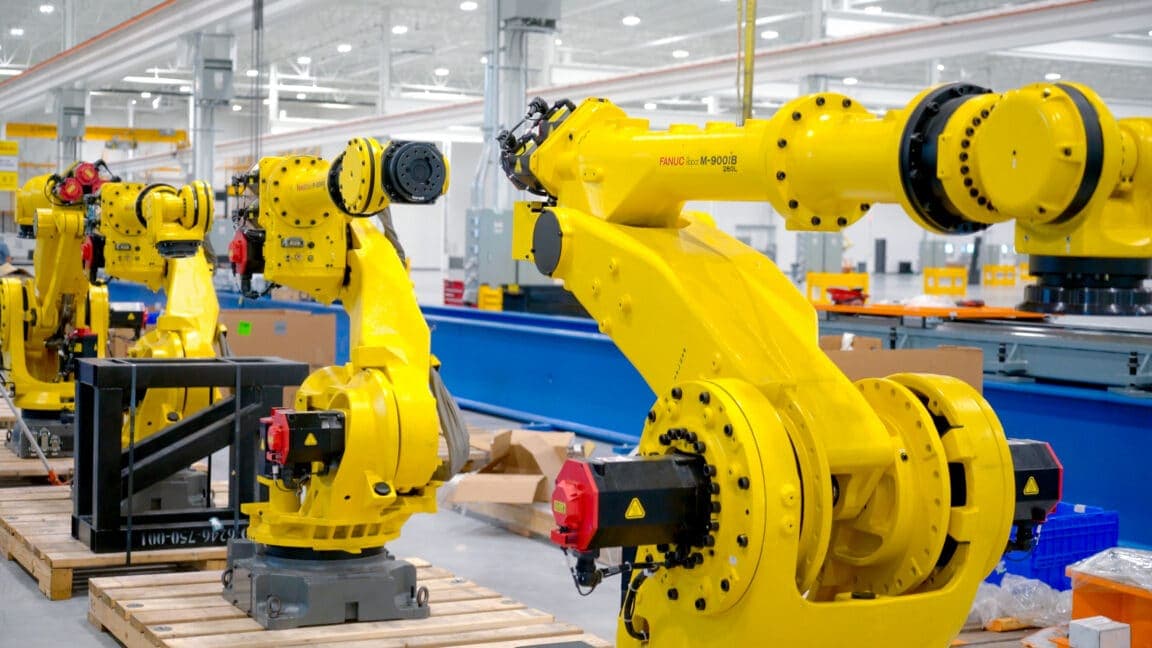
The move extends government scrutiny beyond consumer robotics into the factory floor, targeting the automated systems that underpin automotive assembly lines, aerospace fabrication, and logistics operations. Companies including General Motors, Ford, Tesla, Boeing, and Lockheed Martin rely heavily on imported robotic arms and fixed automation equipment. For these firms, sourcing constraints or cost increases could ripple through production schedules and capital expenditure plans.
The Investigation and Its Findings
The proclamation cites an investigation conducted under Commerce Secretary Howard Lutnick. That review concluded that imports of industrial robots and related machinery present risks to the US industrial base and threaten long-term competitiveness in a sector the administration deems vital to national security.
The investigation also identified what it termed "unique security and safety risks" and warned of cybersecurity vulnerabilities that could lead to severe consequences. The language closely parallels justifications used in July 2026, when the Federal Communications Commission banned new models of consumer and service robots, including robotic vacuum cleaners, quadruped platforms, and humanoid units. That earlier FCC action, however, explicitly exempted industrial robot arms and stationary systems commonly deployed in factories and warehouses.
The presidential proclamation now brings those exempted categories into scope. By framing industrial automation as critical to military production and all critical infrastructure sectors, the administration has signalled that even mature, widely adopted technologies are subject to re-evaluation under national security criteria.
Implications for Manufacturing and Supply Chains
Industrial robots are a global commodity. Japanese, German, Swiss, and South Korean manufacturers dominate the market for high-precision arms, welding systems, and assembly automation. US automotive plants, for instance, have long integrated equipment from FANUC, ABB, KUKA, and Yaskawa into their production lines. Aerospace facilities use similar systems for composite layup, drilling, and fastening operations.
If negotiations fail and tariffs or quotas are imposed, US manufacturers face a menu of unappealing options. They could absorb higher equipment costs, pass them on to customers, delay expansion projects, or pivot to domestic suppliers with narrower product ranges and longer lead times. For capital-intensive industries where automation investments are planned years in advance, sudden policy shifts introduce planning risk.
The 180-day negotiation window is tight. Trade agreements typically take months or years to finalise, and the scope of what constitutes "robotics, industrial machinery, and their components" is broad. Ambiguity over which parts and subsystems fall under the directive could complicate procurement decisions in the interim.
Cybersecurity Concerns and the Broader Context
The proclamation's emphasis on cybersecurity vulnerabilities reflects a growing concern across US policy circles. Industrial control systems, programmable logic controllers, and networked robots can be entry points for intrusion if not properly secured. Supply chain integrity, firmware provenance, and remote access protocols are all areas where regulators and defence planners see potential exposure.
Yet the industrial robotics sector has been aware of these issues for years. Standards bodies, including the International Society of Automation and IEC, have published guidelines for securing industrial automation equipment. Many large manufacturers already implement network segmentation, access controls, and vendor audits. The question is whether the risks identified by the Commerce Department represent newly discovered vulnerabilities or a policy rationale applied retroactively to equipment already in widespread use.
At Opentechwire, we have tracked similar debates across Asia and Europe, where governments weigh the efficiency gains from imported automation against concerns over dependency and data security. The difference here is the explicit linkage to military production and the threat of trade measures.
What Happens Next
The 180-day clock starts from 28 October. During that period, the US Trade Representative and Commerce Department are expected to lead discussions with counterparts in Japan, Germany, Switzerland, South Korea, and possibly China. The aim is to reach agreements that "adjust" imports of robotics and industrial machinery, though the proclamation does not specify what form such adjustments should take.
If no agreements materialise, the president may impose tariffs, duties, quotas, or fees. The scale and structure of those measures remain undefined. They could target specific product categories, originating countries, or even individual manufacturers. They could be modest, designed to nudge supply chains toward domestic production, or substantial enough to disrupt capital budgets and project timelines.
For now, manufacturers are left to model scenarios. Some may accelerate orders to lock in equipment before tariffs take effect. Others may explore partnerships with US-based integrators or look to Mexico and Canada, depending on how those countries are treated under any new regime. A few may lobby for exemptions or carve-outs, arguing that domestic alternatives do not yet exist at the required scale or specification.
The proclamation also raises questions about how national security is defined and applied in trade policy. If industrial robots qualify, what about machine tools, semiconductor fabrication equipment, or industrial sensors? The precedent could widen the aperture for future investigations and trade actions, turning supply chain decisions into exercises in regulatory forecasting.