Sumitomo Bakelite Doubles Down on China for Advanced Chip Packaging
The Japanese materials supplier is betting on AI-driven demand to justify its second capacity expansion in Suzhou this year, even as geopolitical headwinds reshape semiconductor supply chains.
A Second Bet in Four Months
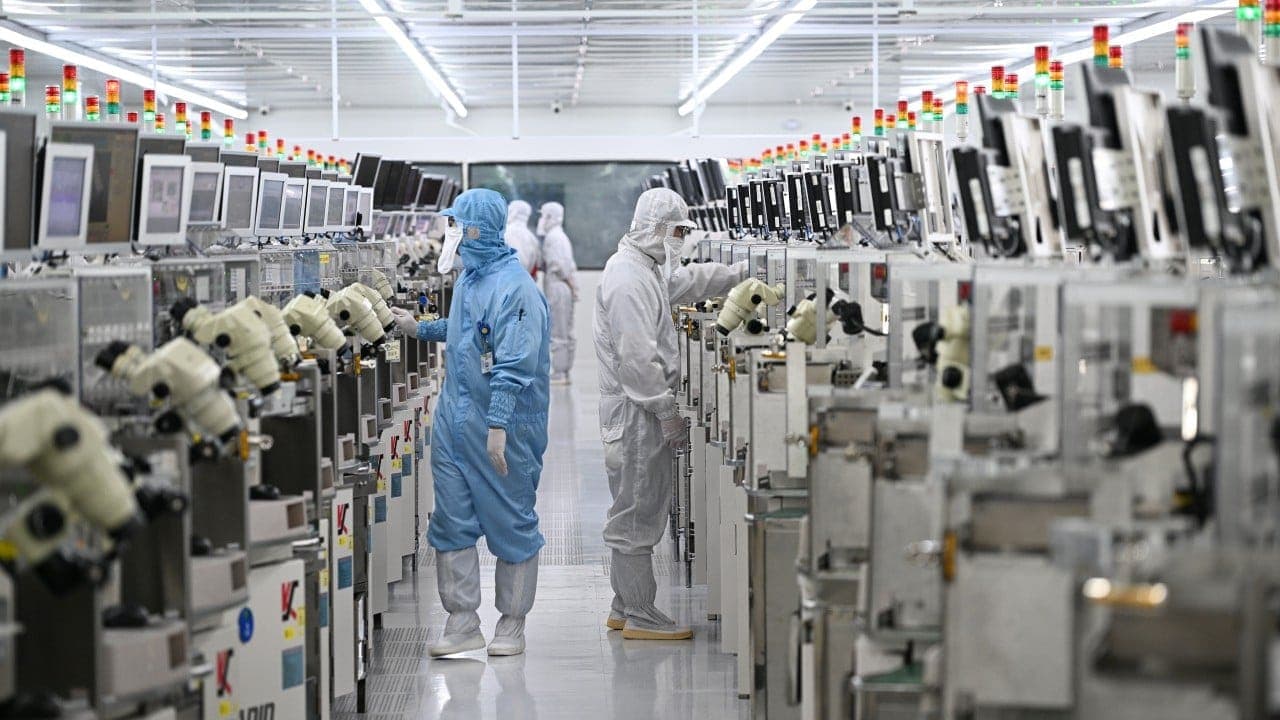
Sumitomo Bakelite announced on 11 October that it will add production lines for mould underfill materials and compression-moulding granules at its Suzhou facility in eastern China, alongside parallel capacity increases in Singapore. The Tokyo-based semiconductor materials supplier last expanded its Chinese operations in June 2026, making this the second such move in under four months.
The decision reflects a calculation that demand for advanced chip packaging materials will continue to grow in mainland China, where domestic semiconductor manufacturers are racing to build capabilities in heterogeneous integration and 3D stacking techniques. These methods allow chipmakers to work around process node limitations by combining multiple dies in a single package, a workaround that has become central to China's semiconductor strategy under export controls that restrict access to cutting-edge lithography equipment.
Mould underfill materials serve a specific function in advanced packaging: they fill the microscopic gaps between chip dies and substrates, managing thermal expansion mismatches that would otherwise crack solder joints under heat. Compression-moulding granules, meanwhile, encapsulate entire chip assemblies to protect them from moisture and mechanical stress. Both materials are critical inputs for high-performance computing applications, where heat dissipation and signal integrity determine whether a chip meets spec or fails in the field.
Why China, Why Now
At Opentechwire, we've tracked a steady stream of materials and equipment suppliers maintaining or expanding their mainland China footprint even as US and European policymakers tighten controls on advanced semiconductor manufacturing. The calculus for companies like Sumitomo Bakelite hinges on two factors: the sheer scale of China's domestic packaging market, and the fact that advanced packaging itself remains largely outside the scope of current export restrictions.
China accounted for approximately 38 per cent of global semiconductor packaging revenue in 2025, according to industry data, driven by a combination of multinational outsourced assembly plants and a growing cohort of domestic packaging houses such as Jiangsu Changjiang Electronics Technology and Tongfu Microelectronics. These facilities handle everything from mature flip-chip assemblies to newer chiplet-based designs, and they consume packaging materials at volumes that few other regions can match.
Sumitomo Bakelite's Suzhou plant already produces epoxy moulding compounds and other encapsulation materials for the automotive and consumer electronics segments. The new lines will focus on materials optimised for AI accelerators and high-bandwidth memory packages, both of which generate significantly more heat than traditional logic chips and therefore demand tighter tolerances on thermal conductivity and coefficient of thermal expansion.
The Singapore Hedge
The parallel expansion in Singapore is worth noting. By splitting capacity additions between Suzhou and a Southeast Asian hub, Sumitomo Bakelite is hedging against the possibility that trade restrictions could eventually extend to advanced packaging materials, or that customers might prefer supply chains with geographic redundancy.
Singapore has emerged as a preferred location for semiconductor suppliers seeking a manufacturing base that serves both Chinese and non-Chinese customers without the geopolitical friction that comes with a China-only footprint. The city-state hosts fabrication, assembly, and materials operations for companies including GlobalFoundries, Micron Technology, and a range of Japanese equipment and materials firms.
For Sumitomo Bakelite, the Singapore expansion also positions the company to serve customers in Taiwan, South Korea, and Malaysia, where advanced packaging activity is concentrated around TSMC's InFO and CoWoS platforms, Samsung's I-CUBE, and a constellation of OSAT providers. These customers increasingly require local or near-line materials supply to minimise logistics lead times, particularly for materials with limited shelf life once formulated.
Demand Signals from AI
The artificial intelligence boom has reshaped demand patterns for semiconductor materials in ways that extend well beyond logic wafers. Training and inference workloads place extraordinary stress on chip packages: a single AI accelerator module can dissipate 700 watts or more, and the latest designs stack high-bandwidth memory dies directly atop compute chips, creating thermal gradients that would destroy conventional packaging materials.
This has pushed materials suppliers to reformulate underfills and moulding compounds with higher thermal conductivity, lower moisture absorption, and better adhesion at elevated temperatures. Sumitomo Bakelite's MUF products, for instance, are engineered to flow into gaps measuring just a few micrometres under pressure, then cure into a solid polymer that maintains mechanical integrity across temperature swings from negative 40 to positive 150 degrees Celsius.
The company has not disclosed the investment amount for the Suzhou and Singapore expansions, nor has it specified when the new lines will reach full production. Industry norms suggest a lead time of twelve to eighteen months from announcement to qualification for materials lines, meaning output would begin flowing to customers in late 2027 or early 2028.
The Packaging Materials Landscape
Sumitomo Bakelite operates in a competitive but consolidated market. Japan's Ajinomoto Fine-Techno supplies build-up films for substrate manufacturing; Shin-Etsu Chemical produces silicone-based encapsulants; Henkel and Nagase ChemteX offer rival underfill formulations. Each supplier differentiates on properties such as cure time, voiding behaviour, and compatibility with specific substrate materials.
China's domestic materials sector has made progress in mature packaging materials, but advanced underfills and high-thermal-conductivity moulding compounds remain dominated by Japanese and US suppliers. This creates a dependency that Chinese policymakers have flagged in semiconductor self-sufficiency roadmaps, though materials chemistry is proving slower to localise than equipment or design tools.
The fact that Sumitomo Bakelite is expanding in China rather than waiting for domestic substitutes to emerge suggests the company sees a window of at least several years during which its products will remain specification leaders. Materials incumbency is difficult to displace: once a packaging house qualifies a material for a high-volume product line, switching suppliers requires months of re-qualification and risks yield losses that can run into millions of dollars per day of disrupted production.
What It Means for Regional Supply Chains
Sumitomo Bakelite's dual expansion underscores a broader pattern: semiconductor supply chains are not cleanly bifurcating into China and non-China blocs, despite policy pressure in that direction. Instead, they are layering redundancy and optionality, with suppliers maintaining presence in both spheres to serve customers who themselves operate across geographies.
For packaging houses in China, the Suzhou expansion ensures continued access to materials that are difficult to source elsewhere. For customers outside China, the Singapore capacity offers a supply alternative that avoids potential tariff or export licensing complications. And for Sumitomo Bakelite, the strategy spreads risk while capturing growth in both markets.
The AI chip buildout will drive packaging materials demand through the end of the decade, regardless of where final assembly occurs. Sumitomo Bakelite's move is a bet that being present in China's advanced packaging ecosystem remains viable and profitable, even as the geopolitical map grows more complex.