Electronics Are 70 Per Cent of Philippine Exports and About 2 Per Cent of GDP
Electronics made up 70 per cent of Philippine exports in September 2026 but contributed about 1.9 per cent of GDP in value added. Third quarter data show semiconductor imports rising faster than exports as the sector remains concentrated in assembly and testing.
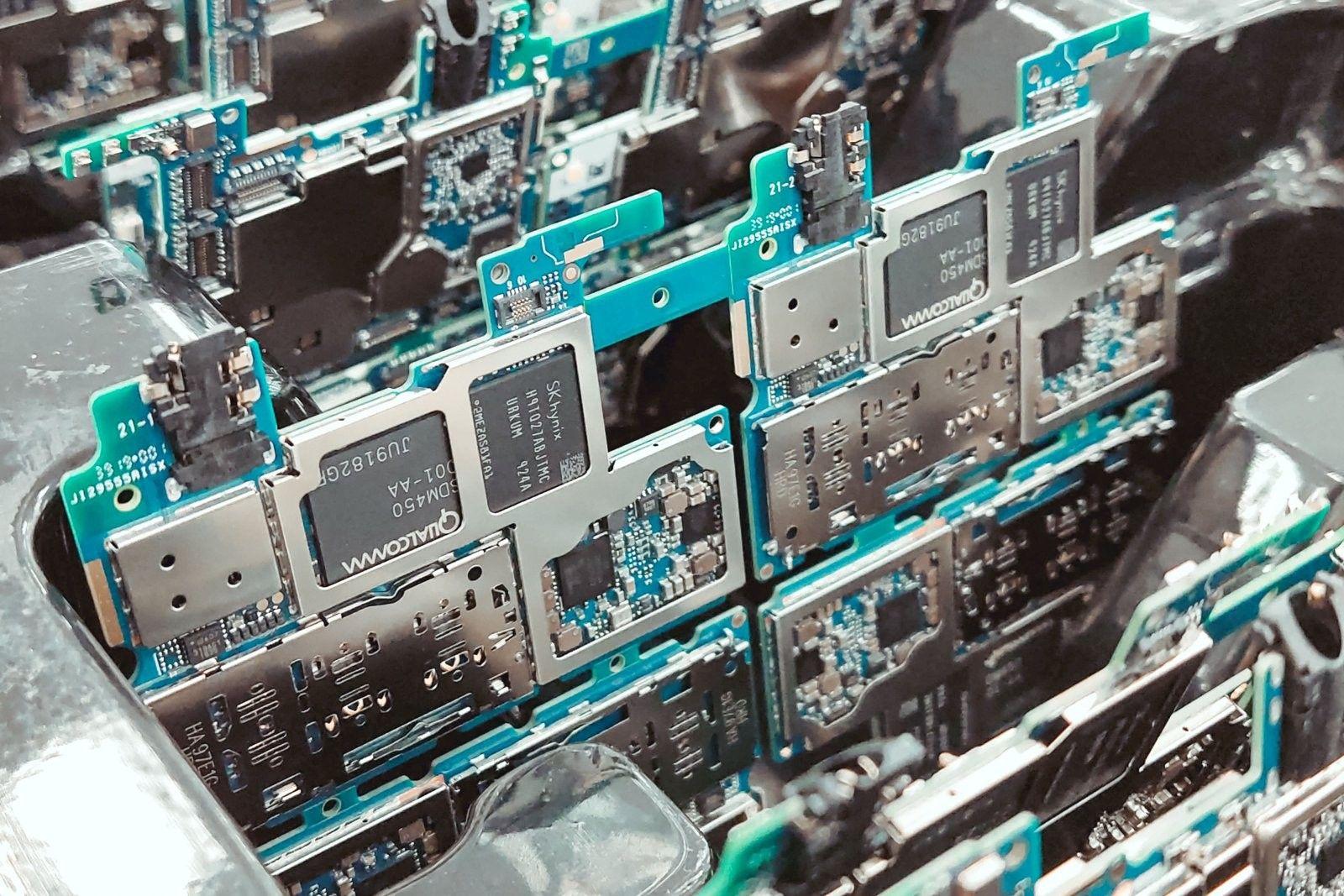
Electronics made up US$6.92 billion, or 70.1 per cent, of Philippine exports in September 2026, according to preliminary Philippine Statistics Authority (PSA) data reported by Insider PH. In the third-quarter national accounts, the factories that make computer, electronic and optical products produced about 1.9 per cent of GDP in value added, by APCG's calculation from PSA tables. Manufacturing as a whole grew 0.7 per cent.
The two figures measure different things. Export value counts everything that crosses the border, including components brought in for assembly. Value added counts what stays in the country after those inputs are paid for. The gap between 70 per cent and 1.9 per cent is a rough measure of how much of the electronics trade passes through. The third-quarter data give a partial reading of it, and the reading is more complicated than the headline suggests.
How the sector appears in the accounts
The PSA records electronics in two places. Exports and imports are listed by commodity. Output is listed by industry, as gross value added in manufacturing. Semiconductor components and devices dominate the trade side: PHP 718.7 billion of the PHP 912.9 billion in electronics exports in the third quarter, or 79 per cent, at current prices.
Volume growth was strong. At constant 2018 prices, exports of semiconductor components rose 18.4 per cent year-on-year. Consumer electronics rose 210.8 per cent, but from a small base, since it is about 6.5 per cent of electronics exports. The industry body SEIPI forecasts 10 per cent growth in 2026 electronics exports to about US$54 billion. Executive Secretary Ralph Recto, who chairs the Semiconductor and Electronics Industry Advisory Council (SEIAC), said on 25 October that electronics exports reached US$37.1 billion in January to August, up 26.2 per cent, according to the Daily Tribune. The same report put total merchandise exports at a record US$64 billion for the period, with the United States the top destination at US$12.3 billion, nearly a fifth of the total.

Exports are up and factory output is close to flat
Computer, electronic and optical products grew 13.1 per cent in real value added in the third quarter. The industry was 12.0 per cent of manufacturing output a year earlier, so it added about 1.6 points to manufacturing growth. Chemicals and chemical products, 12.4 per cent of the base, fell 13.4 per cent and took away about 1.7 points. Machinery and equipment other than electrical fell 22.1 per cent. Manufacturing in total grew 0.7 per cent, against 1.3 per cent a year earlier. The PSA does not explain the chemicals decline. Department of Economy, Planning and Development Secretary Arsenio Balisacan pointed more generally to higher fuel costs raising electricity and production costs, Sunstar reported.

Electronics grew by 13.1 per cent inside a sector that grew 0.7 per cent, in an economy that grew 2.1 per cent. On APCG's calculation, electronics contributed about 0.2 points of that 2.1 per cent.
Source: PSA, Tables 7.1.1 and 8.1.1. Changes and surplus are APCG calculations. Values in pesos include the effect of exchange-rate and price changes.
Imports are growing faster than exports
The commodity tables show the other half. Semiconductor imports rose 54.0 per cent at constant prices, against 18.4 per cent for exports. At current prices, imports equalled 46 per cent of semiconductor export value in the third quarter, up from 37 per cent a year earlier. Total imports of electronic products rose 87.4 per cent in September, according to Trading Economics' summary of PSA data, as imports overall reached a record US$15.03 billion.
Electronics was not the largest driver of the import bill. Mineral fuels added PHP 175.6 billion to goods imports in the quarter and electronics added PHP 156.3 billion, out of a PHP 449.7 billion rise in total goods imports. The import-to-export ratio is a trade ratio and cannot be read as a value-added share, because some of the imported components serve the domestic market.
Why the value stays thin: the structure of the sector
Researchers have described the pattern before the quarter's data. A June 2026 discussion paper from the University of the Philippines School of Economics, by E. Annette Balaoing-Pelkmans, says domestic participation in electronics has stayed concentrated in assembly, testing and other lower-value activities, a pattern it calls "arrested development". The same paper notes that the council guiding policy has twelve members, one of them from the private sector, and that integrated circuit design, the sub-sector it considers most important for upgrading, has no meaningful representation.
A University of the Philippines study reported by the Philippine Daily Inquirer on 4 November warns that the planned Pax Silica hub at New Clark City could become a "satellite platform" for multinationals, hosting manufacturing while higher-value work stays abroad. The Bases Conversion and Development Authority estimates US$40 billion to US$70 billion in investment and 130,000 to 190,000 direct jobs, over a period it says could reach 30 years. The hub has no firm investor yet, the Inquirer reported.
The government's position is that this is changing. Recto said investors see the Philippines as a choice "not only for manufacturing and assembly", and described growing interest in chip design, engineering and research. The SEIAC roadmap targets US$110 billion in annual exports by 2030, a 7 per cent share of global assembly, test and packaging, and US$2 billion to US$3 billion a year in export receipts from integrated circuit design. Toshiba plans a three-year expansion to make data-centre hard disk drives, creating about 3,000 jobs, according to the Tribune.
The third quarter cannot show whether the shift has started
The national accounts show electronics growing and manufacturing flat. They show semiconductor imports rising faster than exports. They do not show how much domestic value is added per dollar exported, and no source reviewed for this article gives that ratio for Philippine electronics.
Why that may matter less than it looks
1. Real output grew. A 13.1 per cent rise in electronics value added means more production happened in the country, whatever the origin of the inputs.
2. Imports may lead exports. Components arrive before finished devices ship, so a 54.0 per cent rise in component imports is consistent with a build-up ahead of later exports. It does not establish that.
3. The surplus is widening. The electronics trade surplus was PHP 347.8 billion in the quarter, up from PHP 278.6 billion.
The real test is whether higher-value work appears in the data at all. Integrated circuit design and engineering services would show up as services exports and as a rising electronics share of manufacturing value added. The PSA's services export lines for business services (up 5.7 per cent) and telecommunications, computer and information services (up 8.6 per cent) are too broad to isolate it.
What to watch
Three things will show whether the electronics boom is deepening. The first is the PSA's monthly merchandise trade releases, for the ratio of component imports to electronics exports. The second is the electronics share of manufacturing value added in the PSA's fourth-quarter accounts (Table 11.7). The third is named capital and jobs for integrated circuit design and engineering projects under the SEIAC roadmap, which so far consist of targets.
Sources: Philippine Statistics Authority, Third Quarter 2026 National Accounts of the Philippines (9 November 2026) and preliminary September trade data as reported by Insider PH; Trading Economics (PSA trade data); Daily Tribune (SEIAC and SEIPI figures); University of the Philippines School of Economics Discussion Paper 2026-06; Philippine Daily Inquirer; Sunstar. Contribution, ratio and share figures are APCG calculations from PSA tables.