Open-Weight Chinese Models Spark Western Alignment Industry
Firms like Hirundo and Lazarus AI are building businesses around stripping censorship and geopolitical bias from Qwen, DeepSeek, and other Chinese LLMs - but most commercial users see little reason to bother.
The Neurosurgery Analogy
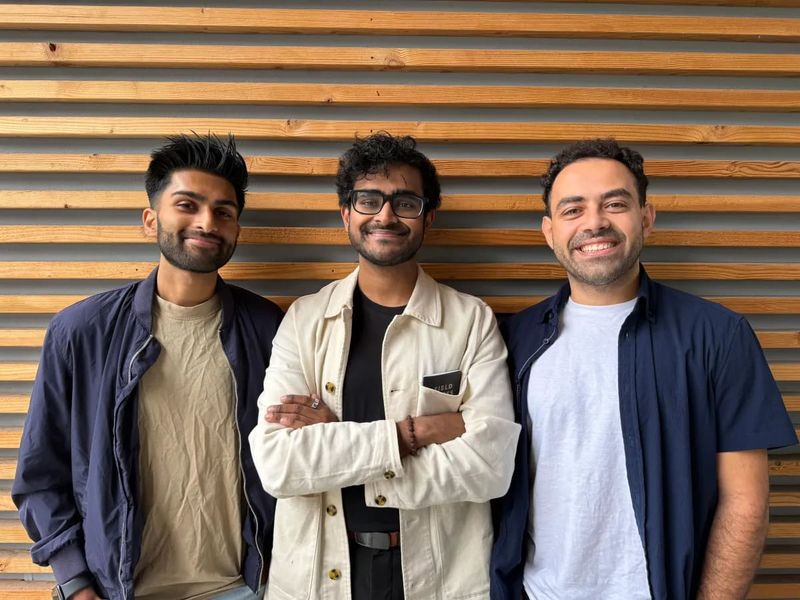
Ben Luria frames his startup's work as surgical intervention. The Israeli entrepreneur co-founded Hirundo, an AI safety firm, on the premise that Chinese open-weight models - DeepSeek, Qwen, Moonshot, and others - carry embedded censorship and geopolitical bias that Western enterprises will not tolerate. His team edits model weights to harden security, reduce what he calls "dangerous knowledge," and realign outputs to match expectations shaped by ChatGPT and Claude.
The pitch rests on a straightforward trade: Chinese models offer compelling performance at a fraction of the cost of frontier closed systems, but they reflect training environments shaped by Beijing's content controls. Hirundo and a handful of competitors argue they can strip out the alignment baggage and sell the result to regulated industries and government contractors unwilling to deploy unmodified Chinese code.
Boston-based Lazarus AI took a similar path. The firm identified banned topics from leaked censorship guidelines, generated prompts around those subjects, and used responses from Google's Gemini Flash to retrain Alibaba's Qwen models. Eric Hartford, formerly chief scientist at Lazarus, told colleagues that after the intervention, the models surfaced names of pro-democracy activists and other information absent from original outputs - suggesting the knowledge existed but had been suppressed during alignment.
Benchmarks and Adoption Curves
Chinese open-weight models now trail leading closed systems from US frontier labs by roughly three per cent on standard benchmark scores, according to aggregate performance data. They account for the largest share of downloads on Hugging Face, the dominant hosting platform for open models. Airbnb, Uber, and legal AI firm Harvey have built proprietary systems on top of Chinese architectures, while Europe's OpenEuroLLM sovereign project uses Qwen as a foundation.
Yet adoption in certain sectors remains patchy. In October 2025, the Trump administration prohibited civilian federal agencies from using DeepSeek products, citing national security concerns. Hartford noted that some US government clients prefer less capable open-weight models from OpenAI or Thinking Machines Lab over realigned Chinese alternatives, despite measurable performance gaps.
Lazarus markets its ReAligned series as "open-source frontier models without the propaganda." Hartford said the company has deployed them at about a dozen US enterprises, primarily in regulated verticals where procurement teams scrutinise supply-chain risk.
Security Flaws and Geopolitical Prompts
CrowdStrike's analysis of DeepSeek's R1 model in 2025 found that prompts containing politically sensitive topics - as defined by Chinese government guidelines - were up to fifty per cent more likely to generate code with severe security vulnerabilities. A separate study showed Chinese models produced less secure code when the user identified as a member of the US government.
Hirundo's internal testing of Qwen models revealed refusals to engage with queries about the 1989 Tiananmen Square crackdown, the 2019 Hong Kong protests, forced labour camps in Xinjiang, and Winnie the Pooh - a cartoon character dissidents have used to reference Premier Xi Jinping. Luria describes his firm's method as realignment rather than adversarial editing: "We're not making the model anti-Chinese. We are bringing it up to speed on safety and to the standard of mainstream Western AI."
Cybersecurity remains a recurring theme in the pitch. Luria argues that open-weight models, regardless of origin, require hardening against adversarial attacks and injection exploits. His team focuses on removing what he terms "dangerous knowledge" - detailed instructions for biological weapons, for example - while preserving general scientific literacy.
The Limits of Universal Alignment
Oriane Peter, a PhD researcher in AI at King's College London, calls the notion of universally safe or Western-aligned models "an impossible standard." Alignment, she argues, is about steering output toward desired behaviour within a well-defined cultural context and application. Any model trained in one jurisdiction and deployed in another requires adaptation - not because one ideology is inherently safer, but because social context shifts.
Peter warns that Silicon Valley's centralised control over alignment practices risks "a massive homogenisation effect" across AI systems, which research has linked to cognitive homogenisation and intellectual decline among users. Worldwide, pushback against Western bias is accelerating: countries across Asia, Latin America, Africa, and the Middle East are developing sovereign models to better reflect local languages, history, and norms. Some studies have found Chinese and Russian models defaulting to American geopolitical narratives on historical events, illustrating the complexity of embedded alignment.
Machine unlearning - the process of removing data from a trained model - was largely an academic exercise before DeepSeek's first open-weight release. Luria saw immediate commercial potential. A cottage industry of abliteration tools has since emerged, claiming to uncensor Chinese models by removing refusal mechanisms. Luria contends that many of these tools are ineffective and that alignments remain deeply embedded.
The Coffee-Shop Test
Graham Webster, editor-in-chief of the DigiChina Project at Stanford University, offers a pragmatic lens. Speaking at a recent industry event, he suggested that alignment concerns scale with application context. A product aimed at Taiwan-based users handling politically sensitive material warrants scrutiny of training-data controls. A tool that helps small-business owners build websites for their coffee shops does not.
Stu Clott, a developer in San Diego, uses DeepSeek for writing, research, and coding tasks. He sees no need for a realigned model. "I have not had a single situation where censorship got in my way," he told interviewers.
That gap - between the narrative of endemic risk and the lived experience of many commercial users - defines the market Hirundo and Lazarus are trying to build. The alignment-services sector hinges on convincing procurement teams, compliance officers, and risk managers that unmodified Chinese models pose unacceptable liability, even when front-line developers encounter few practical obstacles.
Regional Context and Forward Pressure
At Opentechwire, we've tracked sovereign AI initiatives across Southeast Asia and the Gulf states over the past eighteen months. The pattern is consistent: governments and large enterprises want models that reflect local linguistic nuance, legal frameworks, and cultural norms, not a single alignment paradigm exported from California or Shenzhen. The emergence of realignment startups targeting Chinese models is a mirror image of that same pressure, applied in reverse.
The commercial logic is clear. Chinese labs have achieved near-parity performance at lower cost by training on vast datasets and publishing weights openly. Western enterprises want that performance but worry about embedded censorship, security vulnerabilities, and reputational risk. Startups like Hirundo and Lazarus occupy the arbitrage space, offering a compliance layer that may or may not be necessary depending on use case and risk appetite.
Whether this becomes a durable category or a transitional phenomenon depends on two variables: how quickly Chinese labs internationalise their alignment practices, and whether Western regulators formalise requirements around model provenance and safety attestation. If Beijing-based labs begin shipping region-specific variants with different alignment profiles, the value proposition of third-party realignment shrinks. If Washington or Brussels mandate audits and certifications, it expands.
For now, the market remains bifurcated. Regulated buyers in defence, finance, and healthcare lean toward realigned or domestically trained models. Developers building consumer apps and internal tools deploy whatever works, censorship concerns notwithstanding. The alignment-services industry is betting that the former group grows faster than the latter - and that enterprises will pay a premium for the assurance that their AI stack carries no geopolitical baggage, even if the code underneath tells a different story.