Nvidia's Open Source Strategy Faces Uncertain Future After Huang Resignation
The chip giant's interim leadership must decide whether to sustain the former CEO's push for open-weight models, even as Washington debates tighter AI export restrictions and frontier labs build in-house silicon
A Leadership Vacuum at a Pivotal Moment
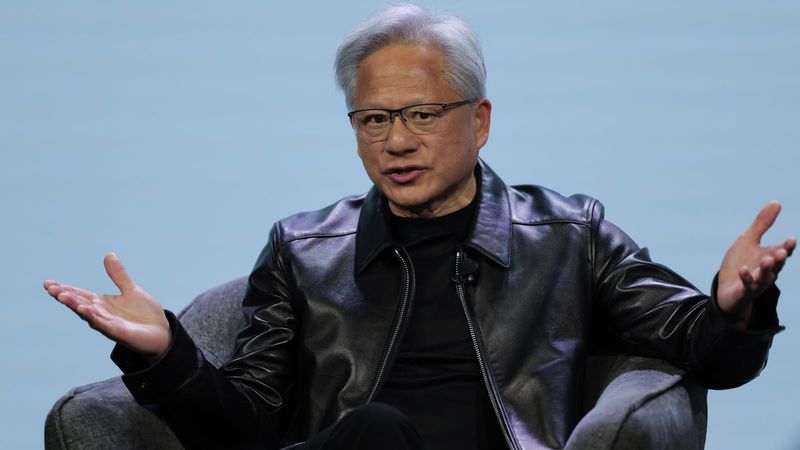
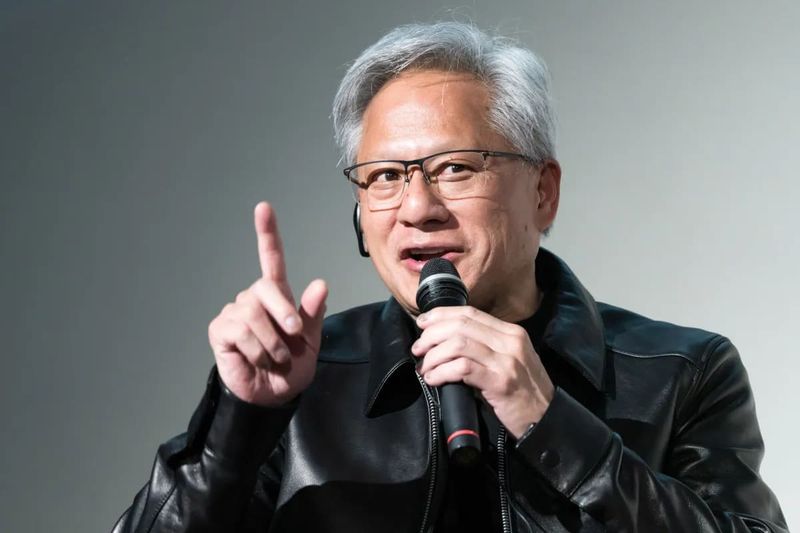
Jensen Huang's resignation from Nvidia on Thursday has left the semiconductor industry's most visible champion of open-weight artificial intelligence without a clear successor to carry forward that agenda. Huang stepped down after acknowledging a relationship with Alice Huang, a Megaspeed executive whom US authorities have identified as a potential intelligence risk, a disclosure that has intensified scrutiny of his past advocacy for relaxed chip export policies toward China.
The timing compounds uncertainty. Nvidia is midway through a proposed $13 billion acquisition of Hugging Face, the collaborative platform that has become the de facto hub for researchers and enterprises building on open-weight models. The company also recently committed $6 billion for a non-exclusive licence to technology from Poolside, a coding-focused AI startup. Both deals reflect a deliberate pivot toward customers outside the handful of frontier labs that have historically consumed the bulk of Nvidia's high-end accelerators.
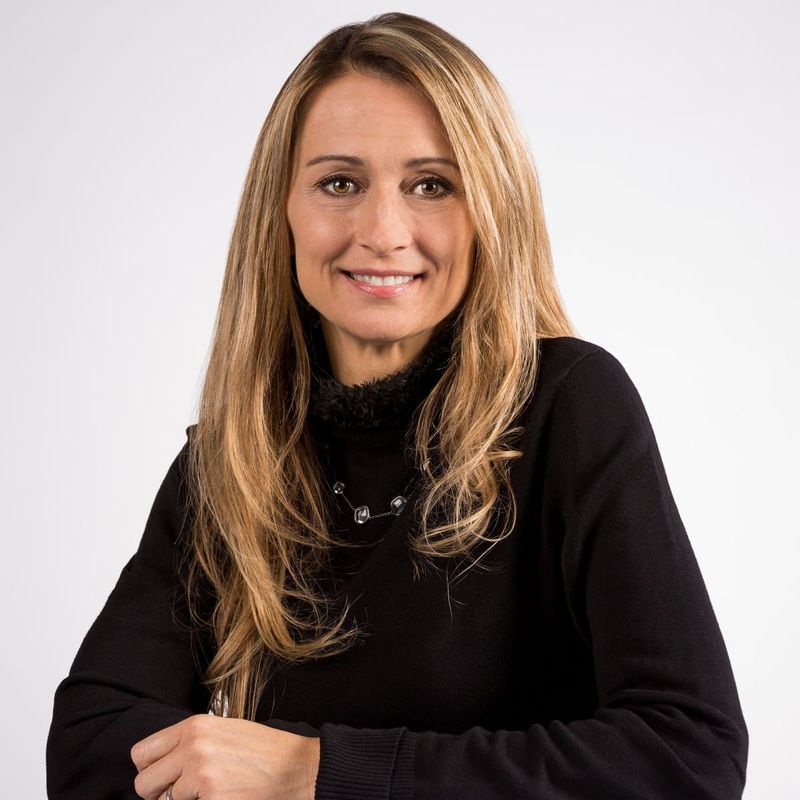
Colette Kress, the company's chief financial officer, has been named interim chief executive. Her tenure in finance has given her deep visibility into Nvidia's revenue mix and margin structure, but she has not been the public face of the company's technical or policy advocacy. Whether she will prioritise the open ecosystem with the same intensity remains an open question, one that developers, policymakers, and competitors are now watching closely.
The Commercial Logic Behind Open Models
Huang's support for open-weight AI was not purely philosophical. Over the past eighteen months, Nvidia's largest customers have begun designing their own accelerators. Google's tensor processing units have been in production for years; OpenAI is collaborating with Broadcom on custom silicon; Meta has invested heavily in its own inference chips. Each of these efforts reduces future orders for Nvidia's flagship H100 and H200 products.
An open ecosystem offers Nvidia a hedge. If thousands of enterprises, research institutes, and national AI programmes train and deploy models, the aggregate demand for compute can offset losses from any single customer. Open-weight models lower the barrier to entry: a logistics company in Jakarta or a genomics lab in Seoul can fine-tune a publicly available foundation model rather than negotiate access to a proprietary API. Every such project requires GPUs, and Nvidia still commands more than 80 per cent of the market for AI accelerators.
The Nemotron family of models, which Nvidia released earlier this year, exemplifies this strategy. Built for long-running agentic tasks and multi-step reasoning, the models are designed to run efficiently on Nvidia hardware but remain accessible to any organisation willing to invest in on-premise infrastructure. According to one engineer inside the company, development of Nemotron is expected to continue regardless of leadership changes, because the product roadmap is now embedded in multiple divisions.
Huang also directed capital toward startups that could make US-developed open models more competitive. Reflection AI and Thinking Machines Lab, both recipients of Nvidia investment, focus on post-training techniques and architecture improvements that reduce the performance gap between open and closed systems. Those bets were consistent with a broader thesis: if American open models can match or exceed the capabilities of Chinese counterparts, US export restrictions become less economically costly.
Washington's Export Control Debate
The national security dimension of Huang's departure is harder to disentangle. Earlier this year, he coordinated an open letter signed by 25 companies, including Microsoft, Meta, IBM, and Palantir, urging the US government to avoid blanket restrictions on open-weight models. The letter argued that such restrictions would harm American competitiveness, push innovation offshore, and alienate allies that view open access as a matter of technological sovereignty.
The letter was a response to pressure from Anthropic and OpenAI, both of which have privately urged the White House to impose stricter controls on advanced models, citing intellectual property theft by Chinese labs. The two companies have framed the issue as one of safety and national interest: if adversaries can replicate frontier capabilities by fine-tuning leaked or open weights, the argument goes, export restrictions on chips alone are insufficient.
Huang's relationship with Alice Huang, and the subsequent questions about his motives, now complicate that policy debate. His advocacy for softer export controls will be re-examined in light of the espionage allegations, even though there is no public evidence linking his policy positions to any compromise of classified information. The scandal nonetheless hands ammunition to those in Congress and the executive branch who favour tighter restrictions, both on chip exports and on the release of open-weight models trained by US companies.
The practical effect may be a more cautious approach from Nvidia itself. Kress has not been a vocal participant in policy debates, and interim executives rarely make bold moves on issues that carry reputational or regulatory risk. If Nvidia steps back from its role as the loudest industry voice defending open models, the balance of lobbying power shifts toward Anthropic and OpenAI, both of which have institutional incentives to limit competition from open alternatives.
Hugging Face and the $13 Billion Question
The proposed acquisition of Hugging Face now sits in a state of limbo. Hugging Face chief executive Clem Delangue posted on X that the company would continue its mission regardless of what happens next, a statement that can be read as both reassurance and contingency planning. The deal has not been finalised, and a change in Nvidia's leadership introduces new variables: valuation, governance, integration priorities, and the willingness to absorb regulatory scrutiny at a moment when the company's ties to China are under investigation.
Hugging Face has become infrastructure for the open model community. Its model hub hosts tens of thousands of weights, datasets, and fine-tuning recipes; its Transformers library is the default toolkit for researchers working outside the major labs. Nvidia's interest in the platform was straightforward: owning the distribution channel for open models would give the company influence over which frameworks, optimisations, and hardware targets become standard practice.
But acquisition rationales that made sense under Huang's leadership may not survive a change in priorities. If Kress or a permanent successor concludes that the regulatory and reputational risks outweigh the strategic benefits, Nvidia could walk away, renegotiate, or slow-walk the deal until market conditions change. Hugging Face would remain independent, but it would lose the capital and hardware access that Nvidia's backing would have provided.
Regional Implications and Sovereignty Concerns
Huang's departure also reverberates across Asia, where several governments have launched national AI initiatives that rely on open-weight models. Singapore's AI Verify programme, South Korea's HyperCLOVA X project, and India's BharatGPT effort all assume access to foundation models that can be customised for local languages, regulations, and use cases. Closed APIs from OpenAI or Anthropic do not satisfy sovereignty requirements; open weights do.
Nvidia has been the primary supplier of hardware for these initiatives, and Huang's personal advocacy for open models reassured governments that they would not be locked into a single vendor's proprietary stack. If Nvidia's commitment to open ecosystems weakens, those governments may accelerate efforts to diversify their supply chains, whether by turning to AMD, investing in domestic chip design, or negotiating access to Chinese models despite US export restrictions.
Japan's Ministry of Economy, Trade and Industry has already signalled interest in fostering a domestic GPU industry, citing concerns about over-reliance on US technology. A perceived retreat by Nvidia from open model advocacy could accelerate similar initiatives in other jurisdictions, fragmenting the market and reducing the leverage that US companies currently enjoy.
What Comes Next
The path forward depends on variables that remain opaque. Nvidia's board will eventually name a permanent chief executive, and that individual's priorities will shape the company's product, investment, and policy strategies. In the interim, Kress must decide which of Huang's initiatives to sustain, scale back, or abandon.
The commercial logic for supporting open models has not changed. Nvidia still faces the risk of customer concentration, and an open ecosystem still offers a way to diversify revenue. But the political environment has shifted. Huang's resignation, combined with renewed scrutiny of his relationship with Alice Huang, makes it harder for Nvidia to argue that open models serve US interests without inviting questions about ulterior motives.
The open source AI community, meanwhile, is preparing for a more hostile regulatory environment. If Nvidia reduces its advocacy, and if Anthropic and OpenAI succeed in pushing for tighter restrictions, the next generation of foundation models may be subject to licensing requirements, export controls, or mandatory safety evaluations that functionally limit their release. Developers outside the United States and Europe would bear the brunt of those restrictions, widening the gap between organisations that can afford proprietary APIs and those that cannot.
Huang's influence extended beyond Nvidia's earnings calls and product launches. He provided political cover for an ecosystem that has few other champions with comparable visibility and resources. His exit does not eliminate the commercial case for open models, but it removes the most prominent voice making that case in Washington, Brussels, and capitals across Asia. Whether Nvidia's next leader will fill that role, or whether the company will retreat to a narrower focus on hardware sales, will determine the shape of the AI industry for years to come.