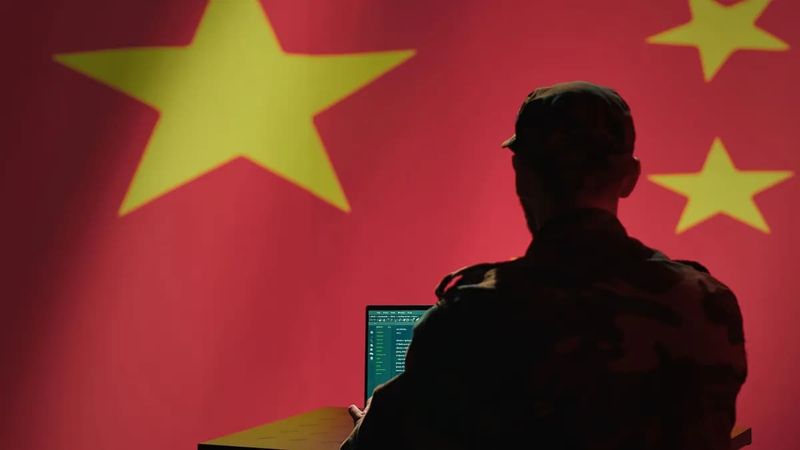
Nvidia Leadership Crisis Tests Asia's Reliance on US Chip Supply
Jensen Huang's abrupt resignation over security concerns exposes the fragility of China's AI infrastructure and raises questions about the stability of semiconductor supply chains across Taiwan and South Korea.
A Sudden Vacancy at the Top
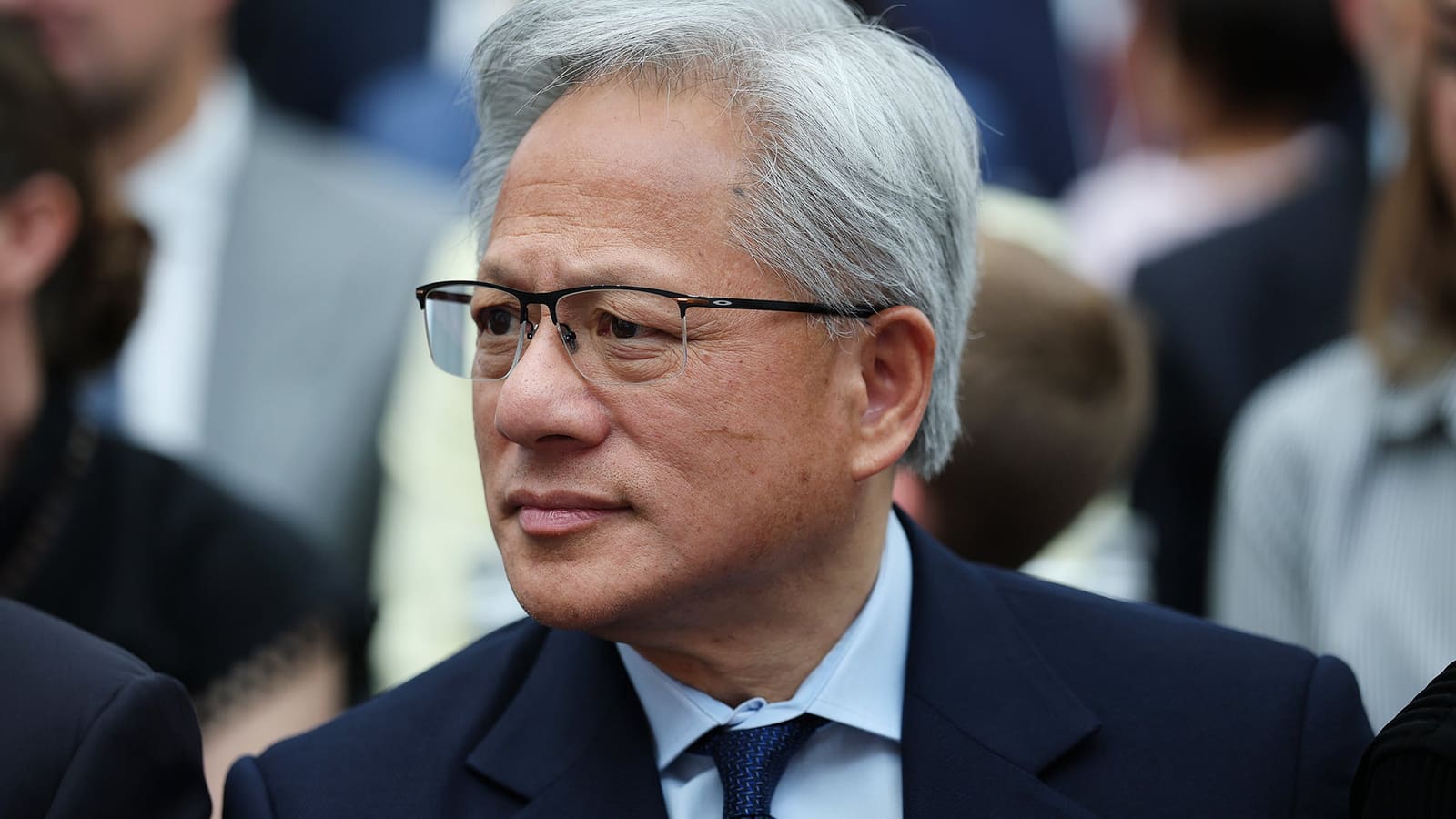
Jensen Huang stepped down from Nvidia on Thursday, ending a tenure that made the company the world's most valuable chipmaker and positioned it at the centre of the global artificial intelligence boom. The resignation came days after Huang acknowledged a relationship with an executive at a Chinese data centre firm whom US intelligence officials suspected of government ties. The New York Times had reported on Wednesday that Huang also had a relationship with another Nvidia executive.
Nvidia's board appointed chief financial officer Colette Kress as interim chief executive while the search for a permanent replacement proceeds. The leadership vacuum arrives at a moment when Nvidia's chips underpin training infrastructure for AI models from California to Shenzhen, and when the company's customer relationships and supplier networks span multiple continents.
The immediate question facing the industry is not merely who will lead Nvidia next, but whether the abrupt transition will disrupt the chip supply arrangements that Chinese AI laboratories, Taiwanese contract manufacturers, and South Korean component makers have come to depend upon. Huang's departure removes the executive who most vocally defended continued sales to China even as Washington tightened export restrictions, and it injects uncertainty into procurement channels that Chinese firms had painstakingly constructed to work around those controls.
The Singapore Data Centre Connection
The intelligence concerns that precipitated Huang's exit centred on Alice Huang, an executive at Megaspeed, a Singapore-based data centre operator that ranks among Nvidia's largest customers in Southeast Asia. The Information reported that Alice Huang facilitated the transfer of approximately 240,000 H100, H200, and some A100 chips into China. Her companies also invested in DeepSeek, an AI laboratory, with commitments to provide Nvidia hardware.
Chinese AI developers have increasingly relied on remote access to chips housed in data centres outside mainland China, a workaround that allows them to train models on hardware they cannot legally import. Singapore, with its robust digital infrastructure and position as a regional technology hub, became a natural transit point. Megaspeed's role illustrates how data centre operators in Southeast Asia have become critical intermediaries in a supply chain that US export controls were designed to sever.
The scale of the chip movement, if the reported figures are accurate, represents a significant portion of Nvidia's high-end accelerator production. It also suggests that enforcement of export restrictions has been porous enough to allow large-scale transfers through corporate structures and hosting arrangements that technically comply with the letter of the law while undermining its intent.
Huang's advocacy for maintaining sales to China rested on the argument that market dominance requires market presence. He contended that cutting off Chinese customers would cede ground to domestic competitors and erode Nvidia's long-term position. That stance now appears to have been entangled with relationships that US officials view as security risks, and the fallout is likely to harden Washington's approach to chip exports.
Tightening Controls and Stockpiling Behaviour
The scandal is expected to prompt stricter enforcement of existing export restrictions and possibly new measures targeting data centre access arrangements. Chinese AI laboratories, anticipating a crackdown, are attempting to secure commitments for overseas chip supply before new rules take effect. Reuters reported that traders in China are stockpiling restricted chips, behaviour that mirrors the pre-emptive buying seen ahead of previous rounds of export control announcements.
The dynamic creates a paradox for US policy. Tighter restrictions may accelerate China's efforts to develop domestic alternatives, even as they limit the immediate availability of the most advanced hardware. The window for Chinese firms to access Nvidia chips through indirect channels is closing, but the urgency of that closure is driving a scramble that may entrench workarounds and deepen the opacity of supply chains.
For Nvidia, the leadership crisis arrives as the company navigates a complex regulatory environment. Kress, as interim chief executive, inherits a portfolio that includes managing relationships with US regulators, reassuring customers in China who fear supply disruptions, and maintaining the confidence of suppliers in Taiwan and South Korea who depend on Nvidia's order volume.
China's Domestic Chip Landscape
Nvidia remains the dominant supplier of AI accelerators in China despite export restrictions. In the first half of the year, Nvidia shipped 678,000 AI accelerators to China, a 44 per cent decline from the previous year, capturing 34 per cent of the market. IDC data cited by Reuters shows that Huawei shipped 572,000 AI accelerators in the same period, up from more than 300,000 a year earlier, giving it 28 per cent market share.
Alibaba's chip unit T-Head held 7 per cent of the market, followed by Cambricon with 5 per cent. Baidu subsidiary Kunlunxin accounted for 4 per cent, and Hygon for 3 per cent. The figures illustrate both the progress Chinese chipmakers have made and the gap that remains. Huawei's growth trajectory is steep, but Nvidia's installed base and performance advantage keep it ahead.
Performance comparisons underscore the challenge facing domestic alternatives. Research firm Epoch AI calculates that Nvidia's B300 chip delivers 6.75 times the arithmetic performance of Huawei's best Ascend 950 chip. That gap matters most in training large models, where computational throughput directly affects development timelines and the scale of models that can be built.
Huawei also lags in production volume. Expanding output requires not only manufacturing capacity but also a supply chain for specialised components, many of which are subject to their own export restrictions. Chinese AI laboratories are increasingly optimising their models to run on domestic hardware, a pragmatic response to supply constraints, but most developers still prefer to train new models on Nvidia chips when they can access them.
The dual-track approach, training on Nvidia hardware while preparing for a future where domestic chips are the only option, reflects the uncertainty that now defines China's AI infrastructure planning. Huang's exit adds another layer of unpredictability to that calculus.
Taiwan's Exposure and Supplier Sentiment
Huang enjoyed considerable popularity in Taiwan, where he was born and where Nvidia sources a substantial portion of its components. He made a point of visiting night markets, sharing meals with fans, and hosting events for executives at Taiwanese suppliers. Huang had said Nvidia planned to invest 150 billion US dollars annually in Taiwan, a figure that underscored the company's reliance on the island's semiconductor ecosystem.
Several executives at Taiwanese suppliers told Taiwan's Central News Agency that they still expect steady orders from Nvidia in the coming years, driven by sustained demand from the AI industry. That confidence reflects the reality that Nvidia's product roadmap and customer commitments extend well beyond any single executive, and that the company's dependence on Taiwan Semiconductor Manufacturing Company and other local partners is structural rather than personal.
Still, Huang's departure introduces uncertainty. His relationships with Taiwanese suppliers were not merely transactional; they involved long-term planning, joint development projects, and a degree of trust built over decades. Kress and any future chief executive will need to maintain those relationships while navigating a more complex geopolitical environment in which Taiwan's role as a chip manufacturing hub is itself a source of strategic anxiety.
South Korea, home to memory chip producers and other Nvidia suppliers, faces similar questions. The stability of Nvidia's supply chain affects order volumes, investment decisions, and the broader health of the region's semiconductor sector. Any disruption to Nvidia's operations or strategic direction would ripple through multiple layers of suppliers across Northeast and Southeast Asia.
Reactions Across the Region
Internet users across Asia expressed disappointment at Huang's downfall, with some describing the loss of a role model in the technology sector. Others noted that the allegations and the scrutiny directed at Huang could contribute to discrimination against Asians working in the US technology industry, a concern rooted in longstanding debates about representation and bias in Silicon Valley.
The reaction reflects Huang's status as one of the most visible Asian executives in global technology, and the sense that his success represented broader possibilities for engineers and entrepreneurs from the region. His departure under these circumstances complicates that narrative and raises questions about how personal conduct, corporate governance, and national security concerns intersect in an industry where talent and capital flow across borders but suspicion often follows ethnicity.
For Chinese observers, the episode reinforces a perception that US policy is less about security principles than about maintaining technological dominance. Whether that perception is justified or not, it shapes how Chinese firms and policymakers approach questions of self-sufficiency and supply chain resilience.
What Comes Next
Nvidia's board faces the task of selecting a permanent chief executive who can maintain the company's technological lead, manage relationships with customers and suppliers across Asia, and navigate an increasingly restrictive regulatory environment. The candidate will need credibility with US officials, given the heightened scrutiny that Huang's exit has triggered, and the ability to reassure Asian partners that Nvidia remains a reliable supplier and customer.
Chinese AI laboratories, meanwhile, are operating under the assumption that access to Nvidia chips will become more difficult. That assumption is driving investment in domestic alternatives, efforts to secure long-term supply agreements through data centres outside China, and research into model architectures that can run efficiently on less powerful hardware.
Taiwan's semiconductor industry is watching for signals about Nvidia's investment plans and order volumes. Any reduction in Nvidia's commitments would have consequences not only for individual suppliers but for the island's broader economic strategy, which is built around maintaining a central position in global chip supply chains.
The leadership crisis at Nvidia is not merely a corporate governance issue. It is a stress test for the interdependencies that define the AI industry's hardware layer, and a reminder that personal decisions by executives at the top of that industry can have consequences that extend far beyond boardrooms and stock prices.