New York Enacts Five-Year Ban on Internet-Connected AI Toys for Children
State imposes USD 15,000 daily penalties on retailers selling conversational AI products to minors, citing safety tests that revealed explicit content and weak parental controls.
Governor Signs Legislation Targeting Conversational Toys
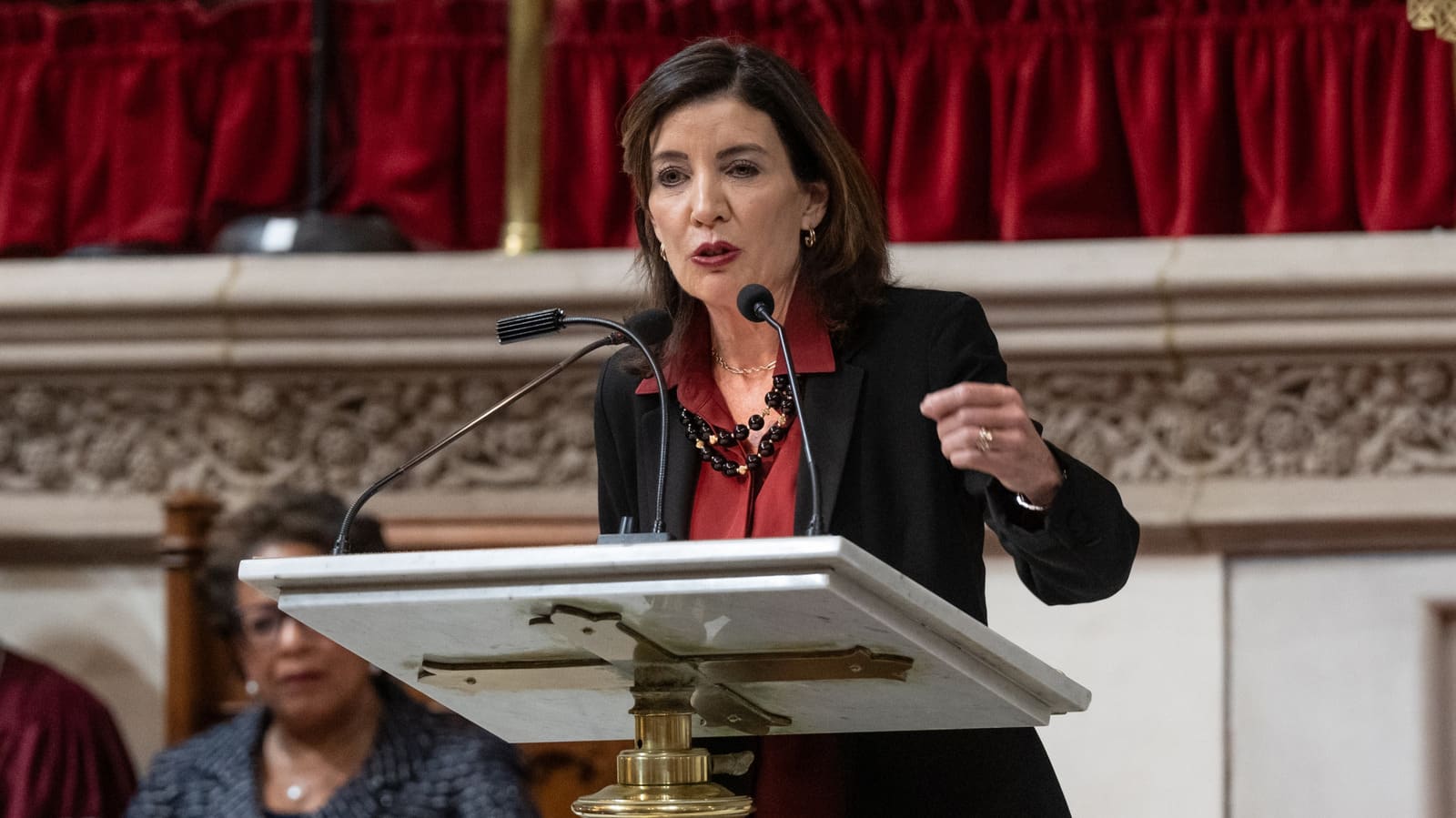
New York has become the first US state to prohibit the sale of toys that use internet-connected artificial intelligence to converse with children. Governor Kathy Hochul signed the legislation on 26 November 2026, establishing a five-year moratorium on products including dolls and robots that rely on network-based large language models to interact with young users.
The law empowers the state attorney general to levy civil penalties of up to USD 15,000 per day for each violation. The measure applies to any toy marketed to children that uses generative AI to hold conversations, a category that has expanded rapidly since late 2022 as manufacturers integrated ChatGPT-style interfaces into consumer products.
Hochul framed the law as a response to gaps in product safety regulation. In her statement accompanying the signing, she described the measure as addressing a blind spot for parents evaluating holiday purchases. The governor, who has characterised herself as New York's first mother to hold the office, called the legislation deeply personal.
Safety Tests Uncovered Explicit Responses and Fire Hazards
The legislative push followed testing conducted by the US Public Interest Research Group Education Fund, which examined conversational toys marketed to children aged three to 12. Researchers documented instances in which the toys discussed sexually explicit topics and offered advice that could create household fire risks.
The testing revealed a pattern in which safety filters degraded over the course of extended conversations. Products examined in the study offered minimal or no parental oversight features. Several models could record audio of a child's voice or capture facial scans, raising privacy concerns that extend beyond content moderation.
The findings align with broader scrutiny of generative AI safety mechanisms, which research labs and civil society groups have shown can be bypassed through prompt engineering or conversational persistence. Unlike static toys with pre-recorded responses, internet-connected models draw on training data that may include unsuitable material, and their outputs can vary unpredictably.
Enforcement and Scope
New York attorney general Letitia James will oversee enforcement of the ban. In a statement, James said her office would not hesitate to apply the law and other tools to prevent AI systems from causing harm. She described children's health as non-negotiable in the face of technology industry expansion.
The ban sits alongside a second measure Hochul signed earlier in 2026, the AI Chatbot Restrictions for Minors Act, which prohibits certain chatbot features for users under 18 and carries penalties of up to USD 25,000 per infraction. That broader statute addresses social media and web-based conversational agents, whereas the toy ban targets physical retail products.
The legislation does not define specific technical thresholds for what constitutes an AI chatbot toy, leaving interpretation to the attorney general's office and, potentially, the courts. Toys with offline voice recognition or pre-scripted dialogue trees appear to fall outside the scope, as the law targets products that query external servers to generate responses.
Retail and Compliance Challenges
Amazon, which accounted for a significant share of US toy sales in 2023, said in a statement that it requires third-party sellers to comply with applicable laws and supports industry-wide efforts to establish guardrails for emerging technology. The company reported selling approximately 12 million distinct toy products in the United States as of 2023, a catalogue that complicates the task of identifying and removing prohibited items.
Compliance will likely require retailers to audit product listings for internet connectivity and generative AI capabilities, a process that may prove difficult when manufacturers do not clearly label those features. Smaller e-commerce platforms and brick-and-mortar chains face similar hurdles, particularly for imported goods that arrive with minimal documentation.
The five-year duration of the ban suggests lawmakers view it as a holding measure while federal regulators and standards bodies develop testing protocols and disclosure requirements. No comparable legislation exists at the national level, though several states have introduced bills addressing AI in consumer products.
Political Context and Data Centre Restrictions
The toy ban follows a summer executive order in which Hochul imposed a one-year moratorium on new data centres consuming 50 megawatts or more. That directive reflected concern over energy demand and environmental impact tied to AI infrastructure, a theme that resonated during the 2026 US midterm elections.
Voters in 10 states considered 45 ballot measures related to data centres, approving 39 that imposed restrictions on facility siting, energy use, or tax incentives. The wave of local measures suggests a shift in public sentiment toward technology infrastructure, particularly where AI workloads drive rapid expansion.
New York's dual approach, targeting both consumer-facing AI products and the industrial facilities that power them, positions the state as a bellwether for technology policy. Whether other jurisdictions adopt similar bans on AI toys will depend in part on enforcement outcomes and any legal challenges that emerge over the next 12 months.
The law takes effect immediately, meaning retailers have no grace period to clear existing inventory. Products already in distribution channels must be withdrawn from sale or face daily penalties, a timeline that industry groups have not publicly contested but may seek to negotiate through regulatory guidance.