The Neocloud Debt Reckoning: Two Visions of AI Infrastructure's Future
Musk predicts wave of failures among GPU rental ventures while Huang sees demand absorbing risk. The gap reveals deeper questions about who captures value in the infrastructure layer.
A Widening Split on Infrastructure Viability
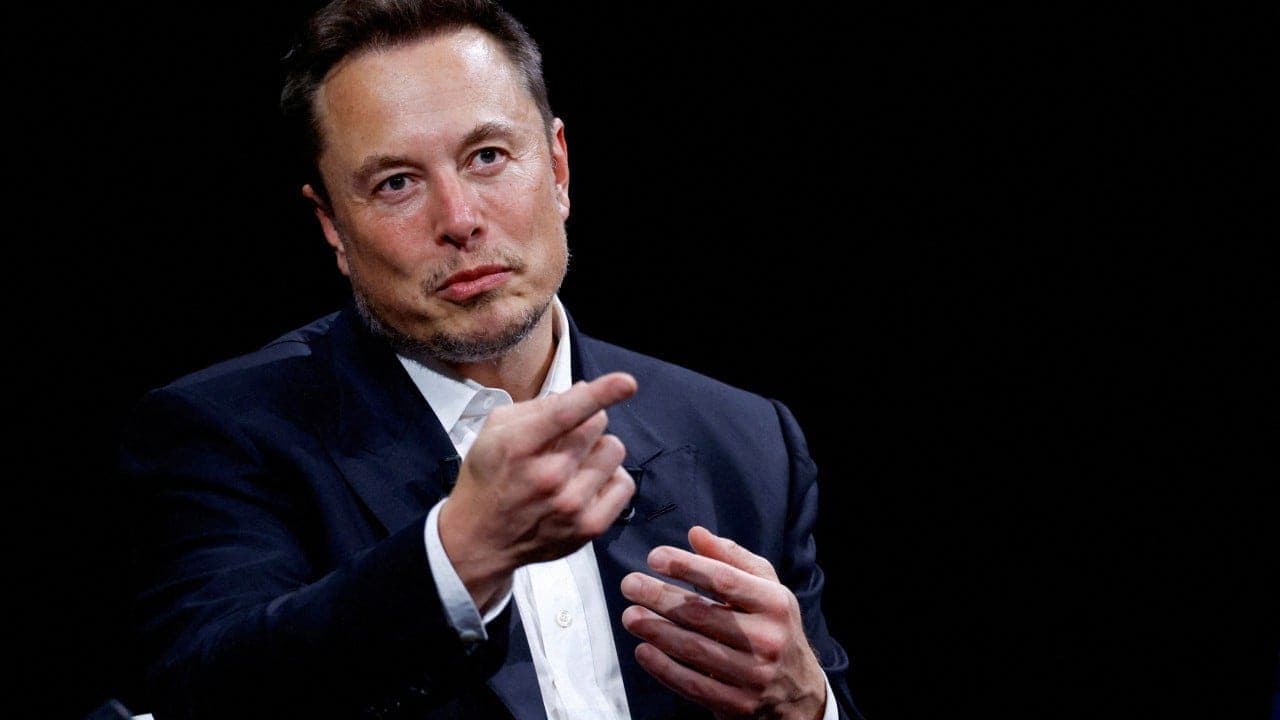
More than 200 specialist cloud providers built to rent graphics processing units now operate across global markets, and the debt many carry has become a flashpoint. Elon Musk has publicly forecast a wave of failures and consolidation among these ventures, often called neoclouds. Jensen Huang, whose company Nvidia supplies the silicon at the heart of the model, takes the opposite view: he argues that customer demand remains strong enough to unlock the capital needed to service obligations and expand.
At Opentechwire, we have tracked the neocloud segment since early entrants began raising term sheets in late 2023. The divergence between Musk and Huang is more than a difference in temperament. It reflects two competing models of how value flows in AI infrastructure and who ultimately shoulders the risk when training workloads plateau or shift.
What Neoclouds Are and Why Debt Matters
Neoclouds are infrastructure businesses that lease large clusters of accelerators to AI labs, research groups and enterprises that need compute but lack the capital or lead time to build their own data centres. Unlike the hyperscale public clouds, which run diversified workloads across retail, enterprise software and consumer services, neoclouds focus narrowly on high-performance inference and training. That specialisation has allowed them to move faster than incumbents in some markets, particularly where export controls or data-residency rules constrain hyperscale entry.
The business model, however, is capital-intensive. A single rack of current-generation accelerators can cost several million US dollars, and the associated networking fabric, power infrastructure and cooling systems add multiples to that base. Most neoclouds have financed expansion through a mix of venture debt, equipment leasing and revenue-based loans. As interest rates rose through 2024 and 2025, the cost of that capital climbed. Utilisation rates, meanwhile, have shown signs of softening in certain segments as some customers delay projects or migrate workloads back to on-premises clusters.
Musk's position centres on the observation that many neoclouds are now servicing debt with revenue that depends on sustained high utilisation. If a meaningful share of capacity sits idle for even a few quarters, cash flow can turn negative quickly. In his view, the sector is overcrowded, and a shake-out is inevitable. Huang, by contrast, emphasises that aggregate demand for accelerator time continues to grow, driven by new model architectures, longer context windows and the expansion of inference at scale. He believes that growth will absorb the supply overhang and that well-run operators will refinance on better terms as revenue proves durable.
The Demand Picture Is Uneven
Across the region, neocloud utilisation varies widely. Operators in Singapore and Seoul that serve multinational AI labs report utilisation above 85 per cent, buoyed by long-term contracts and pre-paid capacity agreements. In contrast, smaller neoclouds in secondary markets, particularly those without anchor customers, have seen utilisation dip below 60 per cent. Some have responded by cutting prices, which improves occupancy but compresses margins and makes debt service harder.
The unevenness matters because it determines which narrative is correct. If demand growth is concentrated among a few large customers and a handful of geographies, then Musk's consolidation thesis gains weight. The top tier of neoclouds, those with established relationships and favourable lease terms, will survive and grow. The long tail will struggle to refinance and either shut down or sell assets at a discount. If, however, demand broadens as inference workloads proliferate and new verticals adopt generative models, then Huang's optimism may prove justified. In that scenario, even marginal operators can fill capacity and grow into their debt.
Capital Markets Are Watching Closely
Investors have become more cautious. Venture debt providers that backed neocloud expansion in 2023 and early 2024 are now conducting deeper due diligence on utilisation, customer concentration and contract duration. Several funds have tightened covenants, requiring borrowers to maintain minimum utilisation thresholds or face accelerated repayment. Equity investors, meanwhile, are pushing neoclouds to diversify revenue by offering managed services, fine-tuning platforms and data-preparation tools, rather than relying solely on raw compute rental.
The shift reflects a broader reassessment of infrastructure economics. During the initial wave of generative AI adoption, the assumption was that demand for compute would remain inelastic and that pricing power would stay with suppliers. That assumption is now being tested. Hyperscale clouds have expanded their own accelerator fleets and are offering competitive pricing on reserved instances. Open-weight models have reduced the compute required for many tasks, and algorithmic improvements have lowered the cost per token. Neoclouds must now demonstrate that they can deliver not just capacity, but differentiated performance, latency or compliance features that justify a premium.
Regional Dynamics Add Complexity
Asia-Pacific markets present a mixed picture. In markets where data sovereignty requirements are strict, neoclouds have carved out defensible positions. Local operators in Jakarta, Bengaluru and Taipei have secured government and enterprise contracts that hyperscale providers cannot easily serve. These neoclouds often operate with lower debt loads and benefit from patient capital from strategic investors, including telcos and state-backed funds.
Elsewhere, the competitive pressure is more intense. In Hong Kong and Tokyo, neoclouds face direct competition from hyperscale clouds that have expanded local availability zones. In these cities, differentiation comes down to customer support, custom networking configurations and the ability to co-locate workloads with proprietary data. Operators that cannot offer those features are losing share.
China's neocloud sector operates under different constraints. Access to leading-edge accelerators is limited by export controls, and domestic alternatives, while improving, lag in performance per watt and memory bandwidth. Chinese neoclouds have focused on inference rather than training, and many have partnered with domestic chip makers to secure supply. Debt levels are generally lower because financing comes primarily from state banks and strategic corporates, but utilisation is also lower due to the narrower range of workloads that current hardware can support efficiently.
What Happens If Musk Is Right
If a significant number of neoclouds fail or merge, the consequences will ripple through the AI supply chain. Accelerator manufacturers will see order cancellations, and the secondary market for used hardware will flood, depressing prices. Customers that have built infrastructure around specific neocloud APIs or networking setups will face migration costs. Smaller AI labs, particularly those in emerging markets, may lose access to affordable compute, which could slow experimentation and widen the gap between well-funded teams and the rest.
Consolidation could also concentrate market power. If a handful of large neoclouds acquire distressed assets and absorb capacity, they will have greater leverage over both suppliers and customers. Pricing could stabilise at higher levels, and innovation in infrastructure tooling may slow as competitive pressure eases.
What Happens If Huang Is Right
If demand continues to expand and neoclouds successfully refinance or grow into their obligations, the sector will mature into a stable layer of the AI stack. Differentiation will shift from raw capacity to specialised offerings: low-latency inference clusters for real-time applications, high-bandwidth training environments for multimodal models, and compliance-certified infrastructure for regulated industries.
In this scenario, the neocloud layer becomes analogous to the content delivery network sector in the 2010s: a fragmented but essential part of the internet infrastructure, with a mix of global operators and regional specialists. Margins compress over time, but the largest players achieve scale efficiencies and maintain profitability.
The Answer Lies in the Next Twelve Months
The question of who is correct will be answered by utilisation data, refinancing outcomes and customer behaviour over the next four quarters. If neoclouds can maintain utilisation above 75 per cent and secure extensions on existing debt or raise new capital on reasonable terms, Huang's view will gain credibility. If utilisation falls below 60 per cent for a sustained period, or if a wave of defaults begins, Musk's prediction will look prescient.
For now, the sector is caught between two futures. The infrastructure that powers the current wave of AI adoption is itself under financial strain, and the resolution of that tension will shape not just the cloud market, but the pace and geography of AI development itself.