Huawei Bets on 2027 as Tipping Point for Domestic AI Training Infrastructure
Eric Xu signals confidence that Ascend 950DT clusters will capture major share of Chinese model training workloads within 18 months, marking inflection point in post-sanctions compute landscape.
The 2027 Forecast
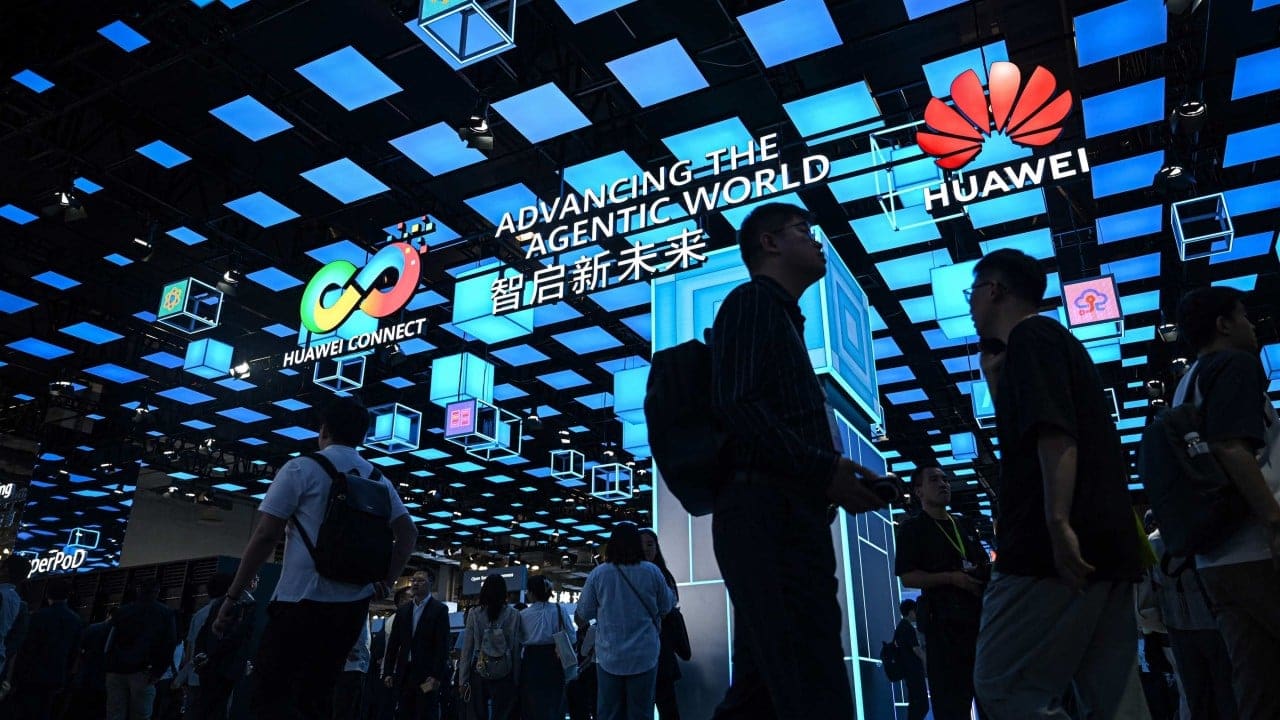
Eric Xu Zhijun stood before reporters at Huawei Connect 2026 in Shanghai and made a projection that, if realised, would represent the most consequential shift in China's AI infrastructure since US export controls severed access to advanced Nvidia silicon three years ago. Starting next year, Xu said, a substantial portion of artificial intelligence model training in China will migrate to Huawei's own compute platforms - specifically, SuperPod and SuperCluster configurations built around the Ascend 950DT processor.
The statement, delivered by Huawei's rotating chairman during the annual conference, carries weight not because it promises a sudden technical leap but because it acknowledges an 18-month runway. At Opentechwire, we've tracked the halting progress of domestic AI accelerators across Asia, and timelines matter. Xu is betting that by 2027, supply will meet demand, software stacks will mature, and the economic logic of training on Ascend hardware will override the inertia favouring Nvidia's CUDA ecosystem.
Supply Constraints and the Path to Scale
The caveat embedded in Xu's forecast is supply. Huawei's Ascend chips remain constrained by manufacturing capacity and the limits of semiconductor equipment China can procure under current export regimes. Advanced packaging, high-bandwidth memory integration, and yield rates at domestic fabs all impose ceilings on how many 950DT units Huawei can ship per quarter.
Yet the company is signalling confidence that these bottlenecks will ease. SuperPod and SuperCluster refer to integrated systems pairing hundreds or thousands of accelerators with networking fabric, storage, and orchestration software. Building such clusters at scale requires not just chips but a functioning supply chain for interconnects, cooling, and power delivery. Huawei has invested heavily in each layer, and the 2027 target suggests internal roadmaps show green lights across those dependencies.
For Chinese AI labs and enterprises, the calculus is straightforward. Access to Nvidia's H100 and successor architectures is blocked. Grey-market routes exist but carry compliance risk and uncertain support. Domestic alternatives from Huawei, alongside smaller players, are the only path to scaling training infrastructure for frontier models. If Ascend can deliver comparable throughput per watt and per yuan, adoption follows.
Competitive Dynamics in a Closed Market
Nvidia's dominance in AI training rests on more than transistor counts. CUDA, the parallel computing platform and API, has anchored developer workflows for over a decade. Models, libraries, and toolchains assume Nvidia hardware. Porting to a different instruction set and memory architecture is non-trivial.
Huawei has countered with CANN, its own compute architecture and software stack designed for Ascend. The company has also worked to ensure popular frameworks such as PyTorch and TensorFlow can target Ascend with minimal friction. But "minimal friction" in 2026 still means debugging, profiling, and occasional rewrites. The question for 2027 is whether that friction falls below the threshold where teams default to Ascend rather than tolerate it.
China's largest technology firms have already begun hedging. Alibaba Cloud, Tencent, and Baidu operate data centres with mixed fleets, blending legacy Nvidia GPUs with Ascend and other domestic chips. Training runs for new models increasingly test across hardware to identify the most cost-effective configuration. Xu's forecast implies that by next year, those tests will consistently favour Ascend for new deployments.
Implications for the Regional AI Stack
If Huawei's projection materialises, the centre of gravity for AI model development in China shifts. Today, many frontier Chinese models are still trained on Nvidia infrastructure purchased before export controls tightened or routed through jurisdictions with looser enforcement. A 2027 pivot to Ascend-based clusters would decouple that dependency.
The downstream effects extend beyond training. Inference workloads, which deploy trained models at scale, have different performance profiles but benefit from ecosystem alignment. If training standardises on Ascend, inference is likely to follow, creating a vertically integrated compute stack insulated from US policy shifts.
For Huawei, the strategic prize is not just chip sales but platform lock-in. Enterprises that commit capital and engineering resources to Ascend clusters become long-term customers for software updates, support contracts, and next-generation hardware. The model mirrors Nvidia's playbook, adapted to a market where geopolitical barriers substitute for technical moats.
Risks and Realities
Xu's confidence notwithstanding, the 2027 timeline faces headwinds. Semiconductor manufacturing at the node densities required for competitive AI accelerators remains a challenge for Chinese fabs. ASML's extreme ultraviolet lithography tools, blocked from export to China, are absent from domestic production lines. Workarounds exist but impose performance and cost penalties.
Software maturity is another variable. Developers accustomed to Nvidia's tooling will migrate only if Ascend offers comparable debugging, profiling, and optimisation capabilities. Huawei has made strides, but gaps remain, particularly for edge cases and custom model architectures.
Finally, competition within China is intensifying. Startups and established semiconductor firms are shipping their own AI accelerators, each with distinct architectures and software ecosystems. Huawei's scale and integration advantages are significant, but fragmentation could delay the consolidation Xu envisions.
A Forecast Rooted in Necessity
The projection Xu offered in Shanghai is less a prediction than a declaration of readiness. Huawei and its customers have little choice but to build a domestic AI infrastructure that functions independently of US supply chains. The 2027 date reflects an assessment that the technical, manufacturing, and ecosystem pieces will align within 18 months.
Whether that assessment proves correct will depend on variables Huawei controls and many it does not. But the direction is set. China's AI training workloads are moving to domestic silicon, and Huawei is positioning Ascend as the default platform. If the shift Xu forecasts occurs on schedule, the bifurcation of global AI infrastructure will be complete.