Fujitsu Brings Fugaku Supercomputer DNA to Commercial AI Chips
The Japanese computing giant will ship inference processors to US and Asian markets by 2027, leveraging architecture from one of the world's fastest supercomputers
A Supercomputer's Second Act
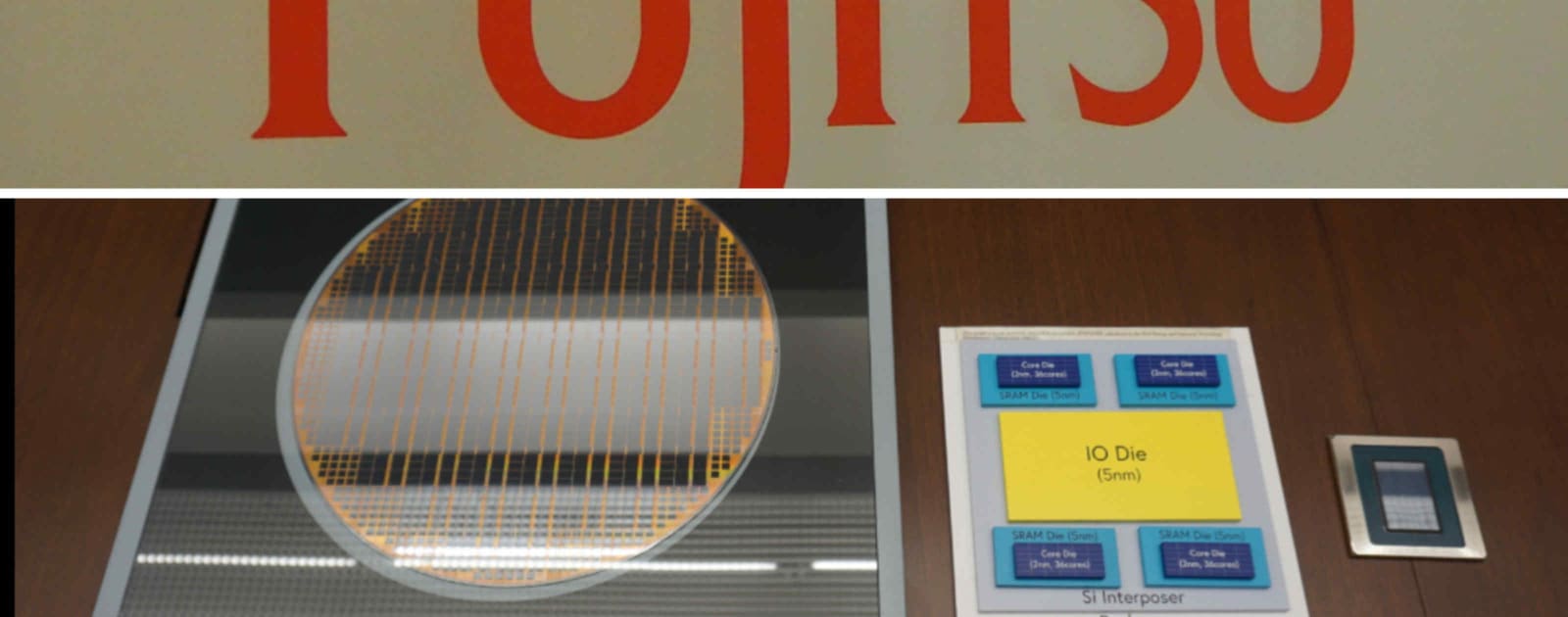
Fujitsu has confirmed it will begin shipping AI processors to customers in the United States and across Asia from 2027, marking the first commercial application of silicon design principles refined in Fugaku, the supercomputer that held the world's top performance ranking for two consecutive years. The Tokyo-based technology conglomerate is positioning the chips as central processing units optimised for inference, the stage of AI deployment where trained models generate predictions or outputs at scale.
Unlike training workloads that demand massive parallel compute and are dominated by graphics processing units from a handful of vendors, inference represents a more fragmented opportunity. Latency, power efficiency and cost per query often matter more than raw throughput, creating room for architectures that prioritise different trade-offs. Fujitsu's move signals confidence that lessons learned from high-performance computing can translate into commercial advantage in a market segment that has seen less consolidation than training hardware.
At Opentechwire, we've tracked how several Asian technology firms have attempted to carve out positions in AI silicon by emphasising domain-specific advantages rather than competing head-on with established GPU ecosystems. Fujitsu's approach is distinctive: rather than starting from a clean-sheet design, the company is adapting an architecture already proven at exascale.
Fugaku's Technical Lineage
Fugaku, operational since 2020 and developed jointly with RIKEN, Japan's national research institute, is built on Arm-based A64FX processors. These chips were designed to deliver high memory bandwidth and energy efficiency for scientific simulations, climate modelling and molecular dynamics. The architecture features 48 compute cores plus four assistant cores per chip, with integrated high-bandwidth memory controllers and a focus on vector processing.
The relevance to inference lies in Fugaku's ability to handle large, sparse matrix operations efficiently, a characteristic that maps well to certain classes of neural network inference, particularly for natural language processing and recommendation systems. While Fujitsu has not disclosed full technical specifications of the commercial chips, the export plan suggests the company has adapted the A64FX design to handle lower-precision arithmetic and optimised memory hierarchies for batch inference tasks.
Japan's broader semiconductor strategy has emphasised logic chips and advanced packaging as areas where domestic firms can compete without replicating the capital intensity of leading-edge foundry operations. Fujitsu's commercialisation effort fits within that framework, leveraging an existing R&D investment that was originally funded for scientific computing rather than commercial AI.
Inference Economics and Market Positioning
The inference market is undergoing rapid recalibration. As generative AI models grow in parameter count and as enterprises deploy them at scale, the cost of serving queries has become a material line item. Hyperscalers and cloud providers are actively evaluating alternatives to incumbent GPU platforms, particularly for workloads where latency tolerance is higher and where batch processing can amortise fixed costs.
Fujitsu's timing reflects this shift. By targeting 2027, the company is positioning for a market that will have moved beyond the initial wave of infrastructure build-out and into a phase where optimisation and cost control dominate procurement decisions. Inference chips from Chinese vendors, startups in Israel and India, and in-house designs from cloud providers are all vying for share, but few can claim lineage from a machine that delivered sustained petascale performance.
The decision to focus on the US and Asia is pragmatic. American hyperscalers and enterprise software vendors represent the largest aggregate demand for inference capacity, while Southeast Asian and Indian markets are scaling AI deployments without the same degree of lock-in to existing GPU ecosystems. Japan's domestic market, though significant, is smaller and more conservative in hardware adoption cycles.
The Export Control Context
Fujitsu's export announcement arrives at a moment when semiconductor trade is shaped as much by policy as by technology. Japan's government has aligned with US-led restrictions on advanced chip exports to China, particularly for AI training hardware, but inference chips occupy a more ambiguous regulatory zone. Their lower performance per chip and different architectural priorities can place them outside the most stringent control thresholds, though this remains subject to evolving definitions.
The company's strategy appears to anticipate this regulatory landscape by emphasising inference over training. Inference workloads are generally less sensitive from a national security perspective because they do not directly enable the development of frontier models. This distinction may give Fujitsu more flexibility in customer selection and export licensing, particularly in Asian markets where geopolitical alignment is more fluid.
At the same time, Japan's own semiconductor policy has prioritised partnerships with allied nations and domestic production resilience. Fujitsu's export plan aligns with these goals by creating demand for Japanese-designed logic chips and by demonstrating that the country's investments in high-performance computing can yield commercially viable products.
Competitive Pressures and Open Questions
Fujitsu's path to market share is not assured. The company will compete with established CPU vendors who have spent years optimising for AI inference, with ASIC designers who can offer lower cost per inference for specific model architectures, and with integrated offerings from cloud providers who control both hardware and the software stack.
Software ecosystem support will be decisive. Inference frameworks, compiler toolchains and model optimisation libraries are overwhelmingly developed for x86 and CUDA ecosystems. Fujitsu will need to demonstrate not only competitive performance but also a frictionless path for developers to deploy models on its chips. The company's track record in enterprise IT and its existing relationships with system integrators may ease adoption, but the gap between supercomputing and cloud-native AI infrastructure is substantial.
Pricing will also matter. If Fujitsu positions the chips as premium products, they will need to deliver measurably superior performance or efficiency to justify the switching cost. If the company opts for aggressive pricing to gain share, margins will be thin and sustainability will depend on volume and ecosystem scale.
The 2027 timeline gives Fujitsu roughly a year to finalise silicon, secure foundry capacity, validate performance benchmarks and build out channel partnerships. That is ambitious but not implausible for a company with Fujitsu's scale and existing semiconductor operations.
A Test for Japan's Chip Ambitions
Fujitsu's move is more than a product launch; it is a test case for whether Japan can translate public investment in frontier computing into commercial semiconductor success. The country has committed billions of dollars to revitalising its chip industry, but much of that spending has focused on memory, mature-node logic and packaging rather than cutting-edge design.
Fugaku represents one of the few instances where Japanese technology has achieved global leadership in a compute-intensive domain. If Fujitsu can convert that achievement into a viable product line, it will validate a model of innovation that starts with mission-driven R&D and migrates to commercial markets. If the chips struggle to gain traction, it will underscore the difficulty of competing in AI hardware without the scale and ecosystem advantages of incumbent platform leaders.
For now, the announcement is a signal of intent. The real measure will come when the first chips ship, when benchmarks are published, and when customers decide whether inference on Fujitsu silicon offers enough value to justify a departure from the familiar.