DeepWay Pivots to Licensing Model for European Electric Truck Push
The Baidu-backed startup plans to transfer assisted-driving technology to local partners rather than compete head-on with established European manufacturers.
A Different Playbook for a Mature Market
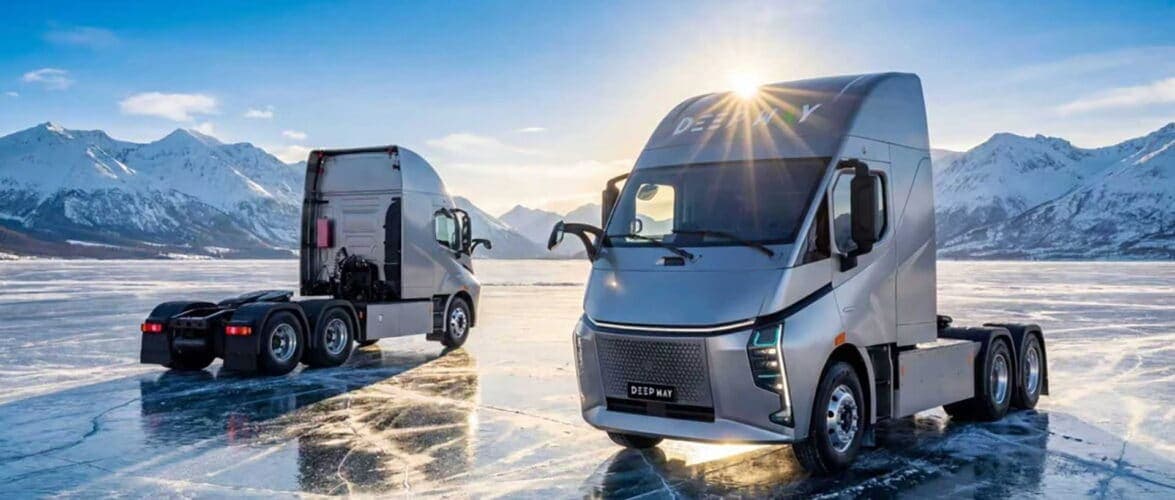
DeepWay, the Hefei-based maker of electric trucks with assisted-driving systems, is planning to enter Europe not by shipping vehicles but by licensing its core technology to established manufacturers. A company executive outlined the strategy at a recent trade show, signalling a pragmatic shift for a startup that has spent the past four years building both hardware and software capabilities in China's fiercely competitive logistics sector.
The approach reflects a calculated read of Europe's commercial vehicle landscape. Unlike passenger cars, where Chinese brands have made inroads through volume and price, heavy trucks occupy a different tier. Fleet buyers prize uptime, service networks, and regulatory compliance - advantages that incumbent European manufacturers have spent decades building. DeepWay's bet is that its assisted-driving stack, honed on Chinese highways, can slot into existing platforms without the friction of a full market entry.
Founded in 2020, DeepWay emerged from a joint venture between Baidu, China's leading artificial intelligence group, and Lionbridge Group, a logistics and financing firm. That parentage gave the startup access to Baidu's autonomous-driving research and Lionbridge's operational knowledge of freight economics. The company has since developed electric trucks equipped with Level 2+ driver-assistance systems, designed primarily for long-haul routes where fuel costs and driver availability are persistent pressures.
Capital Influx Ahead of Anticipated Listing
DeepWay closed two pre-IPO funding rounds in 2026, drawing investment from a geographically diverse roster. Stone Capital, a United Arab Emirates-based fund, participated alongside ABC Impact, a private equity firm backed by Singapore's Temasek. Australia's NGS Super, a pension fund, and Lenovo, the Chinese computer manufacturer, also joined the round. The company has not disclosed the total raised, but the investor mix suggests confidence in both its domestic traction and its ambitions beyond China.
At Opentechwire, we have tracked a pattern among Chinese hardware startups that secure late-stage capital from sovereign and pension funds. These backers typically expect a clear path to liquidity, which in DeepWay's case likely means a public listing within the next eighteen months. The capital also provides runway to pursue partnerships in markets where regulatory approval cycles are measured in years, not quarters.
The timing aligns with shifting sentiment in Europe towards electrification of commercial fleets. The European Union's CO₂ emission standards for heavy-duty vehicles tighten progressively through 2030, creating pressure on truck makers to accelerate electric powertrain development. Meanwhile, driver-assistance technology remains fragmented, with European manufacturers at varying stages of integration. DeepWay's licensing model could appeal to players that want to fast-track advanced driver-assistance systems without diverting engineering resources from electrification.
Technology Transfer as Market Entry
The licensing strategy marks a departure from the export-led approach taken by Chinese electric vehicle makers in passenger segments. Rather than establishing sales channels and service centres, DeepWay intends to transfer its assisted-driving software and integration know-how to partners who already operate production lines and distribution networks in Europe. The executive's reference to "eventually manufacturing locally" suggests a phased plan: initial technology licensing, followed by joint production arrangements if demand warrants.
This model carries distinct advantages. It sidesteps tariff exposure, reduces capital intensity, and places the burden of regulatory homologation on partners with existing certification infrastructure. For European manufacturers, it offers a shortcut to capabilities that would otherwise require years of in-house development or acquisitions. The trade-off is control. DeepWay will depend on partners to integrate its systems effectively and to position them in a market where brand heritage and after-sales support often outweigh technical specifications.
The approach also reflects realities in intellectual property and supply chains. European regulators have grown cautious about dependencies on Chinese technology in critical infrastructure, a category that increasingly includes connected vehicle systems. By licensing rather than exporting finished products, DeepWay may find it easier to navigate scrutiny, particularly if local manufacturing follows. The company's investor base, which includes Western institutions, may also help smooth entry, signalling that its technology has passed due diligence beyond China.
Competitive Landscape and Execution Risk
DeepWay enters a crowded field. European truck makers, including Daimler Truck, Volvo Group, and Scania, have already committed tens of billions of euros to electric platforms and are integrating their own driver-assistance systems. Meanwhile, technology suppliers such as Bosch and Continental offer modular solutions that manufacturers can adopt without ceding platform control. DeepWay's value proposition hinges on demonstrating that its assisted-driving algorithms, trained on Chinese roads, can match or exceed the performance of European incumbents on different infrastructure and in different regulatory frameworks.
The company's domestic track record will matter. In China, DeepWay competes with established players such as FAW Jiefang and Shaanxi Automobile, as well as newer entrants like Windrose and Trunk Tech. Market share data for assisted-driving trucks in China remains opaque, but DeepWay's ability to secure repeat fleet orders and maintain uptime will be scrutinised by potential European partners. Any licensing deal will likely include performance milestones tied to real-world validation.
There is also the question of timing. Europe's commercial vehicle market is cyclical, and 2026 has seen softer demand as logistics companies digest earlier purchases and navigate economic uncertainty. DeepWay's licensing discussions may stretch longer than anticipated if potential partners prioritise cost discipline over new technology integration. The company's capital cushion from its recent funding rounds provides some insulation, but the window to establish partnerships before competitors lock in their own solutions is finite.
Implications for Cross-Border Technology Flows
DeepWay's strategy offers a preview of how Chinese startups with strong technical foundations but limited brand recognition may approach developed markets in the coming years. Rather than replicating the playbook of consumer electronics or passenger EVs, where volume and vertical integration drove market share gains, these companies are experimenting with asset-light models that emphasise intellectual property transfer and co-development.
For European manufacturers, the calculation is whether to build, buy, or license. Building takes time and talent, both in short supply as the industry electrifies. Buying, as evidenced by the scarcity of attractive acquisition targets with proven assisted-driving systems, is expensive and risky. Licensing from a well-capitalised Chinese startup presents a middle path, though it carries its own risks around technology lock-in and geopolitical exposure.
DeepWay has not named potential partners, and the executive's comments at the trade show stopped short of confirming active negotiations. What is clear is that the company sees Europe not as a distant export market but as a region where its technology can be embedded into existing manufacturing ecosystems. Whether that vision translates into signed agreements will depend on how persuasively DeepWay can demonstrate that its systems, developed for Chinese logistics, can adapt to the regulatory, operational, and commercial demands of European fleets. The funding rounds this year have given the company the resources to make that case. The next twelve months will reveal whether European manufacturers are ready to listen.