Crusoe Pulls Out of $1.25 Billion Turbine Deal with Boom Supersonic
The AI infrastructure firm's decision to abandon its commitment to Boom's Superpower units underscores the fluid economics of data centre energy procurement as power demand surges across the sector.

A Deal Undone
Crusoe, the Denver-based artificial intelligence infrastructure company, has terminated a $1.25 billion purchase agreement with Boom Supersonic for 29 stationary turbines, marking an abrupt reversal for what was positioned as a flagship partnership between two Colorado-based technology firms. The commitment, which covered Boom's 42-megawatt Superpower units with initial deliveries scheduled for 2027, was intended to supply on-site generation capacity for Crusoe's expanding portfolio of AI compute facilities.
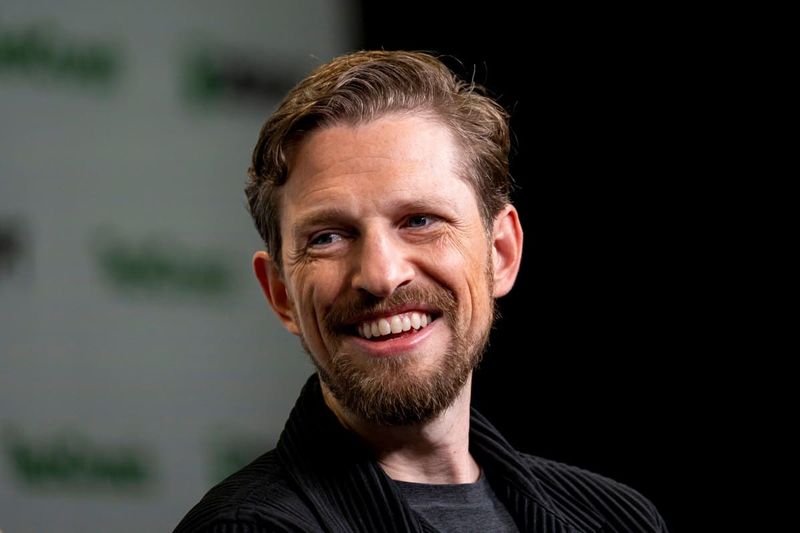
Boom Supersonic chief executive Blake Scholl disclosed the separation in a post on social media platform X on 25 September, following Crusoe's recent closure of a $3.9 billion funding round. Scholl confirmed that turbines no longer fit Crusoe's near-term primary power configuration at its sites, including the large-scale campus in Abilene, Texas. He noted that Boom expects to deliver approximately 250 megawatts of Superpower capacity to other clients in 2027, with a target of one gigawatt by 2028.
Andrew Schmitt, a spokesperson for Crusoe, clarified that the company's broader energy strategy remains intact, emphasising flexibility across its growing site portfolio. According to Schmitt, Crusoe continues to plan for turbine deployment but has opted not to proceed with Boom's technology. The firm is bringing multiple data centre campuses online across the United States, each matched to energy solutions tailored to local conditions and evolving requirements, spanning turbines, wind, solar, battery storage, and grid connections.
The Superpower Proposition
Boom Supersonic, better known for its work on the Overture supersonic passenger aircraft, launched its Superpower turbine line last year as an adjacent revenue stream. The stationary power plant shares roughly 80 per cent of its components with Symphony, the engine under development for Overture. Scholl framed the turbine business as a funding mechanism for the aircraft programme when the company raised $300 million in 2025, leveraging economies of scale and engineering overlap between the two product lines.
Crusoe represented the anchor customer for that strategy. Losing that commitment removes a significant revenue base-case from Boom's near-term commercialisation roadmap, though Scholl indicated a pipeline of alternative buyers. The extent to which those customers can absorb the volume originally earmarked for Crusoe, and whether contract terms mirror the scale of the terminated agreement, remains undisclosed.
At Opentechwire, we have tracked the convergence of aerospace engineering and distributed power generation with interest, particularly as AI infrastructure operators search for dispatchable capacity that sidesteps grid interconnection queues. Boom's approach of repurposing jet engine technology for ground-based generation is not without precedent; aeroderivative turbines from Pratt & Whitney, General Electric, and Rolls-Royce have served industrial and utility applications for decades. The question is whether a company still finalising its core aerospace product can simultaneously scale a parallel energy business with the requisite supply chain maturity and service network.
Crusoe's Energy Mosaic
Crusoe's origin story centres on monetising stranded natural gas at oil and gas extraction sites, initially for bitcoin mining and later for high-performance computing workloads. The company's expansion into AI infrastructure accelerated after securing contracts with Oracle and OpenAI, anchored by a 1.2-gigawatt data centre in Abilene that draws power from the regional grid. A gas turbine plant at that site serves as backup, not primary generation, according to Crusoe.
A separate 900-megawatt facility under construction in Abilene for Microsoft will rely on on-site gas turbines for primary power. That distinction highlights Crusoe's site-by-site approach, where energy architecture varies based on client requirements, grid availability, permitting constraints, and project economics. The decision to forego Boom's units does not signal a retreat from turbines as a technology category; rather, it suggests that competing offerings, procurement timelines, or technical specifications better aligned with Crusoe's current deployment schedule.
The AI infrastructure sector is navigating a capital-intensive phase characterised by tight power supply, extended interconnection timelines, and surging demand for compute capacity. Operators are pursuing diverse strategies, from co-locating with existing generation assets to commissioning new natural gas plants, reviving retired nuclear reactors, and signing large-scale renewable power purchase agreements. Crusoe's $3.9 billion raise, one of the larger venture rounds in the sector this year, reflects investor confidence in its ability to secure and deploy power at scale. Yet that capital also imposes pressure to deliver capacity on aggressive schedules, leaving little room for supplier risk or unproven technology.
Implications for Dual-Use Manufacturing
Boom's turbine venture represents a bet that dual-use manufacturing can unlock capital efficiency, spreading fixed costs across aviation and energy markets. The model is compelling in theory: accelerate engine development through early revenue, achieve volume production sooner, and de-risk the aerospace programme. In practice, the model requires customers willing to adopt a product from a supplier whose primary expertise and organisational focus lie elsewhere.
For Crusoe, that calculus may have shifted as its pipeline matured and alternative turbine suppliers, with established track records and service ecosystems, presented lower execution risk. The AI data centre buildout is occurring at a pace that prioritises certainty over novelty. Operators need equipment with proven uptime, established maintenance protocols, and supply chains capable of supporting multi-gigawatt deployments. A turbine derived from an aircraft engine still in development, offered by a company without a legacy in stationary power, carries integration and operational risk that may be acceptable for a pilot project but less so for a portfolio-wide rollout.
Boom's assertion that it will deliver 250 megawatts next year to other sites suggests progress in securing alternative customers, though the identity and contract structure of those deals remain unspecified. If those projects proceed and Superpower demonstrates reliability in the field, the technology may yet find its way back into Crusoe's portfolio, as Scholl hinted. The data centre sector's appetite for dispatchable, on-site generation is unlikely to diminish, and suppliers that can deliver modular, factory-built turbines at competitive cost will find demand.
The Bigger Picture
The unwinding of this partnership illustrates the fluidity of the AI infrastructure market, where strategic alignments formed during earlier stages of company development can dissolve as priorities shift and scale requirements intensify. Crusoe's fundraising success positions it to be selective about suppliers and technologies, optimising for speed, cost, and risk mitigation rather than strategic alignment with fellow Colorado startups.
For Boom, the setback complicates the financial architecture supporting Overture but does not necessarily foreclose the turbine business. The company retains the option to pivot Superpower into other segments, such as industrial co-generation, remote mining operations, or export markets where grid reliability is inconsistent and premium pricing for modular generation is more readily accepted. The challenge will be scaling production and after-sales support without the anchor volume Crusoe would have provided.
At Opentechwire, we continue to monitor how AI infrastructure operators navigate the tension between speed and technology risk, particularly in energy procurement. The sector's capital intensity and compressed timelines create opportunities for innovative suppliers, but also impose stringent requirements on execution, reliability, and supply chain maturity. Crusoe's decision to walk away from a nine-figure commitment, despite the public partnership narrative, underscores that in a market defined by scarcity of power and abundance of capital, the advantage lies with buyers who can afford to be patient and selective.
The coming year will reveal whether Boom can translate its alternative customer pipeline into delivered megawatts, and whether Crusoe's pivot to other turbine suppliers accelerates or complicates its campus rollout. For now, the separation offers a reminder that even billion-dollar commitments remain provisional until equipment is installed, commissioned, and generating electrons.