Apple Ships Siri AI Across Five Operating Systems, With Regional Gaps
The public release of iOS 27 and macOS Golden Gate brings the revamped assistant to millions of devices, but EU and China users face an indefinite wait as regulatory challenges persist.
A Multi-Platform Rollout With Strategic Omissions
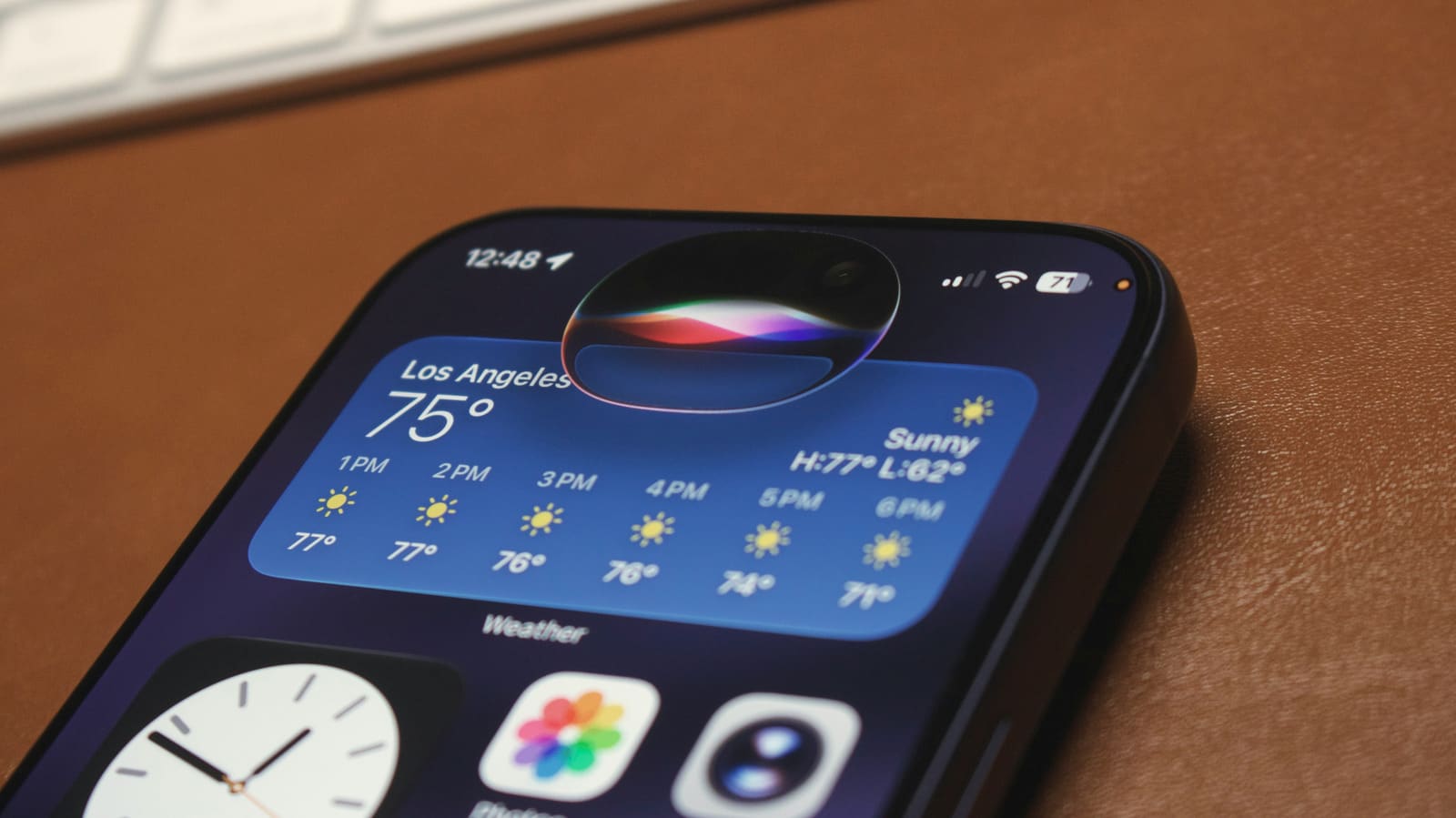
Apple began pushing iOS 27, macOS 27 (marketed as Golden Gate), iPadOS 27, watchOS 27, and visionOS 27 to the public on 14 September 2026, ending the beta-only period for Siri AI. The revamped assistant represents the centrepiece of this year's software updates, integrating across the company's ecosystem with a promise of contextual awareness that draws on personal data stored in first-party apps.
At Opentechwire, we've tracked the widening gap between what Apple announces at its annual developer conference and what ships to end users. Siri AI was previewed in June; its arrival three months later underscores the engineering complexity of on-device language models and the regulatory friction Apple now faces in two of the world's largest consumer markets.
The assistant launches with English-language support only. Apple plans to add French, Japanese, Korean, Portuguese, and Spanish in October, but the company has not published a timeline for additional languages. Usage limits apply, though Apple has not disclosed thresholds or whether they reset daily or monthly.
Geography Determines Feature Access
Siri AI will not appear on devices registered to the European Union at launch. Apple attributes the delay to ongoing work on a compliance path that "preserves its users' privacy and security", language that echoes its public statements on the EU's Digital Markets Act. The company has not committed to a release date for the 27-nation bloc.
In China, Siri AI remains on hold while Apple navigates what it describes as regulatory requirements. The delay is notable given the scale of Apple's installed base in the country and the company's historically close engagement with Beijing on data localisation and content moderation. Local competitors including Baidu, Alibaba, and Tencent have deployed generative AI features in consumer products over the past year, raising the stakes for Apple's market position.
Siri AI and dependent features across iOS, iPadOS, and watchOS are unavailable in both regions. Users in affected markets receive the broader iOS 27 feature set but not the assistant itself.
Hardware Requirements Segment the Installed Base
Siri AI requires an A17 Pro chip or M-series silicon, a threshold that excludes the majority of iPhones in active use. Compatible devices include the iPhone 15 Pro and Pro Max, all iPhone 16 models, and forthcoming hardware such as the iPhone 18 Pro and Pro Max (shipping 18 September) and the foldable iPhone Duo (October).
On the iPad side, the iPad mini with A17 Pro and any iPad running an M1 chip or later qualify. Mac compatibility begins at M1, covering machines released from late 2020 onward. The MacBook Neo, powered by an A18 Pro chip, also supports the assistant. Apple Vision Pro, Apple Watch Series 9 and later, Apple Watch Ultra 2 and later, and the third-generation Apple Watch SE round out the list.
iPhone 11 series devices and the second- and third-generation iPhone SE can install iOS 27, but they will not run Siri AI. The split creates a two-tier user experience within a single software generation, a departure from Apple's traditional approach of delivering uniform feature sets across supported hardware.
Contextual Awareness and a Standalone App
Siri AI can surface information from multiple apps simultaneously and interpret on-screen content to inform responses. Apple has not detailed the extent of app integration at launch, but the company's developer documentation indicates that third-party apps must adopt specific APIs to expose data to the assistant.
A standalone Siri app debuts alongside the system-wide assistant, though Apple has not clarified whether the app offers functionality distinct from the voice or keyboard-triggered interface. The presence of usage limits suggests server-side processing for certain queries, despite Apple's emphasis on on-device computation.
Design and Performance Adjustments
Apple describes updates to its Liquid Glass design language, introduced in 2025, as enhancing customisation and readability. The company has not published specifics on what elements are now customisable, but early adopters report expanded control over lock screen layouts and notification grouping.
Performance improvements span app launch times, which Apple claims are up to 30 per cent faster, and system responsiveness. The gains appear tied to optimisations in the scheduler and memory management subsystems, though independent benchmarking will be required to validate the company's figures across the range of supported hardware.
Additional iOS 27 Features
Beyond Siri AI, iOS 27 introduces AI-assisted photo editing tools, custom equaliser settings for AirPods, and a bill-splitting feature available to users in the United States. Parental controls have been expanded, and a new dual-SIM capability allows the same phone number to be used across two iPhones, a feature likely aimed at users who carry separate work and personal devices.
The photo editing tools rely on machine learning models that run locally, according to Apple's technical documentation. The bill-splitting feature integrates with Apple Pay and Messages, automatically calculating shares and sending payment requests.
Deployment Mechanics and Device Eligibility
Users can check for iOS 27 availability by navigating to Settings, then General, then Software Update. Apple's staged rollout means the update may not appear immediately for all eligible devices. Server load during the first 24 hours typically delays delivery for a portion of users.
Installation requires sufficient free storage; Apple recommends at least 5 GB. The update size varies by device and the version of iOS currently installed, ranging from approximately 3.2 GB for recent builds to over 6 GB for devices running iOS 25 or earlier.
Hardware Launches Aligned With Software
Apple's hardware release schedule clusters around the operating system launch. The iPhone 18 Pro and Pro Max, Apple Watch Series 12, Apple Watch Ultra 4, and AirPods 5 all ship on 18 September, pre-loaded with the new software. The Mac mini and Mac Studio, both refreshed with updated silicon, follow on 21 September.
Refreshed MacBook and iPad models are expected in the fourth quarter, and Apple is widely reported to be preparing a suite of smart home devices that will lean heavily on Siri AI. The timing suggests the company views the assistant as a platform play rather than a point feature, with implications for its broader device strategy.
Open Questions on Adoption and Regulatory Resolution
The geographic exclusions raise questions about how long Apple can sustain a fragmented feature map. The EU and China together represent a substantial share of global smartphone revenue, and competitors in both markets are shipping AI-powered assistants without similar delays.
Apple's language around privacy and security in the EU context implies disagreement with regulators over interoperability requirements or data-sharing provisions. In China, the regulatory path is less clear, but the company's caution likely reflects the complexity of operating generative AI services under the country's content and data governance frameworks.
For developers building on Apple's platform, the hardware requirements and geographic restrictions complicate targeting decisions. Apps that rely on Siri AI integration must account for a user base segmented by device age, chip type, and location, a departure from the relatively uniform environment Apple has historically provided.
The rollout marks a significant step in Apple's effort to embed generative AI across its ecosystem, but the constraints underscore the operational and regulatory realities of deploying such technology at global scale. How quickly the company resolves the EU and China issues will shape its competitive position as the AI assistant landscape continues to evolve.