AMD Bets $8.2 Billion on 3D World Generation With World Labs Acquisition
The chip maker adds Fei-Fei Li and her eighteen-month-old startup to its AI portfolio in an all-stock transaction that values spatial intelligence research at unicorn-plus multiples.
A Chip Maker Buys a Vision
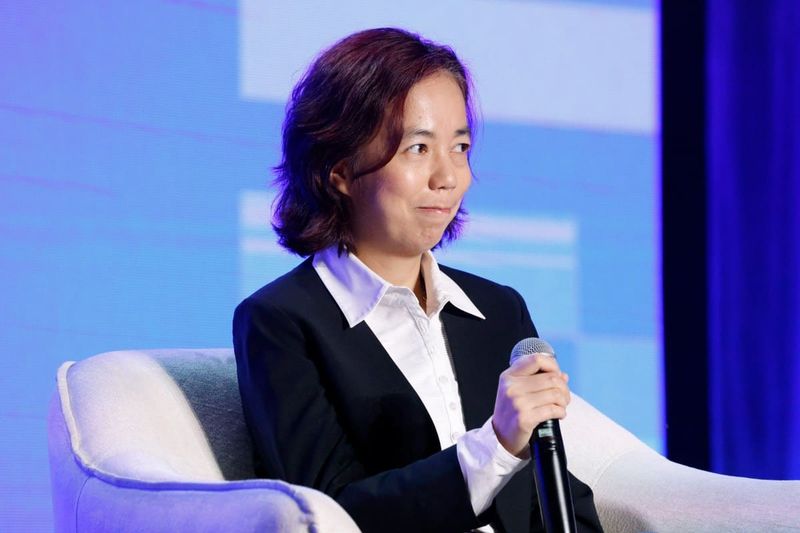
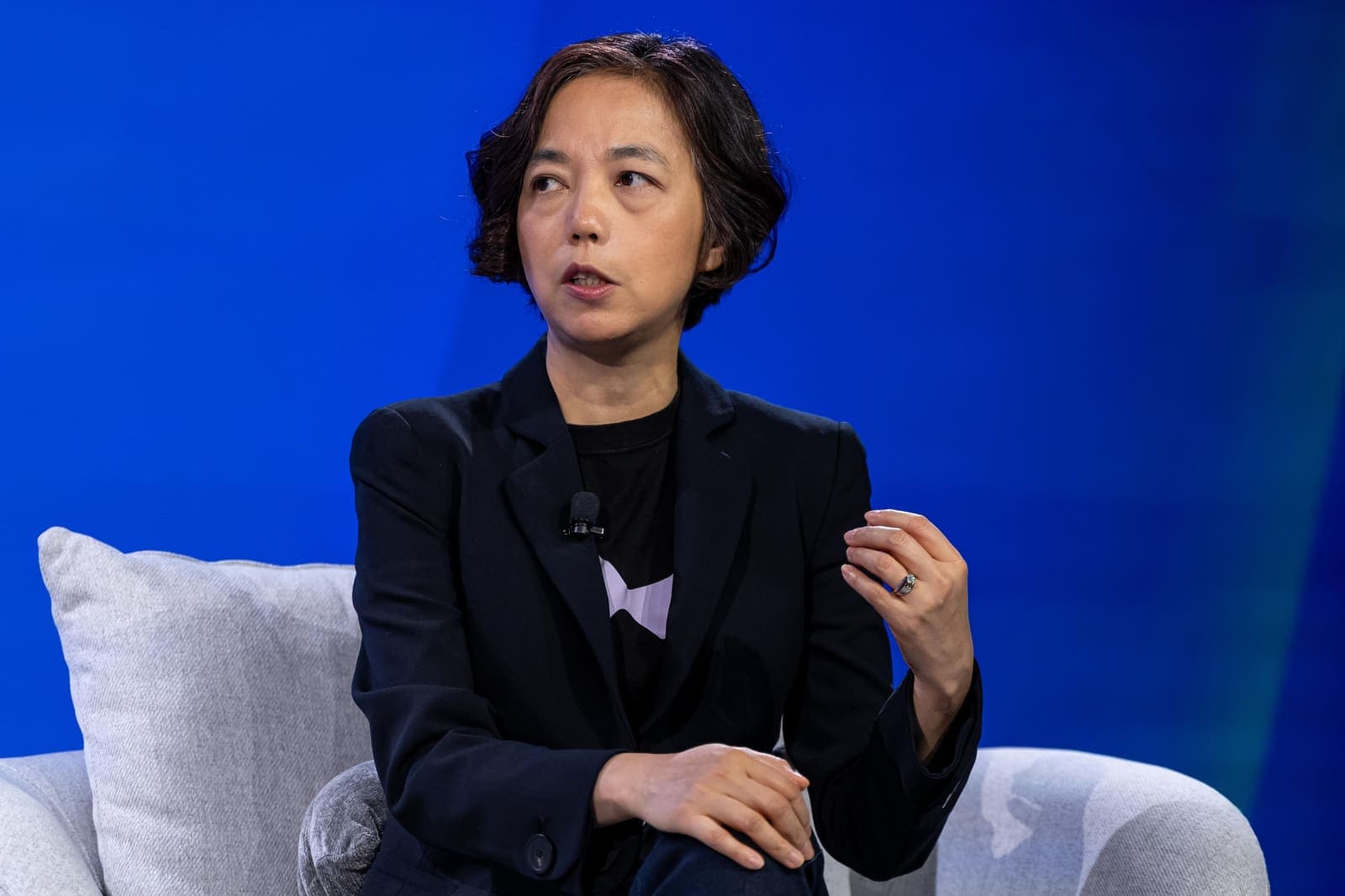
AMD has agreed to acquire World Labs, the artificial intelligence research company co-founded by computer scientist Fei-Fei Li, in an all-stock transaction valued at approximately $8.2 billion. The deal, announced late September, marks one of the largest AI acquisitions in recent quarters and signals AMD's intent to compete not only in silicon but in the application layer where spatial understanding is becoming commercially viable.
World Labs emerged from stealth in 2024. Within months, the company reached a $1 billion valuation. By 2025, it had shipped Marble, a commercial world generation model that transforms text prompts into interactive three-dimensional environments. That trajectory from formation to eight-figure exit in under two years reflects both investor appetite for foundation-model startups and AMD's recognition that hardware alone no longer defines the AI stack.
The Fei-Fei Li Factor
Li, a professor at Stanford University and former chief scientist of AI and machine learning at Google Cloud, brings institutional credibility and a research pedigree rooted in computer vision. Her earlier work on ImageNet, the dataset that catalysed deep learning's breakthrough in image recognition, remains foundational to modern neural networks. At AMD, she will hold the title of executive vice-president and chief scientist, reporting directly to chief executive Lisa Su.
The appointment places Li alongside a handful of academics who have moved into senior industry roles during the current AI cycle. It also underscores AMD's willingness to invest in research leadership at a moment when its data-centre GPU business is gaining share against Nvidia but still trails in software ecosystem maturity.
What World Labs Built
World Labs developed technology that generates spatial representations from natural language. Marble, the startup's flagship product, allows users to describe a scene and receive a navigable 3D world in return. The model handles geometry, lighting, and object placement, aiming to compress the labour-intensive process of 3D asset creation into a prompt-driven workflow.
At Opentechwire, we have tracked the rise of generative 3D models across gaming, simulation, and design tooling. World Labs positioned itself at the intersection of large language models and spatial reasoning, a domain that requires both semantic understanding and geometric consistency. The technical challenge lies in maintaining coherence across viewpoints and ensuring that generated worlds obey physical constraints, an area where diffusion models and neural radiance fields have shown promise but remain compute-intensive.
Strategic Rationale for AMD
AMD's acquisition extends its portfolio beyond inference accelerators and training chips into the application layer. The company has been methodical in building software frameworks such as ROCm to support its Instinct GPU line, but it has lagged Nvidia's CUDA ecosystem in developer adoption. Owning a high-profile AI research team and a commercial product gives AMD a reference implementation and a talent pool versed in optimising models for diverse hardware.
The $8.2 billion price tag reflects a premium over World Labs' last private valuation, though the all-stock structure preserves AMD's cash position. For context, the deal is smaller than Microsoft's investment in OpenAI but larger than most venture-backed AI exits in the past eighteen months. It also arrives as regulatory scrutiny of big tech acquisitions intensifies in both the United States and the European Union, though semiconductor firms have so far attracted less antitrust attention than platform companies.
Integration and Execution Risk
AMD has stated that the World Labs team will continue its focus on AI model research post-acquisition. That language suggests a degree of operational independence, a common arrangement in acqui-hires where the target's culture and velocity are seen as assets to preserve. Yet integration risk remains. Research labs acquired by larger firms often face pressure to align roadmaps with product cycles, and the transition from startup to business unit can slow iteration.
Li's reporting line to Su may mitigate some friction, but the success of the acquisition will hinge on whether World Labs can scale Marble's user base while contributing to AMD's hardware optimisation efforts. If the team becomes a pure research function detached from commercial accountability, the strategic rationale weakens. If it is absorbed into product groups and loses autonomy, the talent that justified the premium may depart.
The Broader 3D Generation Landscape
World Labs is not alone in pursuing text-to-3D generation. Several startups and research groups, including those within Meta and Google, have published models that convert prompts into spatial outputs. The field is still early, with challenges around inference latency, memory footprint, and the fidelity of generated assets. Most commercial applications today involve rapid prototyping rather than production-ready content.
AMD's entry into this segment suggests confidence that 3D generation will become a volume workload in data centres, alongside image synthesis and video generation. If that thesis holds, the company gains both a software moat and a workload optimised for its hardware. If adoption stalls, AMD will have paid a significant premium for a research team and a product with narrow market fit.
Closing Timeline and Governance
The transaction is expected to close by the end of 2026, subject to regulatory approval and standard closing conditions. AMD has not disclosed whether it will operate World Labs as a subsidiary or integrate it fully into existing divisions. The all-stock nature of the deal means World Labs shareholders, including venture backers, will become AMD stakeholders, aligning incentives but also exposing them to the semiconductor cycle.
For Li, the move represents a return to industry after years balancing academic and advisory roles. For AMD, it is a statement that the AI race will be won not only with faster chips but with differentiated software and talent that can shape how those chips are used. Whether an $8.2 billion bet on spatial intelligence pays off will depend on execution in the quarters ahead.