Alibaba Targets 20 GW Data Centre Build-Out as New Chip Enters Production
The Hangzhou giant's Zhenwu V900 accelerator and infrastructure expansion signal a capital-intensive bet on compute-hungry AI workloads across Asia-Pacific and beyond.

Capacity Race Accelerates
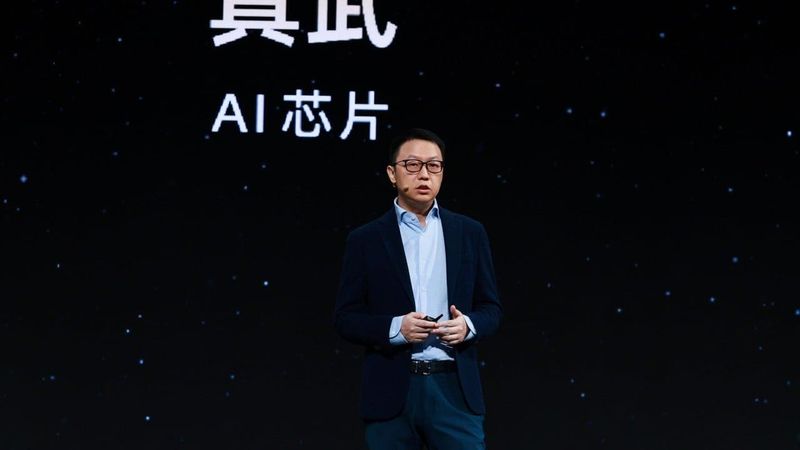
Alibaba has set a target to bring more than 20 gigawatts of data centre capacity online globally by 2032, a move that places the Hangzhou-based group among the most aggressive infrastructure builders in the current AI cycle. The commitment arrives alongside the unveiling of the Zhenwu V900, a proprietary accelerator developed by the company's chip subsidiary, T-Head Semiconductor. Commercial shipments are scheduled to begin in the first quarter of 2027, according to the company.
At Opentechwire, we've tracked rapid expansion of hyperscale compute footprints across Asia-Pacific over the past eighteen months. Alibaba's announcement reflects a broader pattern: the region's cloud platforms are racing to secure both silicon and power capacity as large language models and inference workloads demand orders of magnitude more compute than previous generations of applications.
The 20 GW target is substantial. For context, a single gigawatt can support roughly one million servers under typical density assumptions, though AI clusters often push power draw per rack far higher than traditional web-serving infrastructure. If Alibaba meets its goal, the new capacity would dwarf the combined footprint of many regional peers and position the company to compete directly with Amazon Web Services and Microsoft Azure in markets from Southeast Asia to the Middle East.
Silicon and System Design
The Zhenwu V900 is designed to handle training and inference tasks for large-scale models. Alibaba states the chip delivers three times the performance of its predecessor, the M890, and incorporates 216 gigabytes of on-package memory. Inter-chip bandwidth reaches 1,200 gigabytes per second, a specification that matters when models are sharded across dozens or hundreds of accelerators in a single training run.
T-Head has been iterating on custom silicon since 2019, initially targeting edge and mobile workloads before pivoting to data centre AI. The V900 represents the unit's most ambitious design to date. While Alibaba has not disclosed the process node or fab partner, industry observers expect the chip to be manufactured at an advanced node accessible under current export-control frameworks, likely outside the most restricted tiers that cover cutting-edge lithography.
The decision to bring chip design in-house reflects a strategic calculus shared by several of the region's largest cloud operators. Dependence on Nvidia's H100 and successor architectures exposes buyers to both supply constraints and margin pressure. Custom accelerators allow cloud providers to optimise for their own workload mix, potentially extracting better performance per watt or per dollar on specific tasks such as recommendation inference or video transcoding. The trade-off is upfront engineering cost and the risk that a homegrown design underperforms or ships late, leaving racks idle while competitors scale.
Infrastructure Economics
Building 20 GW of capacity by 2032 implies capital expenditure in the tens of billions of dollars, spanning land acquisition, construction, power infrastructure, cooling systems, and networking fabric. The funding rounds we've followed across the region over the past year suggest that investors remain willing to back infrastructure plays tied to AI, but the scale of Alibaba's target raises questions about utilisation and return on invested capital.
Data centre operators typically aim for utilisation rates above 70 per cent within two years of opening a facility. AI workloads can be bursty: a large training run might consume thousands of GPUs for weeks, then release them. Inference, by contrast, tends to be steadier but less lucrative per unit of compute. Alibaba will need to balance internal demand from its cloud division, Alibaba Cloud, with wholesale colocation and the possibility of offering bare-metal access to third-party AI labs.
Power availability is the binding constraint in many markets. Securing 20 GW requires not only grid connections but also long-term power purchase agreements, often with renewable energy mandates. Singapore, for example, has effectively capped new data centre construction due to grid limitations. Indonesia and Malaysia have emerged as alternative hubs, but both face regulatory complexity and, in some cases, underdeveloped transmission infrastructure. Alibaba's ability to hit its target will depend as much on negotiations with utilities and governments as on chip performance.
Regional Competitive Dynamics
Alibaba's announcement comes as ByteDance, Tencent, and Baidu each pursue their own infrastructure build-outs. ByteDance has reportedly ordered tens of thousands of Nvidia accelerators for training its next-generation recommendation and generative models. Tencent operates one of the largest cloud platforms in China and has begun expanding into Southeast Asia and Latin America. Baidu, meanwhile, has positioned its Ernie model and associated inference infrastructure as a platform play for enterprise customers.
Outside China, the competitive landscape includes AWS, Google Cloud, and Microsoft Azure, all of which have announced multi-billion-dollar commitments to Asia-Pacific data centre expansion. AWS opened new availability zones in Malaysia and Thailand in the past year; Google is investing in facilities in Japan and Taiwan. The arrival of large language models has shifted the calculus: latency-sensitive applications such as real-time translation or voice assistants benefit from in-region inference, while data residency requirements in markets including India and Indonesia favour local infrastructure.
Alibaba's challenge is to demonstrate that proprietary silicon can match or exceed the performance of off-the-shelf Nvidia solutions while also managing the operational complexity of a global footprint. Early adopters of custom accelerators, including Google with its Tensor Processing Units, have shown that vertical integration can yield advantages in specific workloads. But Google benefits from a unified software stack and a decade of TPU iteration. Alibaba's cloud business, while substantial, operates in a more fragmented ecosystem and must support a wider range of third-party frameworks and models.
Forward View
The 2032 timeline gives Alibaba six years to execute. In that span, the AI landscape will shift multiple times: models will grow larger or become more efficient, inference techniques such as speculative decoding may reduce compute requirements, and new architectures could displace transformers. Infrastructure investments made today carry the risk of obsolescence if workload characteristics change faster than anticipated.
At the same time, the bet on scale reflects a defensible thesis. Compute remains the scarce resource in AI development. Labs that can secure priority access to thousands of accelerators gain a speed advantage in training and iteration. Cloud providers that can offer inference at lower cost or higher throughput stand to capture a disproportionate share of enterprise revenue as generative AI moves from pilot to production.
Alibaba's dual push on custom silicon and capacity expansion signals confidence that demand will materialise. Whether that confidence is justified will depend on execution across chip design, data centre deployment, and customer acquisition in a market where competitors are making similar bets with comparable resources. The next eighteen months, culminating in the V900's commercial launch, will offer the first data points.